





Understanding Dietary Fibre
Dietary fibre is a type of carbohydrate that the body cannot digest. It plays a crucial role in maintaining digestive health, regulating blood sugar levels, and promoting a feeling of fullness. There are two main types: soluble and insoluble fibre. Soluble
fibre dissolves in water to form a gel-like substance, which can help lower cholesterol and stabilise blood sugar. Insoluble fibre does not dissolve in water; instead, it adds bulk to stool, aiding in smooth digestion and preventing constipation. Most plant foods, including leafy greens, contain a mix of both types, each contributing to a healthy gut and overall well-being.
The Cooked vs. Raw Debate
The question of whether raw or cooked vegetables are healthier is a common one. The truth is, both have their place in a balanced diet. Cooking can decrease levels of certain heat-sensitive nutrients like vitamin C. However, the heating process also breaks down the tough cell walls of plants. This breakdown can make other nutrients more bioavailable, meaning your body can absorb them more easily. For greens like spinach and kale, cooking increases the absorbable amounts of vitamins A and E, protein, calcium, iron, and important antioxidants like beta-carotene. More importantly, for those with sensitive digestive systems, cooked greens are often easier to digest because the heat has already started to break down the tough fibres.
How Cooking Boosts Fibre Intake
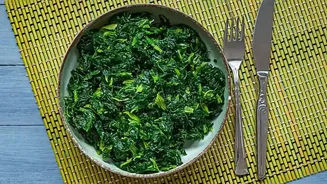
While the fibre itself is heat-stable and isn't destroyed by cooking, the process significantly impacts how much you can consume. Leafy greens have a very high water content and shrink dramatically when cooked. A large bowl of raw spinach might seem like a lot, but it cooks down to just a few spoonfuls. This reduction in volume means you can eat a much larger quantity of greens in a cooked form, leading to a higher overall fibre intake. For example, a cup of raw spinach contains less than a gram of fibre, but a cup of boiled spinach packs over 4 grams. Cooking also softens the fibre, which can be beneficial for individuals who experience bloating from raw vegetables.
Best Cooking Methods for Greens
The way you cook your greens matters. Boiling can cause water-soluble vitamins, like vitamin C and B vitamins, to leach into the water. If you do boil your greens, consider using the leftover nutrient-rich water as a base for soups or gravies to salvage those vitamins. Steaming is often considered one of the best methods as it softens the vegetables without significant nutrient loss. Lightly sautéing with a healthy fat like olive oil can also be beneficial, as some nutrients, such as vitamins A, E, and K, are fat-soluble and are absorbed better when consumed with fat.
Top Fibre-Rich Leafy Greens
Many leafy greens are excellent sources of fibre, especially when cooked. Collard greens are a standout, with a cooked cup providing around 7.6 grams of fibre. Swiss chard, kale, and spinach are also fantastic choices. A cup of cooked spinach not only provides over 4 grams of fibre but also significant amounts of iron and calcium. In India, common greens like methi (fenugreek leaves) and palak (spinach) are fantastic when cooked into dals, curries, and subzis, making it easy to boost your daily fibre intake. Don't forget about others like mustard greens and turnip greens, whose nutritional profiles are also enhanced by cooking.
Easy Ways to Eat More Cooked Greens
Incorporating more cooked leafy greens into your diet is simple. Start your day by wilting spinach or kale into your scrambled eggs or omelette. Add a generous handful of chopped greens to soups, stews, and dals during the last few minutes of cooking. Mix them into pasta sauces or stir-fries for an easy nutrient and fibre boost. You can also blend cooked greens into smoothies; the flavour is often milder than when they are raw. By making these small additions, you can significantly increase your consumption of fibre and other essential nutrients without feeling like you're eating a mountain of salad.