

A Trick of Cosmic Perspective
When we look up at the night sky, we are seeing a flattened, two-dimensional projection of a three-dimensional universe. Objects that appear side-by-side could be incredibly close neighbours or they could be separated by millions of light-years, merely
aligned from our specific vantage point on Earth. This is a fundamental challenge and fascination in astronomy: distinguishing between a true physical relationship and a simple trick of perspective. A new image showcases this concept perfectly, using three different pairs of galaxies to tell three different stories of proximity and distance. It serves as a beautiful reminder that in space, what you see is not always what you get.
Unveiling the Galactic Trio
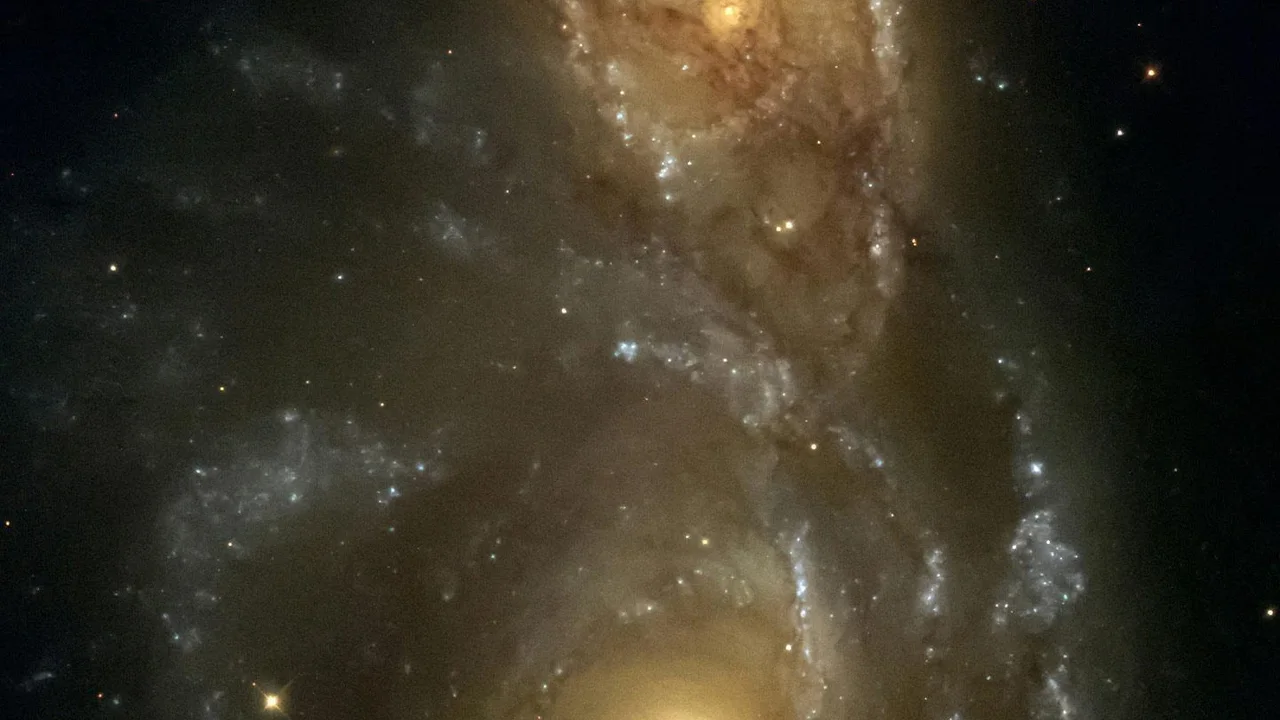
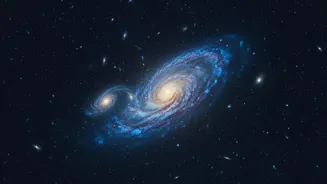
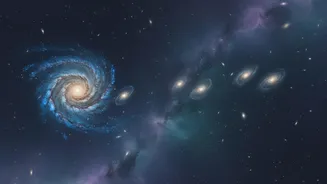
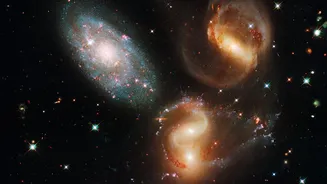
Featured as NASA's Astronomy Picture of the Day, the captivating image vertically arranges three distinct pairs of galaxies, all located within the Centaurus Galaxy Cluster. Each duo presents a unique scenario, providing a masterclass in galactic interaction. At the top, a galaxy with a distinct blue stripe, NGC 4650A, sits near a companion. In the middle, the large spiral galaxy NGC 4650 seems to brush past its partner. At the bottom, the duo of NGC 4622A and NGC 4622B appear locked in a gravitational embrace. But only one of these pairs is truly experiencing the dramatic, universe-altering dance of a galactic merger. The other two demonstrate just how misleading a shared patch of sky can be.
The True Cosmic Collision
The most dramatic story in the image belongs to the bottom pair, NGC 4622A and NGC 4622B. These two are actively interacting, their mutual gravity pulling and distorting each other's structure. When galaxies get this close, they can create long streamers of stars and gas called tidal tails, trigger furious bursts of new star formation as their gas clouds collide, and eventually, merge into one larger galaxy. Astronomers predict that NGC 4622A and NGC 4622B are on a path to do just that, destined to become a single, larger galaxy in roughly a billion years. They are true cosmic neighbours, their fates forever intertwined by the powerful force of gravity.
Deceptive Sky Neighbours
In contrast, the middle pair offers a lesson in cosmic illusion. While NGC 4650 and its companion appear to be interacting, analysis of their relative speeds suggests this is highly unlikely. They are most probably a line-of-sight coincidence—two galaxies at very different distances that just happen to align from our perspective. The top pair tells a slightly different story of time. NGC 4650A is a rare polar ring galaxy, a type of galaxy that often results from a past collision. So while it may not be actively interacting with its visible neighbour right now, its very structure is evidence of a violent gravitational encounter in its history. Together, these pairs illustrate that galaxies can be strangers passing in the night or have histories of past encounters, all while looking deceptively similar in a single frame.
Why Seeing the Difference Matters
Distinguishing between truly interacting galaxies and mere optical pairs is crucial for astronomers. Studying genuine galactic mergers, like the one happening with NGC 4622A and B, provides invaluable insight into how galaxies evolve. These collisions are a primary mechanism through which galaxies grow and change their shape over billions of years. They fuel star formation and can feed the supermassive black holes at their centres. Accurately identifying these mergers helps scientists refine their models of the universe's history and future. On the other hand, correctly identifying non-interacting pairs is just as important for creating an accurate 3D map of the cosmos. Every image like this one, which so clearly lays out the different possibilities, helps us better understand our place in a vast and dynamic universe.