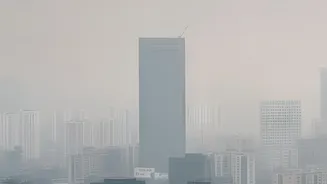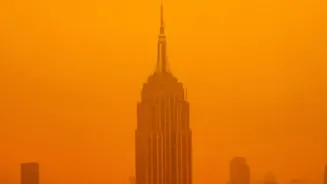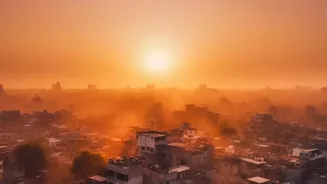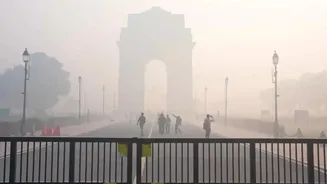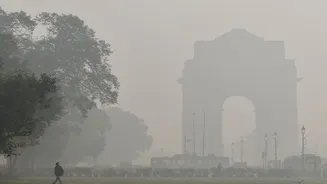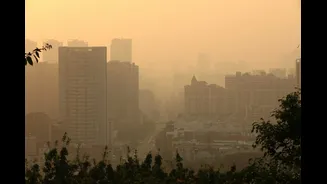






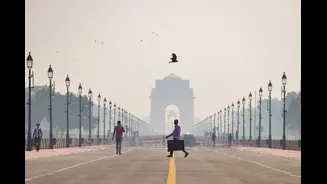
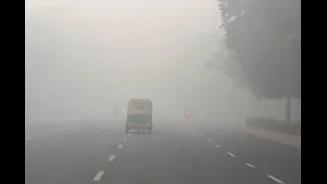
Delhi's air turned toxic again as the Air Quality Index (AQI) hovered in the 'Very Poor' category on November 10, with several areas tipping towards 'Severe' levels. This recurring public health crisis demands immediate attention and precaution.
Grasping for Breath: The Numbers on November 10
On the
morning of Tuesday, November 10, 2026, Delhi's overall Air Quality Index (AQI) was recorded at 311, firmly in the 'Very Poor' category. While this was a slight improvement from the post-Diwali spike, multiple monitoring stations reported readings that were dangerously close to the 'Severe' threshold of 401. For instance, Chandni Chowk registered an AQI of 400, while areas like Pusa were at 398. Just a day before, on November 9, the situation was worse, with firecracker emissions significantly contributing to the toxic haze. By November 11, the city's average AQI had once again worsened to 303, officially entering the 'Very Poor' bracket, signalling a persistent and dangerous pollution episode.
What 'Severe' Air Quality Means for Your Health
The Air Quality Index is divided into categories to help the public understand the health risks. An AQI between 301 and 400 is 'Very Poor', which can cause respiratory illness after prolonged exposure. When the AQI crosses 401, it enters the 'Severe' category, which is considered a public health emergency. At this level, the air can affect even healthy people and seriously impact those with existing conditions like asthma, heart disease, or other respiratory ailments. Symptoms can range from eye and throat irritation to persistent coughing, chest tightness, and difficulty breathing. The primary culprits are PM2.5 and PM10, tiny particulate matter that can penetrate deep into the lungs and even enter the bloodstream, leading to long-term health issues including heart disease, stroke, and lung cancer.
A Familiar Cocktail of Pollutants
Delhi's winter air crisis is a predictable combination of factors. Vehicular and industrial emissions create a baseline of pollution throughout the year. This is compounded by dust from large-scale construction activities. In October and November, this is exacerbated by smoke from crop residue burning in neighbouring states like Punjab and Haryana. The situation is then locked in by meteorological conditions. During winter, calm winds and cooler temperatures create a phenomenon called temperature inversion, where a layer of warm air traps cold, dense, pollutant-filled air close to the ground, much like a lid on a pot. This prevents the smog from dispersing, leading to prolonged episodes of hazardous air quality.
Official Response: The Graded Response Action Plan
In response to the deteriorating air quality, the Commission for Air Quality Management (CAQM) had already invoked Stage III of the Graded Response Action Plan (GRAP) as a precautionary measure on November 6. GRAP is a set of emergency measures that become progressively stricter as the air quality worsens. Stage III is triggered when the AQI is forecast to enter the 'Severe' category. Key restrictions under this stage include a ban on non_essential construction and demolition activities, and prohibitions on the use of BS_III petrol and BS_IV diesel four_wheelers in Delhi and surrounding NCR districts. These measures aim to curb pollution from its primary sources during critical periods.
How to Protect Yourself and Your Family
While systemic solutions are crucial, personal protection is vital for survival. The most important step is to minimise exposure. Stay indoors as much as possible, especially during early morning and late evening hours when pollution is at its peak. Avoid all outdoor exercise, including running and cycling. If you must go out, wear a well_fitted N95 or N99 mask, as simple cloth or surgical masks are ineffective against PM2.5 particles. At home, keep windows and doors closed. Using an air purifier with a HEPA filter, particularly in the bedroom, can significantly improve indoor air quality. It is also advised to wet mop floors instead of sweeping to avoid kicking up settled dust. Staying hydrated and eating a diet rich in antioxidants can also help support your body's defences.