






Mark Your Calendar for 2026
Durga Puja is a multi-day festival, but the main public celebrations and pandal hopping frenzy take place over five key days. For 2026, the primary dates to mark are from October 17 (Maha Shashthi) to October 21 (Vijaya Dashami). The excitement, however,
begins much earlier with Mahalaya on October 10, which marks the ceremonial invocation of the Goddess. Many larger pandals open to the public from as early as Maha Panchami (October 16), making for a slightly less crowded preview.
North vs. South: Choose Your Puja Vibe
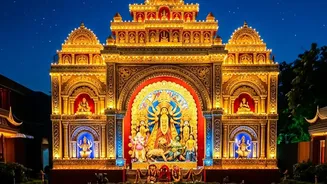
Planning is key, and the first step is understanding Kolkata's geographical and cultural Puja divide. You can't see everything, so it's best to dedicate days to specific zones. North Kolkata offers a journey into tradition. Here, you will find 'Bonedi Bari' pujas in historic family mansions and classic, soulful idols ('ek-chala') in areas like Bagbazar, Sovabazar, and Kumartuli. South Kolkata, on the other hand, is the hub of contemporary creativity, known for its spectacular theme-based pandals, ambitious art installations, and massive crowds. Areas like Ballygunge, Jodhpur Park, and Chetla showcase pandals by renowned clubs like Ekdalia Evergreen, Suruchi Sangha, and Tridhara Sammilani.
Getting Around: Your Transport Strategy
During Puja, Kolkata's streets are choked with traffic, and many roads near major pandals are closed to vehicles. Your best friend will be the Kolkata Metro, which runs extended, overnight services during the peak days. Plan your pandal hopping route around metro stations. For example, the North-South (Blue Line) is perfect for moving between zones, connecting stations like Shyambazar and Kalighat. From the station, embrace the spirit of the festival and walk. Auto-rickshaws are good for shorter distances, but be prepared for surge pricing. For a unique experience, the state transport department often runs special Puja bus and even tram services, which can be a charming way to see the city's lights.
Pandal Hopping Like a Pro
To avoid spending hours in queues, timing is everything. The biggest crowds gather between 7 PM and 2 AM. Seasoned pandal hoppers swear by two strategies: either start very early in the morning (around 6 AM) when the pandals are peaceful, or go very late, after 2 AM, when the crowds begin to thin. Keep a flexible plan. If one pandal has an impossibly long line, move on to another nearby. Wear your most comfortable shoes, as you will be walking several kilometres. Stay hydrated, and carry essentials like a power bank, as you will be out for many hours.
A Feast for the Senses
Durga Puja is as much a culinary festival as it is a religious one. While restaurant tables are hard to come by, the real feast is on the streets. Every pandal is surrounded by food stalls selling everything from Kolkata’s famous Kathi Rolls and Phuchka to Mughlai Parathas and Ghugni. Don't miss out on quintessential Bengali snacks like 'telebhaja' (fritters) and fish fry. For a truly authentic experience, try the 'bhog'—a simple but delicious community meal of khichuri, labra (mixed vegetables), and chutney served at many pandals, usually during the day.
Beyond the Pandals: Deeper Dive into the Craft
To truly understand the artistry of Durga Puja, visit Kumartuli in North Kolkata before the festival begins. This is the potters' quarter where thousands of idols are sculpted from river clay. Walking through these narrow lanes as the artisans give shape to the divine is a magical experience. Another profound experience is the 'Visarjan' or immersion ceremony on Vijaya Dashami (October 21, 2026). Head to one of the ghats along the Hooghly River, like Babughat, to witness the emotional processions as the idols are returned to the water, ready to come back again next year.