





The Basics: A Lid on the Ocean
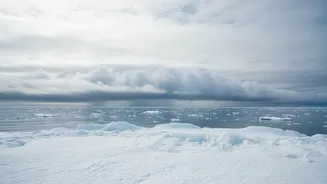
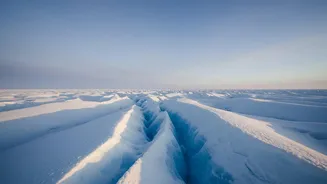
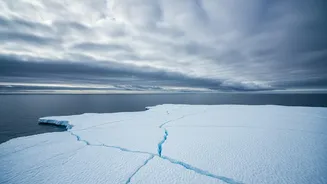
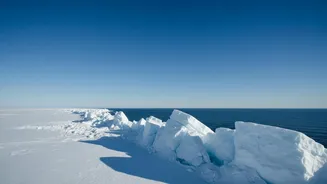
To understand what's changing, we first need to appreciate the Arctic's normal state. For most of the year, thick sea ice acts like a lid, separating the relatively warmer ocean water from the frigid, dry air above. This cap limits the amount of heat
and moisture that can escape from the sea into the atmosphere. While clouds still form, their ingredients are limited. For a cloud to exist, water vapor needs a tiny particle to condense upon, known as an aerosol or a cloud condensation nucleus. In the pristine Arctic air, these particles are naturally scarce.
A New Recipe for Clouds
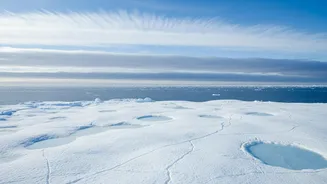
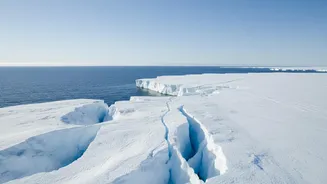
As the planet warms, this icy lid is cracking and melting, exposing vast stretches of open water. A recent study published in Nature Geoscience has shed light on a powerful new process happening at this sea-ice edge. Researchers discovered that where the open ocean meets melting ice, a unique chemical reaction occurs. Sunlight interacts with emissions from marine life, like algae, creating a burst of new particles. Specifically, a mix of iodine, sulphur, and organic compounds creates a surge of cloud-seeding particles. Scientists on an expedition observed the number of these particles increasing fifty-fold in a single day near the ice edge.
More Open Water, More Cloud Seeds
This discovery confirms a mechanism that was previously only seen in laboratory settings. As the sea ice retreats, the area where this process can occur—the marginal ice zone—grows larger. This expanding zone of open water releases more heat and moisture into the atmosphere. More importantly, it also provides the raw ingredients for this newly identified particle-production factory. One study documented the number of cloud-seeding particles jumping from about 50 to 1,500 per cubic centimeter during one of these events. This dramatic increase in aerosols means the potential for more, and different, clouds.
A Complicated Climate Feedback Loop
So, are more clouds in the Arctic a good thing or a bad thing? The answer is complicated and is at the heart of why this research is so critical. Clouds can have two opposing effects. During the day, their white tops can reflect sunlight back into space, creating a cooling effect. However, they can also act like a blanket, trapping heat radiating from the Earth's surface, which leads to warming. The recent research suggests that in the autumn, as the sun gets lower, the warming effect dominates. Low, dense clouds form over the newly ice-free water, trapping heat and preventing the sea from refreezing, which in turn leaves the water exposed for longer. This creates a positive feedback loop, where warming leads to ice melt, which leads to cloud changes that cause even more warming and ice melt.
Why Arctic Clouds Matter Globally
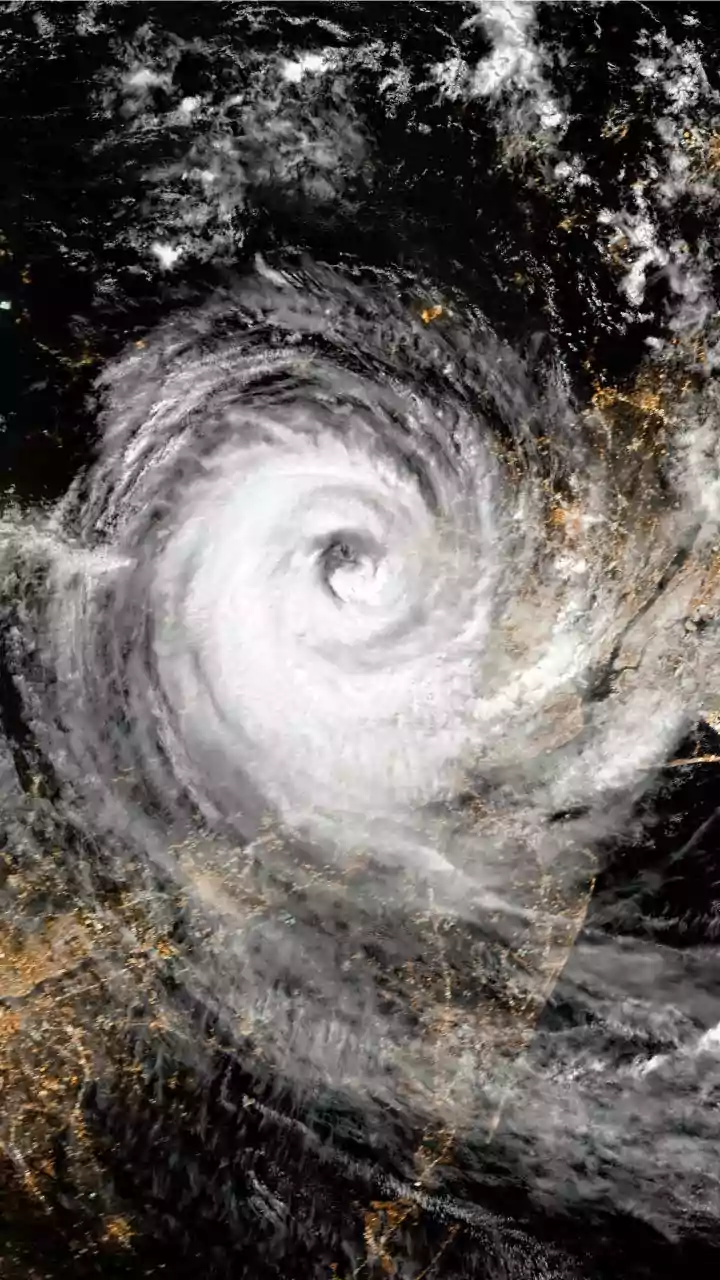
The changes in the Arctic don't stay in the Arctic. The region acts as the planet's air conditioner, and this feedback loop is turning the thermostat up. The accelerated warming has a cascading effect, influencing weather patterns far beyond the polar circle. Disruptions to the jet stream, which is influenced by the temperature difference between the pole and the equator, can lead to more extreme weather events—including heatwaves and cold snaps—in North America, Europe, and Asia. These new findings are crucial for climate scientists, as this newly discovered particle formation process is not currently included in most climate models. Adding it will help create more accurate projections about the future pace of climate change.