





Introducing the Bharatiya Antariksha Station
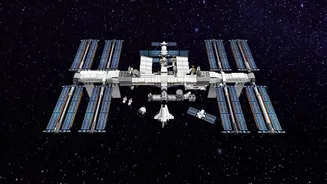
The next great leap for India's space programme is the Bharatiya Antariksha Station (BAS), a planned modular space station that will orbit the Earth at an altitude of about 400 kilometres. Envisioned as a national laboratory in space, the BAS will allow
Indian astronauts to live and work in orbit for extended periods of three to six months. The project represents a monumental shift from short-duration missions to establishing a sustained human presence in space. The station, expected to weigh around 52 tonnes upon completion, will be assembled in stages. In September 2024, the Union Cabinet officially approved the development of the first module, BAS-01, as an extension of the Gaganyaan programme, signalling a firm commitment to this ambitious goal. This initial module is targeted for launch by 2028, with the full five-module station planned to be operational by 2035.
The Gaganyaan Connection
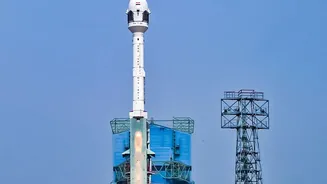
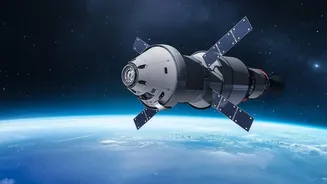
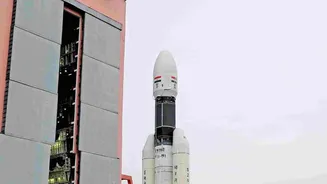
The BAS programme is not starting from scratch. Instead, it is intelligently building upon the immense technological groundwork laid by the Gaganyaan mission. According to government statements, the core technologies developed to send Indians into space are now being repurposed and evolved for the space station. This includes the powerful Human-Rated LVM3 (HLVM3) rocket, the life-support systems that create a habitable environment in the harshness of space, and the complex orbital module that houses the astronauts. Essentially, the systems designed to keep a crew safe for a few days in orbit are the building blocks for a habitat designed to last for years. The development of the BAS-01 module is now formally part of the expanded Gaganyaan programme, confirming that one is a direct successor to the other.
A Strategy of Smart Reuse
This approach of reusing and adapting existing capabilities is a hallmark of a mature and cost-conscious space programme. By leveraging the foundational technologies from Gaganyaan, ISRO can significantly reduce the development timeline and costs for the BAS. It avoids the need to reinvent critical systems, allowing engineers to focus on the new challenges of long-duration spaceflight and modular construction. This strategy also enhances reliability; systems proven during Gaganyaan's uncrewed and crewed flights will form the trusted backbone of the new station. Furthermore, this move signals a major push towards self-reliance. While some components for early Gaganyaan missions were sourced from international partners, the government has approved the indigenous development of critical technologies like flight suits, crew seats, and advanced docking systems, which are essential for the space station's assembly and operation.
A Laboratory Above the Clouds
The primary purpose of the Bharatiya Antariksha Station is to serve as a world-class platform for scientific research. The microgravity environment of space offers a unique vantage point for experiments that are impossible to conduct on Earth. Scientists will be able to study the long-term effects of weightlessness on the human body, which is critical for planning future missions to the Moon and beyond. The station will also be a hub for research in material science, pharmaceuticals, and biotechnology, potentially leading to breakthroughs in medicine and manufacturing. Beyond a research outpost, the BAS is a crucial training ground. It will allow India to master complex operations like in-orbit docking, refueling, and long-term habitation, paving the way for the nation’s goal of a crewed lunar landing by 2040.