






At first glance, cycling and skating seem like two sides of the same coin: both are beloved outdoor activities that challenge our ability to balance on wheels. But beneath the surface, they demand surprisingly different skills. So, which is which?
The Foundation: Your Core
Before
diving into the differences, it’s important to acknowledge the common ground: core strength. For both cycling and skating, a strong core—which includes your abdominal muscles and lower back—is non-negotiable. This group of muscles acts as your body's anchor, providing the stability needed to perform movements with your limbs without losing your center of gravity. In both activities, a powerful core helps transfer force efficiently, whether you're pushing a pedal down or propelling yourself forward on skates. Think of it as the stable platform from which all other balanced movements are launched.
Cycling: Stability Through Forward Motion
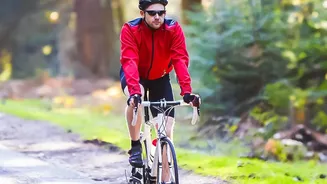
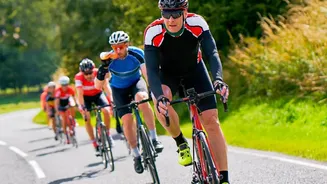
The magic of riding a bicycle is that, once you're moving, the bike largely wants to stay upright on its own. This is thanks to a combination of gyroscopic forces from the spinning wheels and the geometry of the bike's frame. The initial challenge, as any beginner knows, is getting enough momentum for these forces to take over. Balance on a bike is primarily about steering to keep your center of gravity over your wheels. Your core muscles, particularly the abdominals and erector spinae, work to keep your torso steady while your legs do the work of pedaling. Your upper body also plays a key role, with your arms and shoulders making constant, subtle adjustments on the handlebars to maintain control.
Skating: A Constant Dance with Gravity
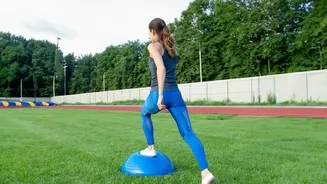
Skating, in contrast, offers very little inherent stability. Whether on inline or quad skates, you are balancing on a very small base of support directly under your feet. There's no gyroscopic effect to help you out; it's all up to your body. This requires a state of dynamic balance, where you make continuous micro-adjustments to stay upright. The challenge is amplified because you must shift your weight from one foot to the other to glide. This makes skating a more intense full-body balancing act. Muscles around the hips, particularly the abductors and adductors (inner and outer thigh), work tirelessly to control lateral movements, while your glutes and core provide overall stability. Crucially, skating heavily relies on the strength and flexibility of your ankles and calves to keep the skate directly under you.
Muscle Engagement: A Tale of Two Workouts
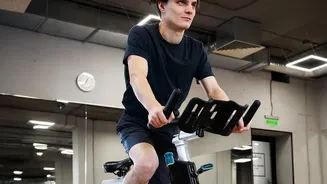
While both activities provide an excellent workout, the muscular focus for balance is distinct. In cycling, the primary power comes from the large muscles of the legs—the quadriceps, hamstrings, and glutes. The balancing work is done more by your core and upper body, which stabilize you against the frame. Skating provides a more comprehensive lower_body and core workout. It engages not just the large leg muscles but also the smaller stabilizing muscles around the hips, knees, and ankles. The side_to_side push_off motion in skating specifically targets the gluteus medius and the hip adductors and abductors, muscles that are less engaged during the forward_and_back motion of cycling.
The Learning Curve and Fear Factor
For many, cycling is easier to pick up after the initial hurdle. Once you overcome the fear of that first wobbly start and find your momentum, the bike's physics make cruising relatively stable. Falls, while potentially more severe due to speed, may be less frequent once you are proficient. Skating often has a steeper initial learning curve because stability is never a given; it must be constantly created. New skaters can expect to spend more time feeling unsteady and are likely to experience more frequent, low_impact falls. However, this process builds a deep, intuitive sense of balance and coordination that is highly rewarding.