








A World of Superlatives
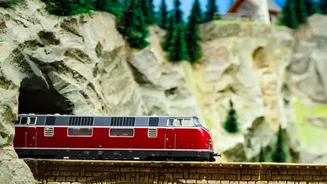
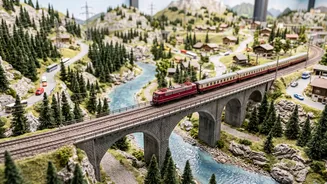
To call Miniatur Wunderland the world's largest model railway is an understatement, though it holds that Guinness World Record title firmly. Sprawling across multiple floors, this attraction boasts over 16 kilometres of track. More than 1,200 trains pull
over 12,000 wagons through meticulously crafted landscapes. But the world is populated by much more than just railways. There are nearly 290,000 tiny, hand-placed human figures, over 10,000 cars, and 52 airplanes. The entire operation, which began in 2000 as a wild idea between twin brothers Frederik and Gerrit Braun, has become one of Germany's most popular tourist attractions, drawing visitors into its ever-expanding world.
Journeys Through Miniature Lands
The magic of Wunderland lies in its distinct sections, each a detailed love letter to a different part of the world. Visitors can stroll from a replica of Hamburg to the mountains of Austria, across the American West, and through the colourful coasts of Italy. One of the earliest areas is the fictional town of Knuffingen, a bustling German city with its own unique road system. More recent additions have expanded the globe to include Rio de Janeiro and the icy landscapes of Patagonia. Each section is a marvel of construction; the Italy exhibit alone, featuring Rome and Venice, took four years and 180,000 hours to build. The Monaco and Provence section even features a tiny, functional Formula One circuit.
The Hidden Technology
What truly brings Miniatur Wunderland to life is the technology humming beneath the surface. The entire world operates on a 15-minute day/night cycle, with nearly 500,000 LEDs creating realistic sunrises and twinkling city nights. A sophisticated control centre, staffed by focused operators, oversees the complex dance of trains, cars, and even ships sailing on real water. The Car System allows hundreds of vehicles to navigate the roads independently, stopping at traffic lights and giving way to others. At the fully functional Knuffingen Airport, planes taxi, take off, and land in a stunning display of engineering that took nearly six years and four million euros to perfect.
A Universe of Tiny Stories
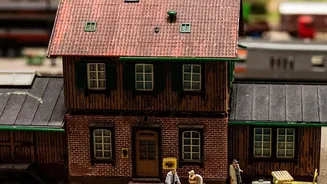
The grand scale is impressive, but the soul of Wunderland is in its microscopic details. Look closely, and you’ll find a world teeming with humour and humanity. There are thousands of hidden scenes, or 'easter eggs,' for sharp-eyed visitors to discover. You might spot a pair of lovers in a sunflower field, a scuba diver in a water fountain, or even Pippi Longstocking making an appearance. Some dioramas even tell historical stories, such as a street corner in Berlin that depicts the city's division and reunification. These tiny narratives, crafted with immense care and wit, transform the model from a technical showcase into a living, breathing world filled with stories.
An Ever-Expanding Dream
Miniatur Wunderland is not a static museum; it is a constantly evolving project. The founders and their team of over 400 employees are always building. A bridge now connects the original building to a new space across the canal, which houses the South American sections. Work is underway for future exhibits, with plans for Central America, the Caribbean, and parts of Asia and Great Britain on the horizon. This commitment to growth ensures that every visit can offer something new, another piece of the world painstakingly brought to life. It started as a dream on two pages of paper and has become a multi-million-euro testament to imagination, proving that even the biggest dreams can be built one tiny piece at a time.