


Swap Arashiyama Bamboo Grove for Hokokuji Temple
The ethereal Arashiyama Bamboo Grove in Kyoto is on nearly every travel itinerary, which guarantees a constant stream of visitors. For a truly peaceful bamboo experience, head to Hokokuji Temple in Kamakura. Nicknamed 'the bamboo temple,' Hokokuji features
a stunning grove of over 2,000 dark green bamboo stalks. Unlike the sprawling, often-crowded paths of Arashiyama, Hokokuji offers a more intimate and meditative atmosphere. A small teahouse within the grove allows you to sip matcha while gazing into the serene forest, an experience that feels a world away from the bustle. Located just an hour from Tokyo, it’s an easy and rewarding day trip.
Swap the Tokyo Metropolis for Fukuoka's Urban Charm
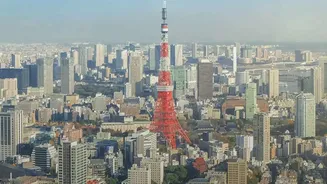
Tokyo is a dazzling megacity, but its sheer scale can be overwhelming. For a vibrant city experience that’s more relaxed and manageable, consider Fukuoka. As a port city with 1.6 million people, it offers the energy of a major urban centre without the sensory overload of Tokyo. Fukuoka is celebrated for its incredible food scene—it's the birthplace of tonkotsu ramen—and its famous yatai (open-air food stalls) provide a unique culinary adventure. The city is compact, with an airport just minutes from downtown, making it incredibly convenient to navigate. You get all the perks of city life—great shopping, art, and nightlife—but with a more laid-back vibe and fewer crowds.
Swap Hakone's Fuji Views for the Izu Peninsula
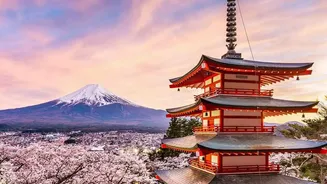
Hakone is the default choice for many visitors hoping for a glimpse of Mount Fuji. While beautiful, it can be saturated with tour groups. For equally spectacular views and a more adventurous feel, explore the Izu Peninsula. This large coastal region, part of the same Fuji-Hakone-Izu National Park, features dramatic sea cliffs, hidden beaches, and charming onsen towns that are far less crowded. Scenic driving routes like the Izu Skyline and Nishi-Izu Skyline offer breathtaking panoramas of the Pacific Ocean with Mount Fuji in the distance. It’s a destination that rewards those who venture beyond the main tourist loop, offering a mix of nature and relaxation.
Swap Fushimi Inari's Torii Gates for Motonosumi Shrine
Kyoto's Fushimi Inari Shrine, with its thousands of vermilion torii gates, is one of Japan's most iconic images, but it's also one of its most crowded. For a similar visual impact without the human traffic, journey to Motonosumi Shrine in Yamaguchi Prefecture. This stunning shrine features 123 torii gates that wind down a cliffside toward the Sea of Japan. The contrast of the red gates, green cliffs, and blue sea creates a uniquely photogenic scene that some consider even more beautiful than its famous Kyoto counterpart. While it requires more effort to reach, the reward is an awe-inspiring spiritual site you can often enjoy in relative solitude.
Swap Kyoto's Gion District for Kanazawa's Chaya Districts
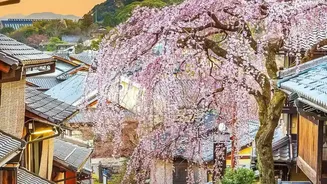
Wandering the historic streets of Kyoto's Gion district is a dream for many, but the reality can involve shoulder-to-shoulder crowds. For a beautifully preserved taste of old Japan, head to Kanazawa in Ishikawa Prefecture. Its Higashi Chaya district, a former geisha entertainment area, boasts meticulously maintained wooden teahouses, craft shops, and cafes. It offers a similar atmosphere to Gion but with a fraction of the tourists, allowing for a more leisurely and authentic stroll back in time. Kanazawa is also home to one of Japan's most beautiful landscape gardens, Kenrokuen, and a thriving contemporary art scene, making it a rich cultural alternative.