




A Galaxy Winding Down
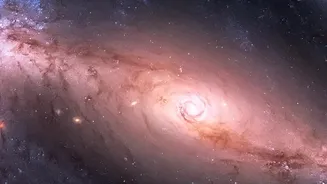
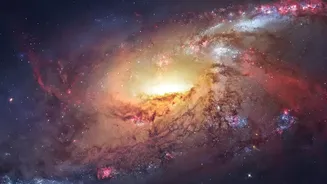
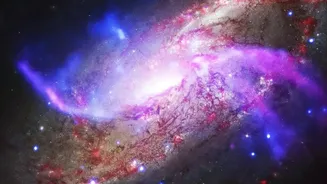
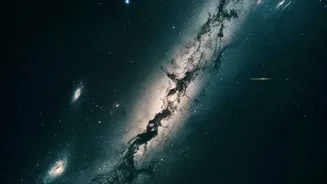
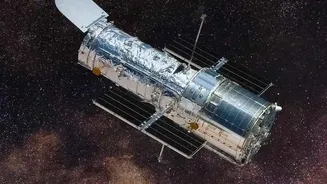
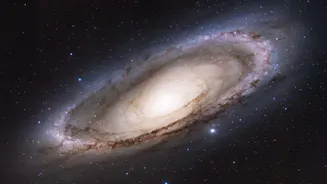
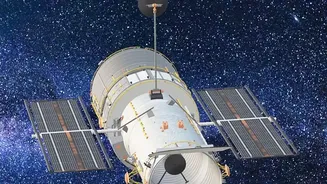
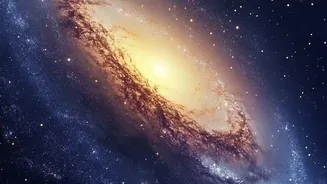
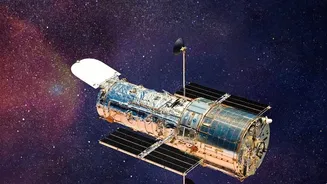
Imagine a bustling city slowly growing quiet over centuries. That's essentially what astronomers have discovered is happening in the Andromeda galaxy. New findings, based on an unprecedented survey by NASA's Hubble Space Telescope, show that the galaxy's
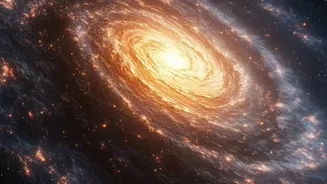
star formation has been steadily declining for the last 500 million years. The most dramatic drop has occurred in just the last 40 million years. Astronomers measure this activity by calculating how much gas and dust gets converted into stars each year. About 500 million years ago, Andromeda was creating the equivalent of one of our suns in mass each year. Today, that rate has plummeted to just one-fifth of a solar mass per year, indicating a galaxy that is transitioning from an active youth to a more sedate middle age.
Reading the Stellar Fossil Record
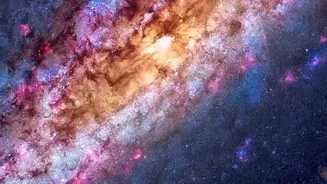
To uncover this history, scientists embarked on a colossal project, mapping two-thirds of Andromeda's sprawling disk and meticulously measuring about 200 million individual stars. This was made possible by combining data from two huge Hubble surveys. According to researchers, individual stars act as a 'fossil record' of a galaxy's life. Massive stars burn brightly with a blue light but have short lifespans, so their presence signals recent star birth. Smaller, redder stars live for much longer, so regions dominated by them are older. By dividing the galaxy into thousands of 300-light-year-wide squares and analysing the colour of the stars within each, the team could create a detailed historical map of star birth across the galaxy.
The Fading Ring of Fire
The slowdown isn't happening uniformly. The study found that much of Andromeda's most recent star-making activity has been concentrated in a prominent ring about 32,000 light-years from the galaxy's center. It is the fading of this specific ring that is driving much of the overall decline in the galaxy. This finding came after a period of intense activity about 2 billion years ago, which was likely triggered by a collision or merger with a smaller galaxy. Since that major event, Andromeda has been on a long, slow path of decreasing activity. The current slowdown is not because the galaxy has run out of the necessary gas and dust, but rather seems to be a natural winding-down process, like an athlete catching their breath after a marathon.
A Glimpse of Our Own Future?
Studying our closest large galactic neighbor is crucial because it provides a template for understanding galaxies like our own Milky Way. While Andromeda is slowing down, studies suggest the Milky Way's star formation has been more constant, or has even seen recent peaks. Understanding why these two similar-sized galaxies have such different recent histories is a key question for astronomers. Furthermore, this research offers a preview of what may lie ahead. Galaxies naturally exhaust their fuel and transition from vibrant spirals to quieter, elliptical galaxies dominated by older, redder stars. Andromeda appears to be further along in this transition. Given that our own Milky Way is destined to collide and merge with Andromeda in about 4.5 to 5 billion years, studying its current state helps us model the future of our own cosmic neighbourhood.