








The Bright Spot in a Slowing World
While many of the world's largest economies grapple with a slowdown, India is poised to maintain significant momentum. While the initial headline suggests a 7% growth, recent reports from various agencies show a dynamic picture. Moody's Analytics, in its
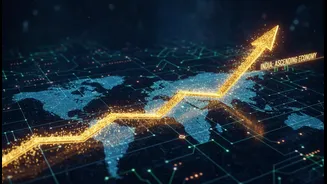
latest global outlook, confirmed India will remain the fastest-growing major economy, even if it loses some pace in line with a softer global economy. This contrasts sharply with a global growth forecast of just 2.5% for 2026. Other major economies are expected to see much slower expansion, with forecasts for China at 4.6%, the US at 2%, and the Eurozone at a sluggish 0.8%. Although some forecasts have been revised—Moody's Ratings, a sister arm, adjusted its 2026 forecast to 6.0% in May citing specific pressures—the consensus remains that India's performance will be a global standout. The IMF similarly projects strong growth, reinforcing India's leading position.
The Engine Room: Domestic Demand and Investment
The primary engine powering India's economic resilience is its strong domestic demand. Unlike export-dependent economies, India is largely cushioned from global trade volatility by its massive internal market. Resilient household consumption, supported by rising incomes and moderating inflation, continues to drive the economy forward. This is complemented by a significant push in investment, particularly from the government. A strong focus on capital expenditure, especially in infrastructure projects, has been a key growth driver, creating assets and jobs. This public investment is also expected to encourage a revival in private capital expenditure, as businesses gain confidence in the economic outlook and invest in expanding their own capacities.
Sectoral Strengths and New-Age Drivers
India's growth is not just a single story; it's broad-based. The services sector, which accounts for a significant portion of the economy, remains a powerhouse, showing robust expansion. Manufacturing has also shown improved performance, supported by domestic demand and policies aimed at making India a more competitive production hub. Looking ahead, new-age sectors are adding another layer of dynamism. Moody's has noted that the global surge in artificial intelligence (AI) has prevented a sharper economic slowdown worldwide by boosting investment in data centers, semiconductors, and computing power. Economies like India, with their strong tech sectors and focus on digital public infrastructure, are well-positioned to benefit from this K-shaped recovery, where tech-linked industries pull ahead.
Navigating the Headwinds
Despite the optimistic outlook, the path forward is not without risks. Geopolitical tensions, particularly conflicts in the Middle East, pose a significant threat. An escalation could lead to higher oil and energy prices, disrupt supply chains, and fuel inflation, which could weigh on economic activity. This is a key reason some forecasts, including one from Moody's Ratings, were trimmed. The performance of the monsoon also remains a crucial variable, as it directly impacts agricultural output and rural demand, which in turn affects food inflation. Central banks face the complex task of balancing growth against these persistent price pressures. Tighter monetary policy, if required to control inflation, could dampen business investment and household spending.