





What Are We Actually Talking About?
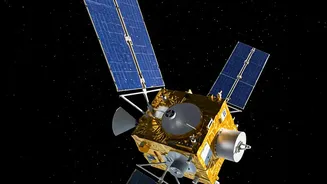
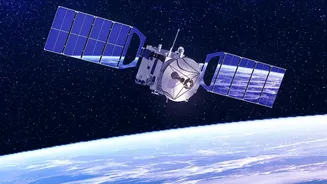
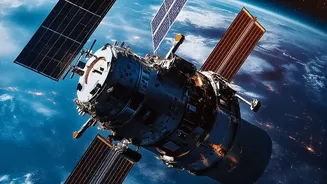
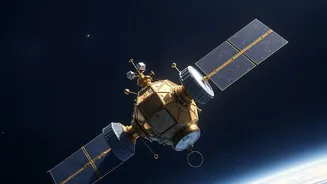
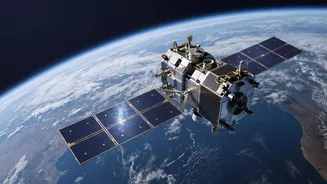
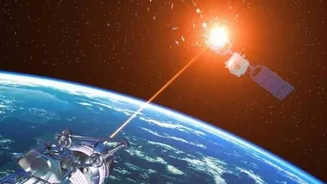
When you hear “orbital weapons,” your mind might jump to sci-fi movie scenes. The reality is both more complex and more subtle. The term covers a few categories. First are anti-satellite weapons, or ASATs, which can be launched from the ground to destroy
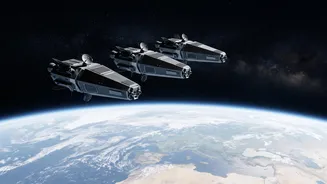
satellites in orbit. Second are “co-orbital” systems, where one satellite is designed to attack another in space. Finally, there are space-to-ground weapons, a concept that involves attacking targets on Earth from an orbiting platform. This last category includes kinetic bombardment, sometimes called “Rods from God,” where dense projectiles are dropped from orbit to strike with immense force, and systems designed to launch nuclear warheads from space.
A Cold War Idea's Modern Return
The idea of weaponizing orbit isn't new. During the Cold War, the Soviet Union developed a "Fractional Orbital Bombardment System" (FOBS). This was designed to place a nuclear warhead into a low Earth orbit, allowing it to approach a target from an unexpected direction, bypassing traditional missile defense radars. While the Outer Space Treaty of 1967 banned placing weapons of mass destruction in orbit, the technology's principles have seen a revival. In recent years, both Russia and China have reportedly tested advanced capabilities, including hypersonic glide vehicles launched from an orbital system, reigniting concerns among military strategists. A recent and direct confirmation from the U.S. that it has now deployed its own "on-orbit" weapons has dramatically escalated the situation, turning a long-held secret into a public declaration.
The High-Stakes Race in Orbit
The United States, Russia, and China are the main players in this escalating competition. For years, officials have traded accusations about the testing of anti-satellite weapons and “inspector” satellites that can maneuver close to others. The recent US announcement is the first time it has explicitly confirmed having active weapons in space. Air Force Secretary Troy Meink stated the country has "on-orbit space control weapons," although specifics were not provided. China responded by warning against turning space into a "battlefield," while Russia called for space to remain free of all weapons. Analysts warn this public confirmation could accelerate an already risky arms race, moving the world from militarization—the use of space for military support like GPS and surveillance—to outright weaponization.
Why a War in Space Is a Threat to Everyone
A conflict in space would have devastating consequences far beyond the battlefield. Modern life is critically dependent on satellites for everything from GPS navigation and financial transactions to weather forecasting and global communications. An attack on these systems could cripple economies and societies. Furthermore, using kinetic weapons—those that physically collide with their targets—creates vast clouds of space debris. This could trigger a chain reaction of collisions known as the Kessler Syndrome, where orbit becomes so cluttered with junk that it is rendered unusable for generations, trapping humanity on Earth. Russia's 2021 anti-satellite test alone created thousands of pieces of dangerous debris.
India’s Stance in the Final Frontier
As a major space-faring nation, India has significant interests in ensuring the stability of outer space. After conducting its own anti-satellite missile test (Mission Shakti) in 2019, India demonstrated its capability to defend its space assets. However, its official policy remains firmly against the weaponization of space. India has consistently advocated for a legally binding international treaty on the Prevention of an Arms Race in Outer Space (PAROS) at the United Nations. This position seeks to strengthen the existing legal frameworks to ensure space remains a domain for peaceful and cooperative activities, seeing voluntary measures as insufficient to prevent conflict.