





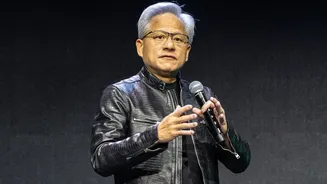

The Jensen Huang era at Nvidia is over. After three decades, the iconic founder's sudden departure raises a critical question for the tech world: what now? For Nvidia, the answer lies not in revolution, but in a disciplined focus on its established playbook.
A Steady Hand at the Helm
In the wake of Jensen Huang’s shocking resignation, Nvidia’s board moved swiftly to signal stability, appointing long-time Chief Financial Officer Colette Kress as Interim CEO. The move was widely seen as a message of continuity. Kress has been a key architect of Nvidia’s financial strategy during its explosive growth since joining in 2013 and is deeply familiar with every facet of the business. While the board has begun a formal search for a permanent successor, Kress’s appointment ensures the company remains operationally focused. Her first communications emphasized that the product roadmap and customer commitments would proceed without interruption, a sentiment echoed by new Board Chair Harvey C. Jones. This contrasts sharply with the founder-centric, and famously flat, management structure Huang was known for, where he had as many as 60 direct reports and no clear succession plan.
The AI Chip Roadmap Is Unchanged
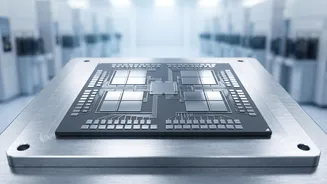
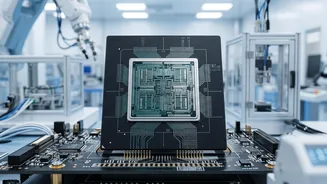
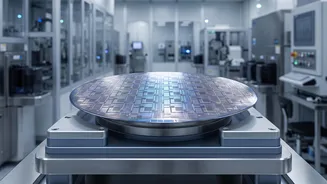
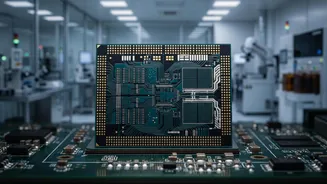
The core of Nvidia's post-Huang strategy is the relentless execution of its ambitious, multi-year product roadmap. The company has committed to an aggressive annual cadence for its data centre platforms, a strategy designed to outpace competitors, including its own hyperscale customers who are developing in-house chips. The immediate focus is on the Vera Rubin platform, slated for the second half of 2026, which is projected to deliver a significant leap in performance over the current Blackwell architecture. Looking further ahead, the roadmap extends to Rubin Ultra in 2027 and a platform codenamed Feynman for 2028. This public, long-term plan acts as a strategic weapon, signaling to the market that any investment outside the Nvidia ecosystem risks falling behind a rapid innovation cycle. Interim CEO Colette Kress confirmed that demand remains incredibly high and that the company’s plans for fiscal 2027 and 2028 are unchanged.
Doubling Down on Customer Integration
Beyond silicon, Nvidia's other pillar is its deep, strategic integration with its customers. The company has evolved far beyond a chip vendor into a full-stack platform provider, offering everything from hardware to the critical CUDA software ecosystem and AI enterprise deployment tools. This strategy creates a powerful lock-in effect, making it difficult for customers to switch providers without rebuilding their entire software stack. In the near term, the company is focused on maintaining these relationships, particularly with the major cloud providers and the thousands of AI startups it supports. The strategy involves not just selling chips, but acting as a partner in building AI infrastructure, a model some analysts have described as Nvidia acting like the 'central bank of AI'. The new leadership is expected to bring more formal scrutiny to large-scale customer financing and investment guarantees, a shift from Huang's more aggressive, founder-led dealmaking.
Navigating a New Reality
While the company's fundamentals appear solid, the transition is not without risk. Huang was not just a CEO; he was a visionary who personally drove the company's culture and strategy for over 30 years. His departure, amid a governance scandal, has created uncertainty and a significant drop in the company's stock market valuation. Analysts note that while the roadmap through 2028 was set by Huang, the real test for the new leadership will be making the right strategic bets for the years that follow. Competitors like AMD and Intel, along with the custom silicon efforts at Google, Amazon, and Microsoft, will surely look to exploit any perceived weakness during this transition period. However, with demand for its current and next-generation products outstripping supply for the foreseeable future, Nvidia has a crucial window to prove that the company's success is built on its platform and people, not just one man.