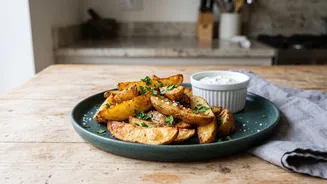





The Common Wedge Woes
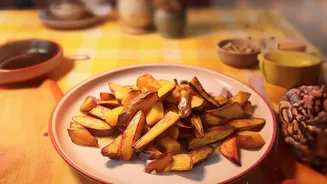
We’ve all been there. You slice your potatoes, toss them with oil and spices, and slide them into a hot oven with high hopes. Forty minutes later, you’re faced with a disappointing reality: wedges that are either burnt on the outside and still hard in the middle,
or limp, greasy, and altogether lacking that satisfying crunch. Roasting from raw is a culinary gamble. The intense heat required to crisp the outside often works too fast for the dense interior to cook through evenly. This results in that classic trade-off where you sacrifice a fluffy centre for a crisp edge, or vice-versa. It seems like a simple dish, but achieving that perfect textural contrast often ends in frustration. This is where a technique well-known to British home cooks and restaurant chefs comes into play: parboiling.
The Simple Science of Parboiling
Parboiling, or partially boiling, isn't just an extra chore; it's a scientific shortcut to a better potato. When you boil a potato, you're doing two crucial things. First, you're cooking the inside gently and evenly, ensuring it becomes tender and fluffy long before it sees the high heat of the oven. This uncouples the two cooking goals: the interior is already cooked, so the oven’s job is purely to crisp the exterior. Second, the boiling water triggers a process called starch gelatinization. The starch granules on the potato's surface absorb water, swell, and burst, creating a microscopic, sticky layer of starch gel. This rough, starchy coating is the key to a super-crisp finish. When it hits the hot oil in the oven, the water evaporates, leaving behind a dehydrated, glass-like crust that provides that sought-after crunch.
Choosing the Right Potato
While the technique is vital, the potato itself plays a starring role. For the best wedges—fluffy and crisp—you want a potato with a high starch content. Varieties like Russet or Maris Piper are often considered top-tier choices because their floury texture is perfect for creating a light interior and a crunchy crust. Medium-starch potatoes, such as Yukon Gold, are also excellent all-rounders that deliver a slightly creamier, buttery texture while still crisping up nicely. The main types to avoid are waxy potatoes, like new potatoes, as they hold their shape too well and don't have the starchy composition needed for that ideal fluffiness.
A Step-by-Step Guide to Perfect Wedges
Ready to put it all into practice? Start by cutting your chosen potatoes into even-sized wedges. Place them in a pot and cover with cold water—starting them in cold water ensures they cook evenly. Bring the water to a boil, add a generous amount of salt, and let the wedges simmer for about 5-10 minutes. You're not looking to cook them all the way through; the goal is for a fork or knife to meet slight resistance when inserted. Once they reach this stage, drain them thoroughly. Let them sit in the colander for a few minutes to allow the steam to evaporate, which helps dry the surface. For an even rougher, crispier surface, you can give the colander a gentle shake to scuff up the edges. From there, toss the wedges with your preferred oil and seasonings. Spread them in a single layer on a preheated baking sheet—don't overcrowd the pan—and roast in a hot oven (around 220°C or 425°F) for 30-40 minutes, or until deeply golden and crisp.