




A Key Test on the Road to Space
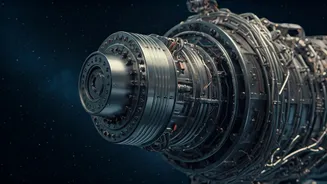
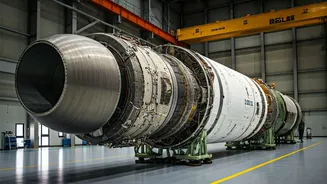
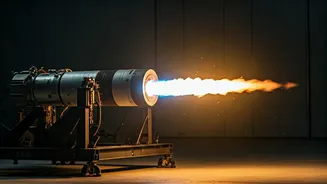
The Indian Space Research Organisation (ISRO) successfully conducted the first ground test of a new solid motor on July 3rd at the Satish Dhawan Space Centre in Sriharikota. This wasn't just any engine test; it was for a newly developed vehicle called
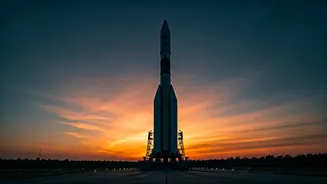
SOLVE, which stands for Sub-Orbital Launch Vehicle for Experiments. According to ISRO, the motor performed exactly as planned, validating its design and performance. This success is a significant milestone, not for the main rocket that will go to orbit, but for a specialised vehicle designed to test one of the most critical phases of the mission: getting the astronauts back to Earth safely.
Meet SOLVE: A Parachute Test Platform
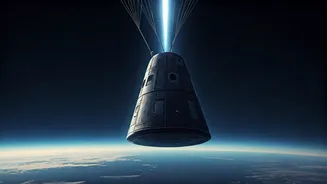
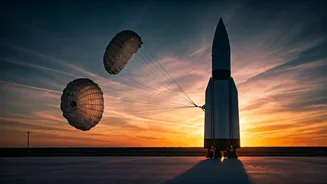
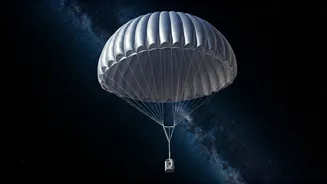
The primary job of the SOLVE vehicle is to test the parachute system for the Gaganyaan crew module. In a real mission, after the astronauts complete their time in orbit, their capsule will re-enter the atmosphere at tremendous speed. A complex sequence of parachutes must deploy perfectly to slow the module down for a gentle splashdown in the ocean. There's no room for error. This is where SOLVE comes in. It's a dedicated rocket designed to carry a test version of the crew module to an altitude of 10 to 17 kilometres and then release it. This allows engineers to repeatedly test the deployment of the entire 10-parachute sequence under various simulated flight conditions, ensuring the system is absolutely reliable before ever putting a human inside.
Proven Technology, New Purpose
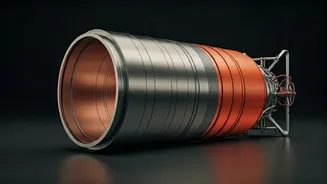
To build SOLVE, ISRO engineers cleverly adapted existing technology. The solid motor is a modified version of the strap-on boosters used on India's workhorse rocket, the Polar Satellite Launch Vehicle (PSLV). However, it has been significantly changed to meet the unique needs of these parachute tests. Modifications include a special propellant that burns more slowly to achieve the desired flight profile, a new straight nozzle design, and a secondary injection system for steering the vehicle during its short flight. By re-purposing a proven system, ISRO can accelerate development and increase the flexibility of its testing schedule, allowing for more frequent and varied test missions.
What This Means for Gaganyaan
Every successful test like this builds momentum and confidence for the entire Gaganyaan programme. The mission aims to send a three-member crew into a 400-km low-Earth orbit for a mission lasting several days before bringing them safely back to Indian waters. Before the first crewed flight, which is tentatively targeted for 2027, ISRO plans to conduct a series of uncrewed missions to validate every system. The development of SOLVE provides a robust platform for rigorously testing the crucial deceleration and landing systems, which are paramount for astronaut safety. This successful motor firing is a foundational step, clearing the way for future in-flight tests of the parachute system that will one day bring India's first space explorers home.