



The Astronauts' Only Haven
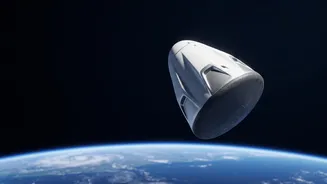
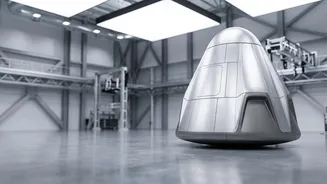
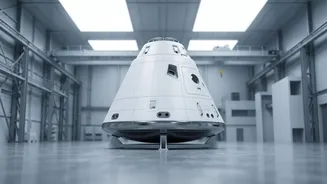
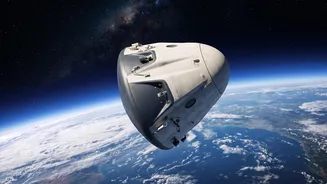
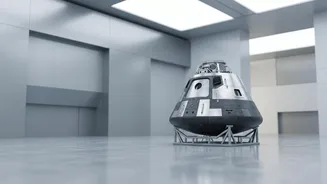
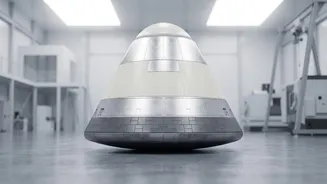
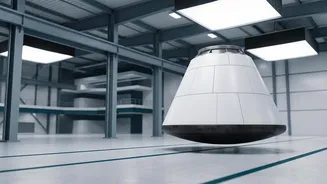
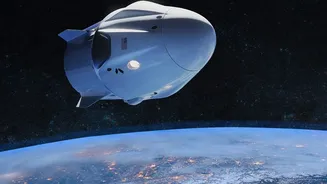
Before we dive into the tests, let's talk about the Crew Module. Think of it as the only bubble of life for India's astronauts in the harsh vacuum of space. This conical capsule, about 3.7 meters in diameter, is where the crew will live and work during
their mission in low Earth orbit. More importantly, it's their ride home, designed to protect them from the extreme heat of re-entry and splash down safely in the ocean. Given that human lives are at stake, this module is subjected to a level of scrutiny that makes the safety checks on a commercial airliner look like a brief once-over. Every single component, from its structure to its life support systems, must be proven to be reliable beyond any doubt.
The Three-Test Gauntlet
ISRO recently completed a trio of crucial qualification tests on the crew module, each designed to simulate a high-stakes moment of the mission where failure is not an option. The first is the Crew Module Up-righting System (CMUS) test. After a fiery re-entry, the capsule will splash down in the sea. But what if it lands upside down? The CMUS uses a system of floats, inflated by stored gas, to automatically flip the module into the correct, upright position, which is critical for the safety and recovery of the astronauts. The second test involves the separation of the umbilicals connecting the Crew Module to the Service Module. The Service Module provides power and propulsion in orbit, but it must be jettisoned cleanly before re-entry. This test ensures that all electrical and fluid connections detach perfectly without causing any damage. Finally, the third test validates the module's structural strength during the Apex Cover separation. This cover protects the main parachutes. To deploy them, the cover is blasted away using small explosives. The test confirms the crew module can withstand these forces without any compromise to its integrity.
Why Not Just Simulate on a Computer?
In an age of powerful computer modeling, one might ask why these expensive, time-consuming physical tests are necessary. The answer lies in the unforgiving nature of spaceflight. While simulations are essential for design, they operate on assumptions about how materials will behave. Physical tests are where theory meets reality. They are designed to push components to their breaking point, often subjecting them to forces and conditions far more extreme than they are ever expected to encounter during an actual mission. For example, the structure was tested at nearly 1.75 times the estimated load it would experience. This process uncovers hidden flaws, validates engineering models, and builds a mountain of data that gives mission controllers confidence that the systems will work flawlessly when it matters most. There are no second chances at 400 km above the Earth.
A Foundation of Trust
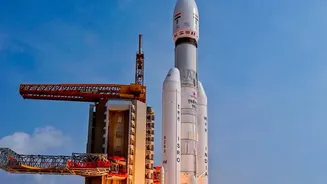
Ultimately, this intensive pre-flight testing is about building a foundation of trust. Trust for the astronauts, who will strap themselves into the capsule, and trust for the nation, which is investing its hopes and resources into this monumental undertaking. Every successful test is another brick in that foundation. The Gaganyaan program involves a series of uncrewed test flights before the first human mission, which is tentatively planned for 2027. The first of these, G1, is targeted for late 2026 and will test the entire system in a real-world space environment, albeit without a crew. These missions, informed by the ground qualification push, will demonstrate that India has mastered the complex art of not just sending humans to space, but bringing them back safely. The path to space is paved with patience, precision, and thousands of hours of testing.