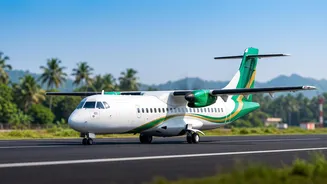










Kerala is aiming for the skies with a radical idea: an airline owned and funded by its powerful co-operative sector. The plan, greenlit by the state government, hinges on a unique business model and the leadership of one man, C N Vijayakrishnan.
A New Vision for Regional Skies
Kerala's
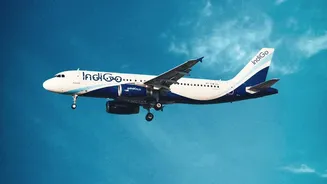
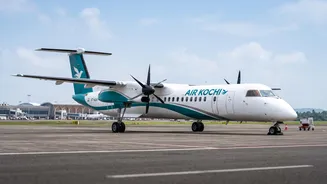
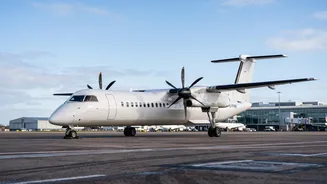
government has given its initial approval for what could be India's first airline operating under a co-operative model. Tentatively named 'Co-Keralam', the venture has been proposed by the Kerala Civil Aviation Development Cooperative Society. The announcement was made by Chief Minister V D Satheesan, who positioned the project as a testament to the strength and versatility of the state's co-operative movement, which is traditionally focused on banking and agriculture. The core objective is to enhance regional air connectivity, providing faster and more affordable travel options across southern India. Initial plans detail a modest start, leasing two 72-seater aircraft to be based in Kochi. From there, the airline aims to connect key destinations including Kozhikode, Kannur, Bengaluru, Chennai, Coimbatore, Madurai, and Mangaluru.
The Co-operative Model Explained
Unlike traditional airlines owned by large corporations or governments, Co-Keralam plans to raise capital from its member institutions. The proposed funding structure involves around 200 co-operative societies each investing ₹2 crore, which would amass an initial capital of ₹400 crore. This approach is reportedly modelled on the success of Cochin International Airport Ltd (CIAL), which was also built with a public-private partnership structure involving numerous small investors, including Non-Resident Indians (NRIs). By pooling resources from member co-operatives, the airline aims to operate without direct financial assistance from the state government. This member-ownership model means that the people and institutions funding the airline are also its key stakeholders, theoretically aligning the company's goals with community interests. The promoters officially submitted the company's registration and bylaws to the state's Cooperation Minister, marking a formal step towards making the airline a reality.
The Man Leading the Charge
At the helm of this ambitious project is C N Vijayakrishnan, a well-regarded figure in Kerala's co-operative sector. His most prominent current role is as the chairman of the MVR Cancer Centre and Research Institute in Kozhikode, a major healthcare institution that also operates under the co-operative sector. The Chief Minister highlighted that the same successful team behind the cancer centre and the Calicut City Service Cooperative Society would be working with Vijayakrishnan to launch the airline. His leadership is being presented as a key asset, bringing a track record of managing large-scale, community-focused enterprises to a notoriously difficult industry. His deep roots and success within the co-operative ecosystem are seen as crucial for rallying the necessary support and investment to get the airline off the ground.
High Stakes in a Tough Market
While the co-operative model is innovative, the Indian aviation market is notoriously challenging. The industry is characterized by high operational costs, particularly for aviation turbine fuel, intense price competition, and thin profit margins. India's aviation history is filled with airlines that failed to survive, including major names like Kingfisher Airlines and Jet Airways. These ventures collapsed due to a mix of financial mismanagement, high debt, and the unforgiving market structure. New entrants face significant hurdles competing against established players in an oligopolistic market. Co-Keralam's plan to lease aircraft is a common strategy to reduce initial capital expenditure, but it will still face the same pressures from fuel costs, regulatory hurdles from the Directorate General of Civil Aviation (DGCA), and the need to build a sustainable network. The success of the venture will depend not just on its unique funding model but on disciplined operational execution.