







The Rise of the AI Idea Machine
At the heart of the scientific method lies the hypothesis: a testable idea that forms the foundation of an experiment. Traditionally, these ideas came from human intuition, extensive reading, and moments of insight. Now, a new generation of AI tools is transforming
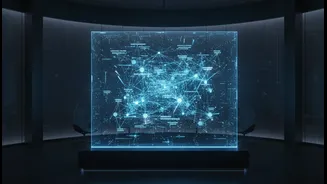
this creative process. These systems, often powered by large language models (LLMs), can analyze millions of scientific papers, genetic sequences, or climate data points in minutes. By identifying patterns and connections that are invisible to the human eye, they can generate novel hypotheses for everything from drug discovery to materials science. Tools like Google's Co-Scientist and others use AI to simulate the scientific method, proposing new research questions and even debating their merits. This accelerates the earliest, and often slowest, part of discovery.
Promise of Unprecedented Speed
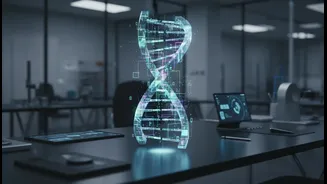
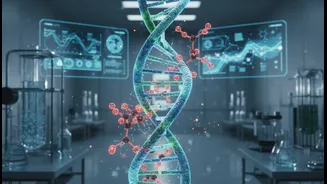
The primary promise of AI-driven hypothesis generation is speed. Research fields like genomics, pharmaceuticals, and climate science are overwhelmed with data, making it impossible for any single researcher to stay on top of it all. AI can compress what might have taken weeks of reading into hours of synthesis, suggesting new avenues of investigation that might have been missed. For instance, in medicine, AI tools can predict how different drug compounds might interact or identify genetic markers for diseases, potentially shortening the lengthy trial-and-error cycle of drug development. This doesn't just make research more efficient; it allows scientists to tackle more complex and ambitious questions than were previously possible.
The Indispensable Human Filter
Despite their power, these AI tools are not infallible scientists. They are powerful pattern-matchers, but they lack true understanding and context. The hypotheses they generate can be novel but unfeasible, statistically plausible but physically impossible, or based on biases hidden within the training data. Some AI models are known to "hallucinate," creating plausible-sounding but entirely false information, which can be dangerous in a scientific context. This is where the headline's crucial warning comes into play. The AI is a tool for ideation, not a replacement for the scientist. Every AI-generated hypothesis requires rigorous human validation, critical thinking, and, ultimately, experimental testing in the real world to prove its worth.
Verification Is the Bottleneck
The ability of AI to generate ideas now far outpaces our ability to test them. One study found that while an AI agent generated ideas that human experts rated as more novel, many were simply not feasible to test. The real bottleneck in AI-driven science is not idea generation, but verification. A scientist cannot blindly trust an AI's output, as the model may have theoretical blind spots or make statistical errors. Running physical experiments for thousands of AI-generated ideas is often too slow and expensive. This has led to a focus on creating better validation frameworks, including using separate, independent AI agents to try and find flaws in a hypothesis before it ever reaches a lab. Without this critical verification step, AI research risks becoming a flood of plausible guesses rather than a source of genuine discovery.
A New Partnership in Discovery
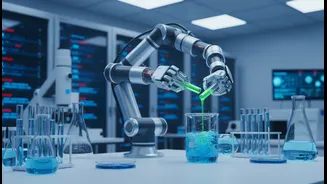
The future of science is not about humans versus machines, but about a powerful partnership. AI can serve as a tireless research assistant, augmenting human intellect and creativity by handling the immense scale of modern data analysis. By freeing up scientists from some of the more laborious parts of research, it allows them to focus on higher-level thinking: asking the right questions, designing clever experiments, and interpreting results. However, this partnership requires vigilance. Researchers must maintain oversight, question the outputs, and apply the timeless principles of the scientific method to these new tools. The risk is that an over-reliance on AI could lead to a narrowing of scientific inquiry, where researchers only ask questions that AI can easily answer.