




What Exactly Is Stone Balancing?
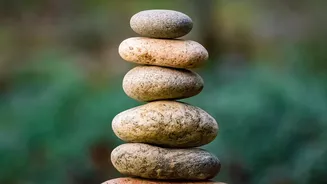
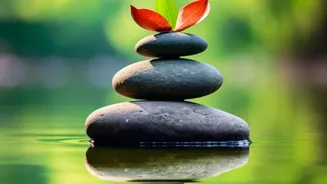
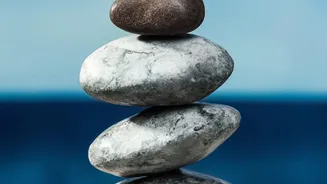
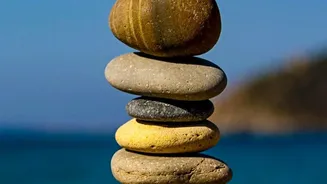
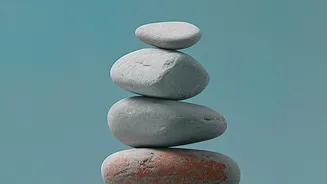
At its core, stone balancing is the art of stacking rocks in improbable and beautiful arrangements without the use of any adhesives, wires, or supports. It relies purely on the principles of gravity and finding the natural balance point of each stone.
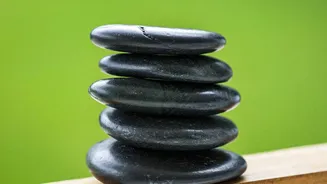
Practitioners select rocks and carefully place them one on top of another, seeking the unique points of contact that will allow the structure to stand. This can range from simple stacks of flat pebbles to complex and seemingly impossible towers of irregularly shaped rocks. The goal isn't just to build, but to enter a state of deep concentration and presence during the process.
An Outdoor Workout for the Mind
The primary benefits of stone balancing are mental. The practice demands immense focus and patience. To find the precise point where a rock will balance requires you to shut out distractions and be completely in the moment, a state often described as meditative flow. This intense concentration acts as a natural stress reliever, helping to quiet anxious thoughts. Over time, this builds mental endurance and sharpens your ability to focus on tasks in daily life. It becomes a form of active meditation, where the physical task of balancing the stones helps to balance the mind.
Improving Coordination and Physical Awareness
While deeply mental, stone balancing also offers tangible physical benefits. The delicate act of picking, positioning, and making micro-adjustments to each stone is a fantastic exercise for hand-eye coordination and fine motor skills. You learn to feel the subtle shifts in weight and the almost imperceptible "click" when a rock settles into its point of balance. This process enhances your proprioception—your body's awareness of its position in space. It's a gentle, low-impact activity that gets you outside, moving your body, and connecting with the physical world in a very tactile way.
How to Get Started with Balancing
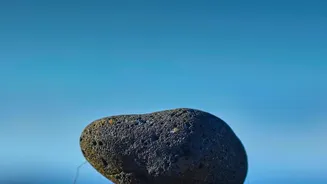
Getting started is simple, as the only equipment you need is a bit of patience and a collection of stones. Find a quiet spot outdoors, perhaps by a riverbed or on a beach. Begin by trying to balance a single longish, rounded rock on a stable base. The key is to find three points of contact, often described as a tiny triangle, between the stones. Roll the top rock gently in your hand, feeling for the small divots and bumps that will nestle together. Don't be discouraged if your stacks tumble; it's a fundamental part of the learning process. Start small, with just two or three stones, and focus on the feeling of finding that perfect, still point.
The Philosophy of Letting Go
One of the most profound lessons in stone balancing is impermanence. The structures you create are, by their very nature, temporary. A gust of wind, a rising tide, or a gentle nudge can bring them down in an instant. This teaches an important lesson in non-attachment. The joy is found in the act of creation, not in the final product. Many dedicated practitioners make a point of respectfully dismantling their creations before they leave, returning the stones to where they found them. This act symbolizes letting go and accepting the transient nature of things, reinforcing the mindful aspect of the practice.
Balancing with Respect for Nature
As the popularity of stone stacking grows, so does the need for responsible practice. It is crucial to adhere to Leave No Trace principles. Moving rocks can disturb sensitive ecosystems, dislodging insects, salamanders, or fish eggs and contributing to soil erosion. While official cairns are used by park services to mark trails, unofficial stacks can confuse hikers and detract from the natural beauty of a place for others. The most ethical approach is to enjoy the process and then gently return the rocks to their original positions, leaving the landscape as you found it for wildlife and fellow visitors to enjoy.