





The Date Was a Personal Choice
The date of India's independence was not the result of a long-drawn-out negotiation but a personal decision by the last Viceroy, Lord Mountbatten. The British government had initially set a deadline of June 1948 for the transfer of power. However, Mountbatten,
fearing escalating tensions, advanced the date. He chose August 15 because it marked the second anniversary of Japan's surrender to the Allied forces in World War II, a moment he considered lucky from his time as the Supreme Allied Commander in South East Asia.
Our National Flag's Evolution
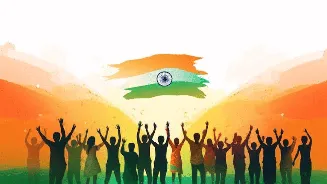
The Tiranga we salute today went through several changes. A design was first presented to Mahatma Gandhi by Pingali Venkayya in 1921, which featured red and green stripes with a spinning wheel. After modifications to represent all communities and ideals, the Constituent Assembly officially adopted the present-day flag on July 22, 1947. The final version replaced the spinning wheel (charkha) with the Ashoka Chakra, a symbol of the eternal wheel of law.
India Isn't Alone in a Day of Celebration
India shares its day of freedom with five other countries. North and South Korea celebrate their liberation from Japanese rule on August 15, 1945. The Republic of the Congo gained independence from France on this day in 1960. Bahrain declared its independence from the British in 1971, and the European microstate of Liechtenstein also celebrates its National Day on August 15.
The National Anthem Came Later
While Rabindranath Tagore's 'Jana Gana Mana' resonates with national pride, it was not adopted as the official national anthem on August 15, 1947. The Constituent Assembly officially declared it so much later, on January 24, 1950. However, it was not absent from the original independence proceedings. A version of the song was unanimously sung at the closing of the Constituent Assembly session on the night of August 14, 1947, heralding the birth of a free India.
Gandhi Was Not in Delhi
In a poignant turn of events, the 'Father of the Nation', Mahatma Gandhi, was not present in Delhi for the first Independence Day celebrations. Deeply pained by the Partition and the ensuing communal violence, he was in Calcutta (now Kolkata). Instead of celebrating, he spent the day fasting and praying in an effort to bring peace between Hindus and Muslims in the riot-torn region.
The Partition Line Was Kept Secret
The boundary line that divided British India into India and Pakistan, known as the Radcliffe Line, was ready by August 12, 1947. However, Lord Mountbatten made the controversial decision to not make it public until August 17, two days after independence. The delay was intended to prevent the news of contentious border placements from spoiling the independence celebrations in both nations, but it left millions of people in a state of uncertainty about which country they belonged to when freedom finally arrived.
Not All of India Became Free That Day
While August 15, 1947, marked the end of British rule for most of India, some parts of the country were still under foreign control. Goa, Daman, and Diu remained Portuguese colonies for another 14 years. It was only in December 1961, after a 40-hour military action named 'Operation Vijay', that these territories were liberated and integrated into the Indian Union.
The First Red Fort Ceremony Was on August 16
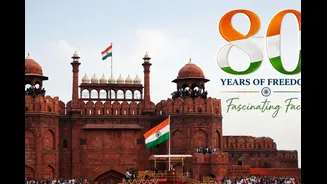
The iconic tradition of the Prime Minister hoisting the national flag at the Red Fort did not begin on the first Independence Day. Jawaharlal Nehru delivered his famous 'Tryst with Destiny' speech to the Constituent Assembly at midnight. He hoisted the flag above the Lahori Gate of the Red Fort for the first time on the morning of August 16, 1947, not August 15. That day's event marked the start of a tradition that continues to define our modern celebrations.
The Last Viceroy Became the First Governor-General
In an unusual transition of power, Lord Mountbatten did not simply hand over control and depart. At the request of Jawaharlal Nehru, he stayed on after independence to serve as the first Governor-General of the newly formed Dominion of India. He held this largely ceremonial post until June 1948, helping to provide administrative continuity during the turbulent early months of the new nation.
The Act That Made It Official
India's freedom was formally sealed by a piece of legislation passed in the British Parliament. The Indian Independence Act of 1947, which received royal assent on July 18, 1947, laid down the legal framework for the end of British rule. It set the date of August 15 and provided for the partition of British India into two independent dominions, India and Pakistan, officially transferring all legislative authority to their respective constituent assemblies.