





The Allure of Softness and Texture
The primary advantage of choosing a textile over a traditional painting or print is its ability to introduce softness and depth. Unlike a flat, glass-fronted frame, a woven or fabric piece has a three-dimensional quality that interacts with light, creating
subtle shadows and highlighting its texture. This tactile nature instantly makes a space feel more inviting and comfortable. Textiles also offer a surprising acoustic benefit; in rooms with high ceilings or hard flooring, a large fabric hanging can help absorb ambient sound, reducing echo and creating a calmer environment. This move toward materials with a handmade, authentic feel is a growing trend in modern design, as homeowners seek to create spaces that feel personal and unique.
Beyond the Traditional Tapestry
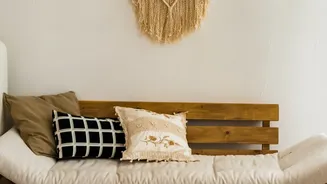
When you think of a large wall hanging, a medieval tapestry might come to mind, but the options today are incredibly diverse. Vintage or contemporary quilts can add a sense of history and craftsmanship. Lightweight rugs, such as a colourful kilim or a patterned dhurrie, make for stunning, graphic focal points. Hand-woven macrame or intricate fibre art can introduce a bohemian or minimalist feel, depending on the design. Even a large piece of beautifully printed fabric, like silk or a high-quality linen, can be stretched over a frame or hung from a dowel to create a custom piece of art. Many artists and makers create pieces from sustainable materials like organic cotton or recycled fibres, offering an eco-friendly choice.
Mastering the Golden Rule of Scale
The key to successfully incorporating an oversized textile is getting the proportions right. A piece that is too small for the wall will look lost, while one that is too large can make the room feel cramped. A reliable interior design guideline is the two-thirds rule. When hanging art above a piece of furniture like a sofa, bed, or console table, the textile should ideally span about two-thirds to three-quarters of the furniture's width. For a large, empty wall, the art should cover roughly 60-75% of the available space you intend to fill, leaving enough blank 'breathing room' on all sides. Before committing, you can test the size by outlining the dimensions on the wall with painter's tape to get a feel for its visual weight in the room.
Hanging With Confidence
How you hang your textile depends on its weight and style. A simple and elegant method for many pieces is to use a curtain rod or a wooden dowel. You can sew a channel or sleeve onto the back of the textile to slide the rod through, then mount it with brackets. For lighter fabrics, strong adhesive strips can work well for a damage-free option. Heavier items like rugs may require a more robust system, such as a sturdy support board with Velcro attached or a professional gallery-style clip system to distribute the weight evenly and prevent damage to the textile. As a general rule for placement, the centre of the artwork should hang at average eye level, which is typically about 57 to 60 inches from the floor.
Creating a Cohesive Look
To ensure your new textile feels like an intentional part of the room's design, pull the look together with other elements. One of the easiest ways to do this is through colour. Pick one or two accent colours from the textile and repeat them in smaller doses around the room, such as in throw pillows, a vase, or other decorative objects. This creates a sense of harmony without being overly matched. You can also create interest by mixing textures; if your wall hanging is a chunky wool weave, contrast it with smooth leather or sleek metal finishes elsewhere in the room to create a rich, layered look.