







The Panic Behind the Plastic Box
For most cats and many dogs, the carrier is not a neutral object. It appears only before something unpleasant happens: a car ride, a trip to the groomer, or, most commonly, a visit to the veterinarian. This predictable pattern teaches them to associate
the carrier with stress, fear, and unfamiliar environments. The moment it emerges from the closet or garage, their anxiety spikes, leading to hiding, hissing, or struggling. This negative association is a learned behavior, and the good news is that it can be unlearned with patience and a new approach.
Make the Carrier Part of the Furniture
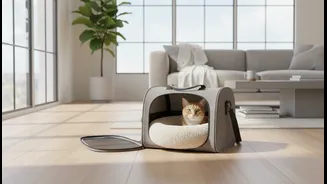
The single most effective strategy is to stop hiding the carrier. By leaving it out in a common area where your pet spends a lot of time, you begin to neutralize its power. It transforms from a harbinger of doom into just another piece of furniture. This process of desensitization allows your pet to investigate the carrier on their own terms, without pressure. Over time, they learn that its presence is not an immediate threat. This constant access helps it become a familiar and normal part of their territory.
From Scary Box to Safe Haven
Once the carrier is a fixture in your home, the next step is to make it an inviting space. The goal is to transform it from a cage into a cozy den. Start by placing soft, familiar bedding inside; a blanket or towel that carries your scent can be especially reassuring. Toss high-value treats, favorite toys, or a sprinkle of catnip inside to encourage exploration. You can also begin feeding your pet their meals near the carrier, gradually moving the bowl closer and eventually placing it just inside the open door. These positive associations help overwrite the old, fearful ones, teaching your pet that good things happen in and around the carrier.
A Step-by-Step Guide to Acceptance
With the carrier established as a positive space, you can begin short, voluntary training sessions. Never force your pet inside. Once they comfortably enter to retrieve treats or eat, you can practice closing the door for just a few seconds, offering praise and another treat, and then opening it again. Gradually increase the duration the door is closed, always ensuring your pet remains calm. The next stage is to lift the carrier and move it to another room before letting them out. Eventually, you can progress to short 'practice trips'—a drive around the block that ends immediately back at home with a reward. This teaches them that not every journey in the carrier ends at the vet.
Choosing the Right Carrier Matters
The design of the carrier can also influence your pet's comfort level. For many animals, a carrier with a removable top or a large top-loading door is less stressful, as it allows you to lower them in gently rather than pushing them through a small front opening. Proper sizing is also crucial; the carrier should be large enough for your pet to stand up and turn around comfortably. Good ventilation is a must for safety and comfort. A sturdy, well-designed carrier is not just a tool for transport; it's a key component of your pet's safety and well-being during travel.