


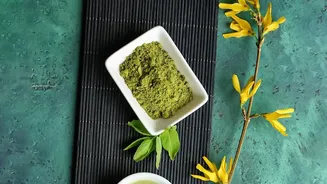
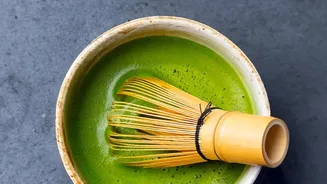
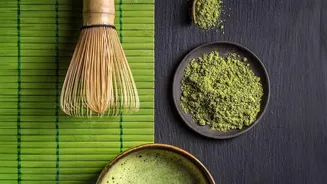
What Exactly Is Matcha?
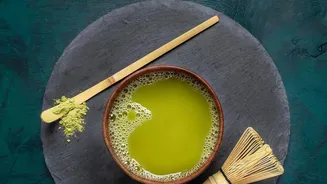
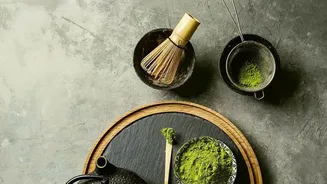
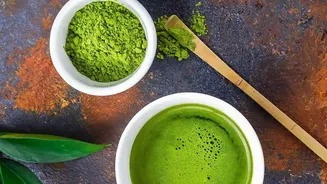
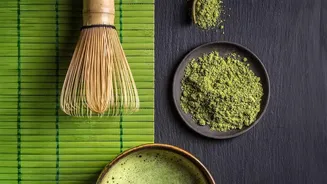
Before it was a trendy latte flavour, matcha was a cornerstone of Japanese tea ceremonies for centuries. Unlike regular green tea where you steep the leaves and discard them, matcha is a finely ground powder made from specially grown tea leaves. This
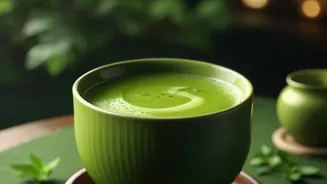
means when you drink matcha, you are consuming the entire leaf, unlocking a more potent concentration of its nutrients, flavour, and vibrant colour. The process involves shading tea plants before harvest to increase chlorophyll and amino acids, which gives matcha its distinctive bright green hue and a complex flavour profile that balances earthy, umami, and slightly sweet notes.
The 'Calm Alertness' Effect
Much of matcha's modern appeal lies in its unique health profile, particularly as an alternative to coffee. While it does contain caffeine, sometimes at levels comparable to a cup of coffee, the effect is noticeably different. This is due to a rare amino acid called L-theanine, which is abundant in shade-grown matcha. L-theanine promotes the production of alpha waves in the brain, which are associated with a state of relaxed concentration. The synergy between L-theanine and caffeine is known to provide a sustained, jitter-free energy boost that can last for hours, followed by a gentle tapering off—avoiding the infamous 'caffeine crash' many experience with coffee.
An Instagram-Ready Aesthetic
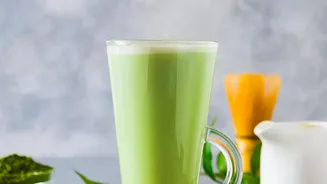
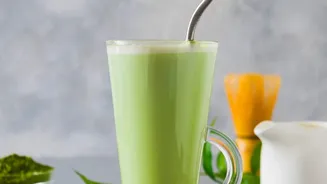
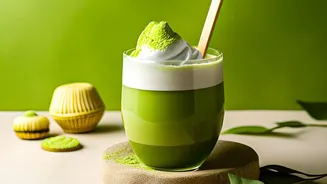
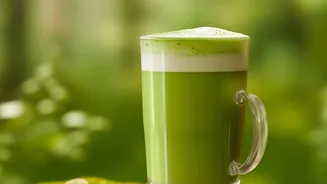
You can't talk about matcha's boom without mentioning its visual appeal. Its brilliant green colour makes for stunningly photogenic lattes, desserts, and smoothies, turning every cup into a potential social media post. In India, where millennial and Gen Z consumers are increasingly exposed to global trends, matcha has become both a wellness statement and a lifestyle accessory. This has created a virtuous cycle: cafes introduce beautiful matcha creations to attract customers, who then share photos online, boosting the drink's visibility and desirability further. The trend has moved beyond drinks, with 'matcha' becoming an aesthetic that influences everything from face masks to fashion.
The Trend in India
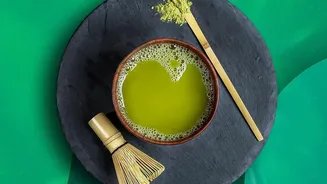
In a nation with a deep-rooted tea culture, matcha isn't replacing masala chai, but rather finding its own place alongside it. Its growth is fastest in urban centres like Delhi, Goa, and Chandigarh, where a thriving cafe culture and a focus on wellness have created the perfect environment for it to flourish. The Indian market, valued at over USD 40 million in 2024, is growing at nearly double the rate of the traditional tea market. This growth is driven by consumers who are not just buying lattes but are investing in the experience. A 1,300% surge in searches for 'how to make matcha' in India over the past year shows a clear shift from cafe curiosity to a home-brewing ritual, with people also searching for whisks and bowls.
Beyond the Basic Latte
The versatility of matcha powder is a key part of its success. In India, culinary creativity is adapting the flavour to local tastes. Cafes and home cooks are experimenting with inventive combinations, leading to breakout search interest for drinks like strawberry matcha, mango matcha, and 'dirty matcha' (a latte with a shot of espresso). Beyond beverages, matcha is being infused into everything from kulfi and laddoo to cheesecakes and protein bars, proving its adaptability and sparking a green revolution in kitchens across the country.