

When Ash Grounded a Continent
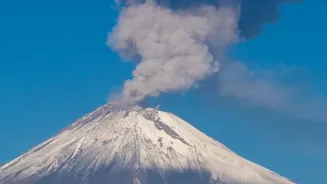
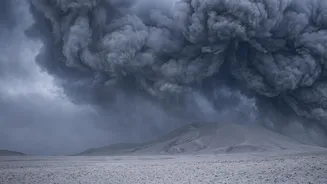
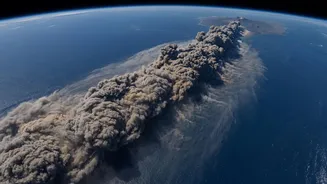
In April 2010, the eruption of Eyjafjallajökull in Iceland demonstrated the modern world's vulnerability to volcanic ash. While not a massive eruption in geological terms, its timing and location were critical. The fine ash plume drifted directly into
some of the busiest airspace in the world, paralysing European aviation for nearly a week. More than 100,000 flights were cancelled, affecting around 10 million passengers. The economic impact was staggering, with the airline industry losing an estimated $1.7 billion and total costs to the global economy reaching as high as $5 billion. Industries far from Iceland felt the pain; for instance, Kenyan farmers had to destroy tonnes of fresh flowers and produce that they were unable to export to Europe, leading to daily losses in the millions and temporary layoffs for thousands of workers. This event was a stark wake-up call, exposing how a single eruption could sever vital arteries of global trade and travel.
The Eruption That Reached for Space
The 21st century's largest volcanic event so far occurred on January 15, 2022, when the Hunga Tonga-Hunga Haʻapai submarine volcano exploded. The blast was hundreds of times more powerful than the atomic bomb dropped on Hiroshima and generated atmospheric shockwaves that circled the Earth multiple times. Unlike most eruptions that are rich in sunlight-blocking sulphur, this one was unique because it injected an unprecedented amount of water vapour—equivalent to about 10% of the total water in the stratosphere—deep into the atmosphere. This has created a complex and fascinating natural experiment for scientists. While major eruptions like 1991's Mount Pinatubo caused global cooling, the massive water injection from Hunga Tonga has scientists studying its potential for a slight, temporary warming effect on the surface and its impact on the ozone layer. The event showcased a new type of volcanic threat and provided invaluable data on atmospheric physics.
A Devastating Human Toll
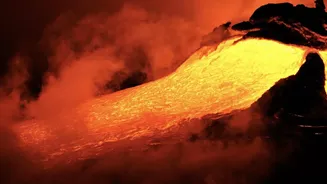
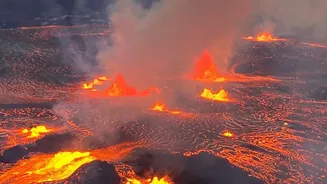
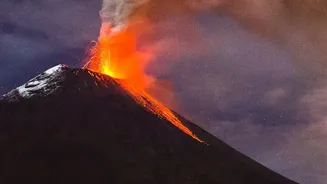
Beyond the global economic and atmospheric effects, many 21st-century eruptions have had a devastating and immediate impact on human lives. The 2010 eruption of Mount Merapi in Indonesia, its largest since the 1870s, killed 386 people and forced the evacuation of over 350,000. Pyroclastic flows—fast-moving currents of hot gas and volcanic matter—destroyed entire villages. Similarly, the eruption of Mount Nyiragongo in the Democratic Republic of Congo in 2021 sent lava flows into the outskirts of Goma, a city of two million people. More than 3,500 homes were destroyed, leaving 20,000 people homeless and cutting off water access for half a million residents. These events highlight the tragic reality for communities living in the shadow of active volcanoes, where eruptions can erase homes, livelihoods, and lives in a matter of hours, often compounding existing humanitarian crises.
Lessons in Monitoring and Resilience
Each major eruption has served as a crucial lesson, driving advancements in monitoring, forecasting, and our collective response. After the Eyjafjallajökull crisis, aviation authorities and volcanologists collaborated to refine how they define and measure dangerous levels of ash, allowing for more nuanced airspace management. This paid off; when Iceland's Grímsvötn volcano had a much larger eruption in 2011, flight cancellations were only a fraction of what they were in 2010. The Hunga Tonga eruption, captured in unprecedented detail by satellites, has given scientists a treasure trove of data to improve models that predict atmospheric effects and even tsunami generation from underwater volcanoes. While we cannot stop volcanoes from erupting, these events have accelerated our ability to anticipate their impacts and build a more resilient global community.