





A Prehistoric Puzzle
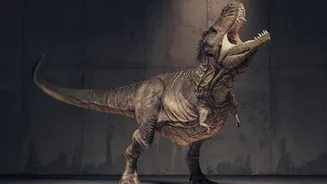
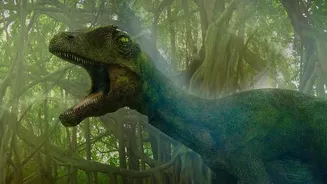
For over 150 million years, dinosaurs dominated nearly every corner of the planet, evolving into an incredible array of shapes and sizes. We are familiar with the titans like Tyrannosaurus rex and the colossal long-necked sauropods. Yet, paleontologists
have long been stumped by a curious gap in the fossil record. While today’s ecosystems are filled with tiny vertebrates—from mice and shrews to hummingbirds and geckos—the era of dinosaurs seems to have a size floor. Even the smallest known non-avian dinosaurs, like Microraptor, weighed around 450 grams, roughly the size of a rabbit. In contrast, the vast majority of modern bird and mammal species are smaller than this. This absence is strange because small-bodied species are typically the most common in any ecosystem, not the rarest. For years, scientists wondered if this was simply a quirk of the fossil record—small bones are harder to preserve—or if something in dinosaur biology prevented them from shrinking.
It’s Not a Biological Problem
A recent study published in the journal Evolution sought to solve this mystery. Researchers from Princeton University and the American Museum of Natural History used sophisticated mathematical models to test if dinosaur physiology was the limiting factor. These models predict the body sizes that natural selection should favor based on how animals use energy and reproduce. The models worked perfectly for modern animals like mammals, birds, and turtles, accurately capturing their range of body sizes. However, when the same models were applied to non-avian dinosaurs, they failed. Even after testing a wide range of potential biological scenarios, the models consistently predicted that tiny dinosaurs, far smaller than anything found in the fossil record, should have existed. The conclusion was clear: the reason for the absence of truly small dinosaurs was not a limitation of their internal biology. Something else was stopping them.
The New Suspects: Early Mammals
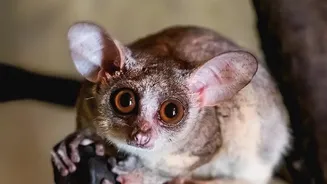
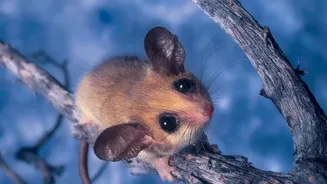
If biology wasn't the barrier, the researchers proposed, the answer must be ecological. The new explanation points the finger at a surprising group of animals: our own ancestors. During the Mesozoic Era, while dinosaurs ruled the day as large and medium-sized animals, early mammals were already thriving in the shadows. These mammals were mostly tiny, shrew-like creatures, occupying the very ecological niches—foraging for insects and seeds in the undergrowth—that a mouse-sized dinosaur would need to inhabit. The hypothesis is that these early mammals were so effective at living the small-critter lifestyle that they created intense competition for food and resources. Essentially, dinosaurs may have kept mammals from evolving into large sizes, but in return, mammals effectively locked dinosaurs out of the market for being tiny. The niches for animals smaller than a rabbit were already taken, preventing dinosaurs from shrinking down to fill them.
The Bird Exception
This new theory also provides a compelling explanation for one of the greatest success stories in evolution: the rise of birds. Birds are direct descendants of dinosaurs, yet they have successfully evolved into an astonishing variety of tiny sizes, from the sparrow to the bee hummingbird, the smallest vertebrate in the world. According to the new research, the key to this success was flight. By evolving the ability to fly, early birds were able to access entirely new ecological opportunities that were unavailable to their ground-dwelling relatives. They could exploit different food sources, escape ground-based predators, and move into aerial niches that were completely free from the intense competition with small mammals below. This evolutionary escape hatch allowed the avian branch of the dinosaur family tree to break through the size floor that constrained other dinosaurs, leading to the explosive diversification and miniaturization that characterizes modern birds.