






The Soaring Heat Challenge
Data centres are the humming factories of the digital age, and keeping them cool is their biggest operational challenge. Cooling can account for up to 40% of a facility's total energy consumption. Historically, this has been managed with massive air conditioning
systems. However, the hardware that powers modern AI, particularly graphics processing units (GPUs), generates heat in a much more concentrated way. Traditional air cooling, which struggles to handle rack densities beyond 15 kW, is simply hitting a wall when faced with AI workloads that can demand 50 kW per rack or even more. This intense heat not only risks equipment failure but also drives up energy costs and environmental impact, forcing the industry to seek smarter solutions.
What is Closed-Loop Cooling?
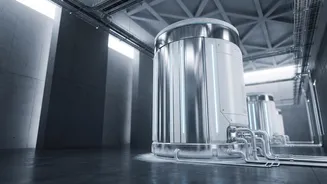
Enter closed-loop cooling, a method that brings cooling much closer to the source of the heat. Instead of chilling an entire room, these systems use a sealed circuit of liquid coolant—often treated water or a special fluid—that circulates through pipes to absorb heat directly from server racks. Think of it like a car's radiator: the liquid absorbs heat from the engine (the servers) and carries it away to be dispersed, all without the fluid itself being exposed to the open air. This approach can take several forms, from heat exchangers on the back of server racks to liquid piped directly to the processors themselves, a technique known as direct-to-chip cooling. The key principle is that the coolant is continuously recycled within a closed system, making it fundamentally different from older, water-intensive methods.
The Efficiency and Water-Saving Edge
The primary benefits of closed-loop systems are immense gains in efficiency and sustainability. Because liquids transfer heat far more effectively than air, these systems require significantly less energy to operate. More critically, they address the massive water consumption associated with traditional data centres. Many large facilities use evaporative cooling, which can consume millions of gallons of water per day—as much as a small city. Closed-loop systems, by contrast, are not designed to evaporate water. They can reduce freshwater use by up to 70% or more because the same water is used over and over, with only minimal amounts needed to top up the system during maintenance. This drastically reduces a data centre's impact on local water supplies, a growing concern in many regions.
Not a Simple Switch
Despite the clear advantages, transitioning to closed-loop cooling isn't without challenges. The upfront installation costs are typically higher than for conventional air-cooling systems. Retrofitting existing data centres can be complex and expensive, requiring specialized racks and plumbing. There are also new operational complexities. These systems require precise management of coolant quality to prevent corrosion or leaks, which could be catastrophic if they occur near sensitive electronics. Furthermore, liquid cooling creates a tighter link between IT systems and facility infrastructure, demanding greater coordination between teams to manage everything from flow rates to temperature setpoints.
The Future of Data Centre Design
The challenges are significant, but the market is clearly heading toward liquid-based solutions. The global data center liquid cooling market is projected to grow substantially, with some forecasts predicting it will reach over USD 13 billion by 2035, driven almost entirely by the demands of AI. As AI workloads become the standard, cooling solutions like closed-loop systems are no longer a niche option but a necessity. They enable the high-density computing required for training and running advanced AI models, something that is becoming impossible with air alone. This shift represents a fundamental redesign of data centre architecture, prioritizing targeted, efficient heat management as a core component of performance.