

The Essential Nimki
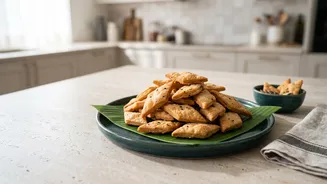
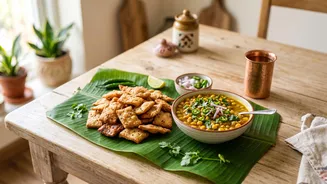
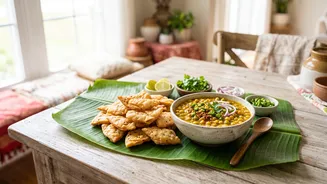
No Bijoya platter is truly complete without the quintessential nimki. These small, diamond-shaped, savoury crackers are a triumph of texture. Made from a simple dough of flour, nigella seeds (kalonji), and salt, they are deep-fried to achieve a perfect,
flaky crunch. Nimki can be enjoyed on its own, a delightfully salty munchable that pairs beautifully with a cup of hot tea. Historically made in homes specifically for the Bijoya period, these snacks are perfect for storing in large batches, ensuring no guest ever leaves without having their fill. Their crispiness provides a wonderful contrast to the array of sweets that are also central to the celebration.
Hearty, Wholesome Ghugni
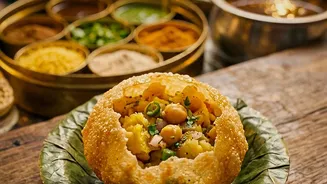
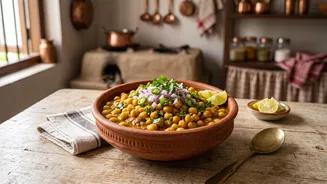
Ghugni is the comforting, warm embrace in a bowl that every Bijoya visitor looks forward to. This flavourful curry is made from dried yellow or white peas, slow-cooked to tender perfection. The beauty of ghugni lies in its versatility. Often prepared 'niramish' (vegetarian, without onion or garlic) for festive occasions, it's simmered with spices and sometimes garnished with fried coconut pieces, chopped onions, and a sprinkle of 'bhaja moshla'—a special roasted spice blend. It serves as a fantastic standalone snack or as a companion to luchi or nimki, making it a beloved staple of Bijoya gatherings.
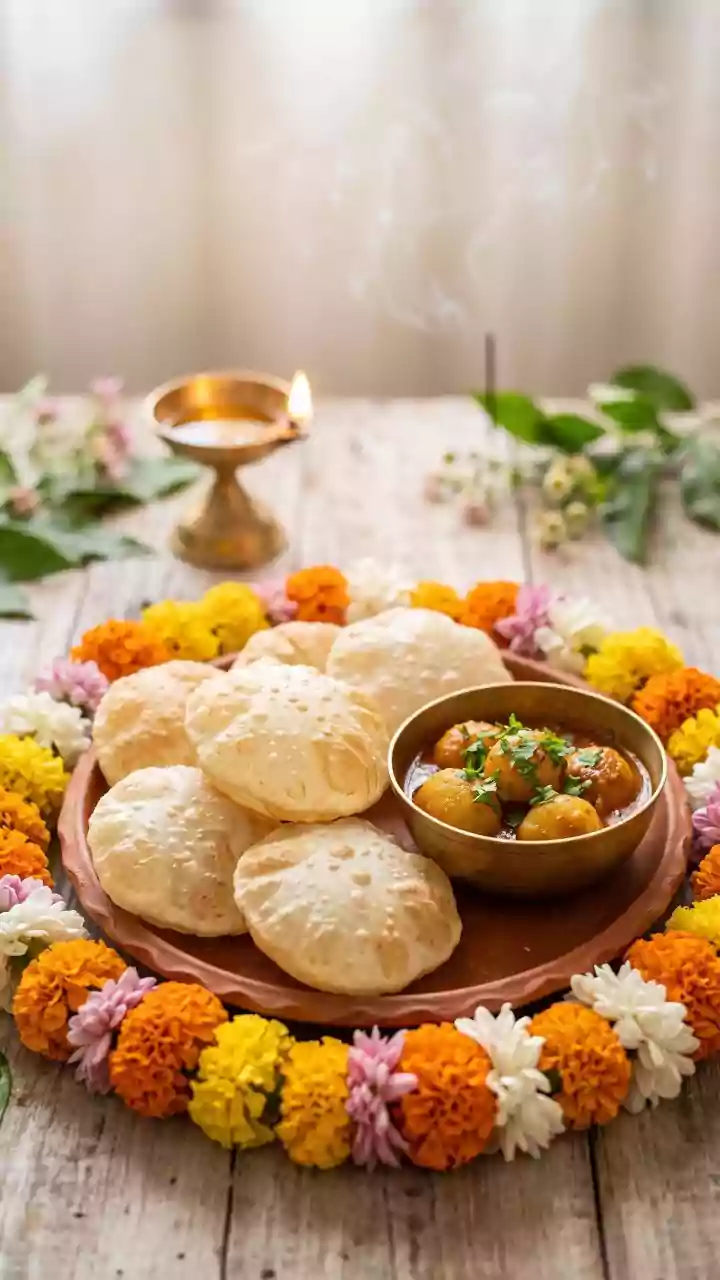
The Classic Luchi and Alur Dom
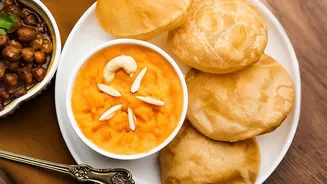
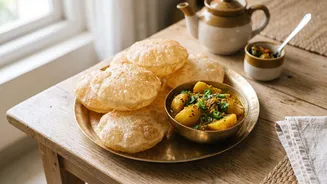
More than just a snack, the combination of Luchi and Alur Dom is a mini-feast in itself and a hallmark of Bengali festive indulgence. Luchis are soft, fluffy, deep-fried breads made from refined flour that puff up into delightful golden orbs. They are the perfect vehicle for scooping up Alur Dom, a slow-cooked potato curry. This isn't just any potato dish; the baby potatoes are often fried before being simmered in a rich, spiced gravy of tomatoes, ginger, and aromatic whole spices, creating a dish that is both comforting and complex. Serving this duo is a gesture of warm hospitality, guaranteed to make any guest feel cherished.
Crispy, Comforting Beguni
Simple, elegant, and irresistibly delicious, beguni is a classic Bengali 'telebhaja' or fried snack. It consists of thin slices of eggplant (brinjal) dipped in a spiced gram flour (besan) batter and deep-fried until the coating is golden and crisp while the inside remains tender and succulent. Beguni is a popular street food and a household favourite, especially during festivals. Its magic lies in its simplicity and the delightful textural contrast. It's the kind of snack that is made fresh as guests arrive, filling the home with an appetising aroma and offering an instant, savoury bite that perfectly complements the festive mood.
The Delectable Mochar Chop
For those seeking a true taste of Bengali culinary artistry, the mochar chop is a must-try. 'Mocha' is the Bengali word for banana blossom, which forms the heart of this unique cutlet. Preparing the banana flower is a labour of love, but the result is a snack with an incredible texture and flavour. The cooked and mashed florets are mixed with boiled potatoes, roasted peanuts, fried coconut pieces, and a blend of aromatic spices. This mixture is then shaped into patties, coated in breadcrumbs, and fried to a perfect crisp. Each bite offers a complex medley of sweet, spicy, and earthy notes.
The Unbeatable Shingara
While samosas are popular across India, the Bengali shingara has its own distinct identity. Typically smaller and with a flakier, more delicate crust, the filling is what truly sets it apart. The classic Bengali shingara is stuffed with a subtly spiced mixture of diced potatoes and cauliflower (fulkopi), often with the addition of peanuts for an extra crunch. The filling is less spicy and has a slightly sweeter note compared to its North Indian counterpart. It's a beloved tea-time snack and a staple during Durga Puja and Bijoya, perfect for satisfying those savoury cravings between sweet treats.