

The Unique Benefits of Walking in Reverse
Walking forward is second nature, but reversing the motion challenges your body in new and beneficial ways. When you walk backward, you strike the ground with your toe and roll to your heel, a motion that engages different muscle groups compared to a standard
stride. Studies and physical therapists highlight several key advantages. It can significantly strengthen the quadriceps, the large muscles at the front of your thighs that are crucial for knee stability. This change in mechanics often results in less pressure on the knee joint, making it a valuable exercise for individuals with knee pain, including from conditions like osteoarthritis. Beyond the knees, reverse walking demands more from your core and lower back muscles to maintain an upright posture, which can improve overall stability and coordination. It also sharpens your proprioception—your body's awareness of itself in space—which can lead to better balance over time. As an added bonus, because your body has to work harder and concentrate more, you can burn up to 40% more calories than walking forward at the same speed.
Why Beginners Face a Higher Risk
While the benefits are compelling, stepping backward isn't without its challenges, especially when you're just starting. The most obvious risk is falling. We don’t have eyes in the back of our heads, making it easy to trip over unseen obstacles like cracks in the pavement, discarded items, or uneven ground. This lack of visibility requires a much higher level of environmental awareness than regular walking. Beyond external hazards, the movement itself is unfamiliar. Your brain and muscles are not accustomed to coordinating this way, which can lead to a wobbly gait and a loss of balance. It's easy to misjudge a step or stumble. Glancing over your shoulder to see where you’re going can further throw off your equilibrium. For these reasons, experts strongly advise beginners to start in a controlled environment and take specific precautions. Jumping into reverse walking too quickly, especially outdoors or in a crowded area, significantly increases the risk of injury.
Your Safety Net: Types of Balance Support
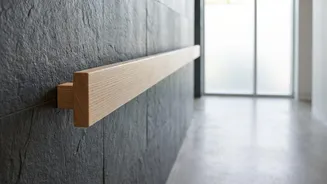
The key to starting safely is using balance support. This doesn't necessarily mean buying special equipment; you likely have effective options at home or the gym. A treadmill is one of the most highly recommended tools for beginners. Its handrails provide constant, stable support, allowing you to focus on your form without the fear of falling. The controlled speed and flat surface eliminate the risk of unexpected obstacles. If you don't have a treadmill, a long, clear hallway in your home is an excellent alternative. You can lightly trail your fingertips along a wall as you walk. A sturdy piece of furniture like a kitchen counter or a heavy desk also works perfectly as a stationary support to hold onto as you practice the motion. For those who prefer to be outdoors, walking poles can offer a similar level of stability. Another simple but effective method is to walk with a partner, where one person walks forward while the other walks backward, ready to offer a steadying hand.
Getting Started: A Step-by-Step Guide
Ready to give it a try? Start slow and prioritise form over speed. If using a treadmill, set it to a very slow pace—around 1.0 to 1.5 kph is a good starting point. Stand facing the rear, hold onto the handrails, and attach the safety clip. Begin by reaching one leg back, landing on the ball of your foot, and then rolling your weight back onto the heel. Keep your posture upright, with your chest lifted and core engaged. Avoid the temptation to hunch over or lean heavily on the handrails; use them for balance, not for support. Start with short intervals of just one to two minutes, alternating with forward walking. If you're using a wall or counter, practice the same toe-to-heel motion while taking small, deliberate steps. As you become more comfortable and your balance improves over a few sessions, you can gradually increase the duration and speed. The goal is to eventually reduce your reliance on the support, perhaps by holding on with just one hand, then with just your fingertips, until you feel confident enough to walk without any assistance.