








The Thirsty Engine of Modern AI
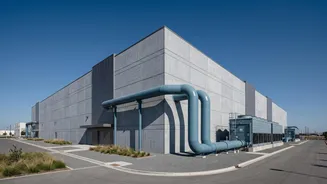
Every time you ask a generative AI to write an email, create an image, or answer a complex question, a chain reaction of immense computation kicks off. This work is done by thousands of specialized processors housed in sprawling data centers. These servers
generate an enormous amount of heat, and just like any high-performance engine, they need to be cooled to prevent overheating and failure. While we interact with a clean digital interface, the physical reality involves rows upon rows of hardware that must be kept at optimal temperatures, a process that is both energy- and water-intensive. The rise of AI has made these data centers more powerful and, consequently, hotter than ever before, dramatically increasing their resource demands.
Why So Much Water? The Cooling Conundrum
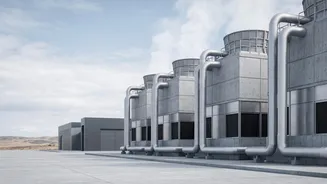
The primary use of water in the majority of data centers is for cooling. Many facilities use evaporative cooling systems, which are highly energy-efficient. These systems work much like a swamp cooler or human sweat, using the evaporation of water to dissipate heat from the servers. Water is cycled through cooling towers where some of it evaporates into the atmosphere, carrying heat away with it. While effective, this process means that vast quantities of water are consumed and not returned to the local water system. While it may seem counterintuitive to bring millions of gallons of water into a building filled with sensitive electronics, it has long been one of the most cost-effective ways to manage the intense heat generated by computing at scale.
Putting Numbers to the Thirst
Quantifying AI's exact water footprint is complex, with figures varying based on the AI model, the data center's efficiency, and even the local climate. However, the numbers available paint a startling picture. Training a model like GPT-3 was estimated to consume 700,000 liters of fresh water. On a smaller scale, estimates for a single chat session with an AI range from a few drops to an entire bottle of water, depending on what is being measured. Zooming out, the collective thirst is immense. Microsoft, for example, reported a 34% increase in its water consumption to 6.4 billion liters in one year, largely attributed to its AI expansion. Some projections suggest that by 2028, global AI data centers could consume over a trillion liters of water annually.
Local Strains and Global Concerns
This massive water consumption is not just an abstract global figure; it has a direct local impact. Data centers can consume as much water as a small city, placing significant strain on local water supplies, particularly in arid regions where many tech companies have built facilities. A single large-scale data center can use up to 5 million gallons of water per day. This creates a point of tension, as a global user base's demand for AI services translates into a concentrated drain on a single community's water basin. With many data centers drawing from the same potable water sources used by the public, concerns are growing about resource competition, especially as climate change exacerbates drought conditions in many parts of the world.
The Search for Sustainable Solutions
The tech industry is aware of the problem and is exploring solutions. Companies like Microsoft and Google have pledged to become "water positive" by 2030, meaning they aim to replenish more water than they consume through investments in restoration projects. There is also a major push in technological innovation. Advanced techniques like direct-to-chip liquid cooling offer a more efficient way to remove heat. This method uses a closed-loop system where a cooling fluid is circulated directly to the processor, absorbing heat without the massive water loss from evaporation. Microsoft has already begun implementing new data center designs that use zero water for cooling during normal operations. Greater transparency in reporting water usage is another crucial step, allowing for better public oversight and accountability.