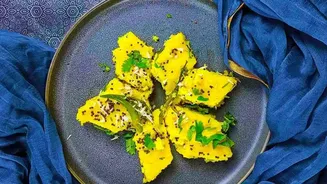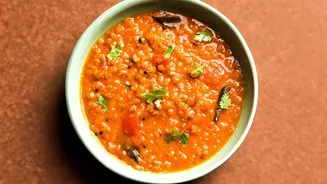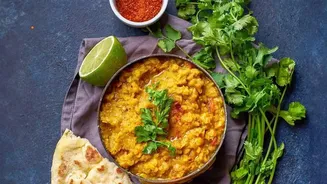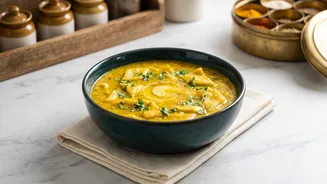


What Exactly is Dal Dhokli?
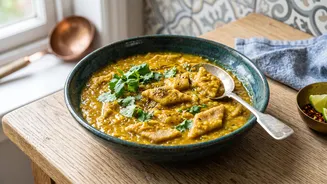
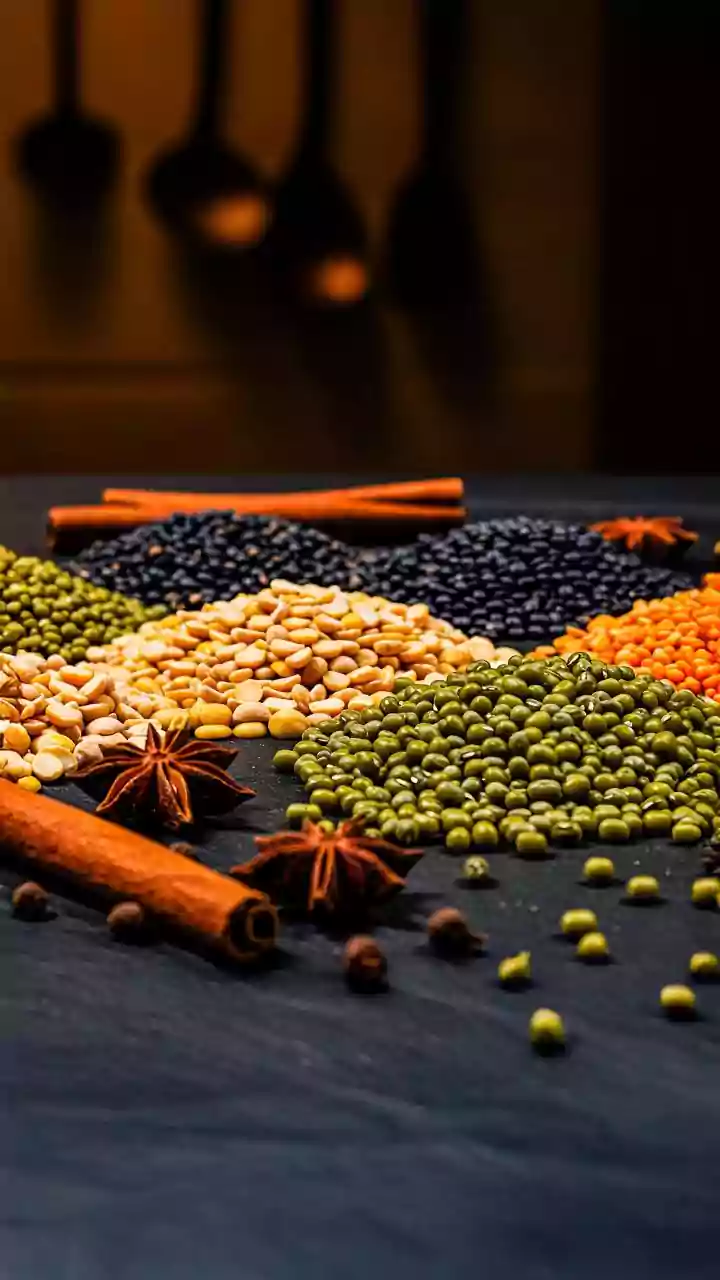
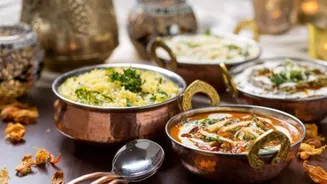
At its heart, Dal Dhokli is a brilliantly simple concept: tender, spiced dumplings made from whole wheat flour are simmered in a flavourful lentil stew. The name itself tells the story, with 'dal' referring to the lentils and 'dhokli' describing the small,
flattened pieces of dough. Traditionally made with toor dal (split pigeon peas), the stew is a staple in Gujarati cuisine, known for its distinct sweet, sour, and spicy flavour profile. The dhokli, which are essentially a type of fresh, unleavened pasta, are cut into diamond shapes and cooked directly in the simmering dal, absorbing all its deliciousness until they become soft and silky.
A Symphony of Flavours and Textures
The taste of Gujarati Dal Dhokli is a masterclass in balance. The dal is typically tempered with mustard seeds, cumin seeds, fenugreek, and asafoetida, creating a fragrant and pungent base. The signature sweet and sour notes come from jaggery and a souring agent like kokum or tamarind, a combination that defines much of Gujarati cooking. This complex gravy is complemented by the texture of the dhokli, which are soft and slightly chewy. To add another layer, peanuts are often included for a nutty crunch, making each spoonful a delightful mix of sensations. A final garnish of fresh coriander and a squeeze of lemon juice brightens everything up before serving.
A Complete, Nourishing Meal
One of the most compelling aspects of Dal Dhokli is that it’s a nutritionally balanced, one-pot meal. The lentils provide plant-based protein and fibre, while the whole wheat dhokli offer complex carbohydrates for sustained energy. This combination makes it incredibly wholesome and satisfying, eliminating the need for separate side dishes like rice or bread. In many Gujarati households, it is considered a complete meal, perfect for a comforting dinner or a lazy weekend lunch. Its all-in-one nature makes it both nourishing and incredibly practical.
Rooted in Resourcefulness
Dal Dhokli is a dish born from the clever, waste-not-want-not ethos of home kitchens. Traditionally, it was often made using leftover dal from a previous meal. Housewives would thin out the leftover lentils, bring them to a boil, and add freshly made dhokli to create an entirely new and substantial dish. This spirit of resourcefulness is central to its identity. While many now make it from scratch, its origins reflect a deep-seated culinary wisdom: transforming simple, available ingredients into something truly special. There are also regional variations, with a spicier version popular in Rajasthan and a Maharashtrian equivalent known as Varan Phal.
Perfect for the Modern Kitchen
In an era of meal prepping, one-pot dinners, and a growing appreciation for wholesome, plant-based foods, Dal Dhokli feels more relevant than ever. Its status as a single-pot meal means less time spent on washing up, a clear win for any busy household. It's the kind of dish that delivers deep comfort and flavour without requiring complicated techniques. As more people seek out foods that are both satisfying and good for them, Dal Dhokli stands out as a timeless classic that fits perfectly into a contemporary lifestyle. It’s a testament to the fact that sometimes, the most comforting foods are the simplest ones, passed down through generations.