

What Exactly Is a Fire Rainbow?
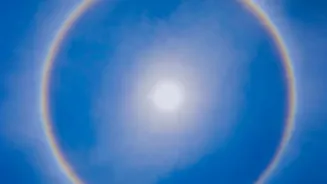
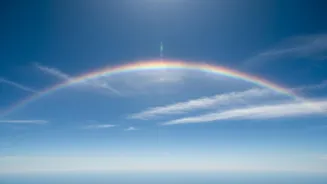
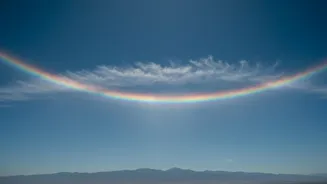
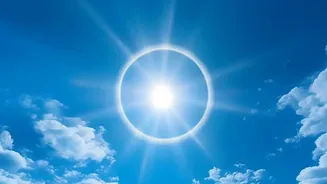
Despite its dramatic name, a fire rainbow has nothing to do with fire and isn't a rainbow in the traditional sense. The correct scientific term for this beautiful display is a circumhorizontal arc. It's an optical phenomenon belonging to the family of
ice halos, which are created by the interaction of light with ice crystals in the atmosphere. The name 'fire rainbow' likely comes from its flame-like appearance when it appears in wispy, fragmented cirrus clouds, creating a vibrant, colourful smear parallel to the horizon.
The Science Behind the Spectacle
For a circumhorizontal arc to form, a very specific set of ingredients must come together perfectly. First, you need high-altitude cirrus or cirrostratus clouds, which are thin, wispy clouds found where temperatures are low enough to form ice crystals. Second, these ice crystals must be hexagonal and plate-shaped, and they need to be aligned horizontally, like tiny floating dinner plates. Finally, the sun must be very high in the sky, specifically at an elevation of 58 degrees or more above the horizon. When sunlight enters the vertical side of these ice crystals and exits through the bottom face, it bends—or refracts—splitting the light into the colours of the spectrum.
Fire Rainbow vs. Traditional Rainbow
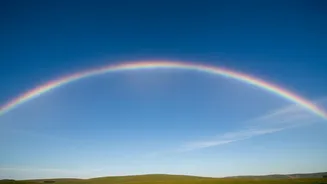
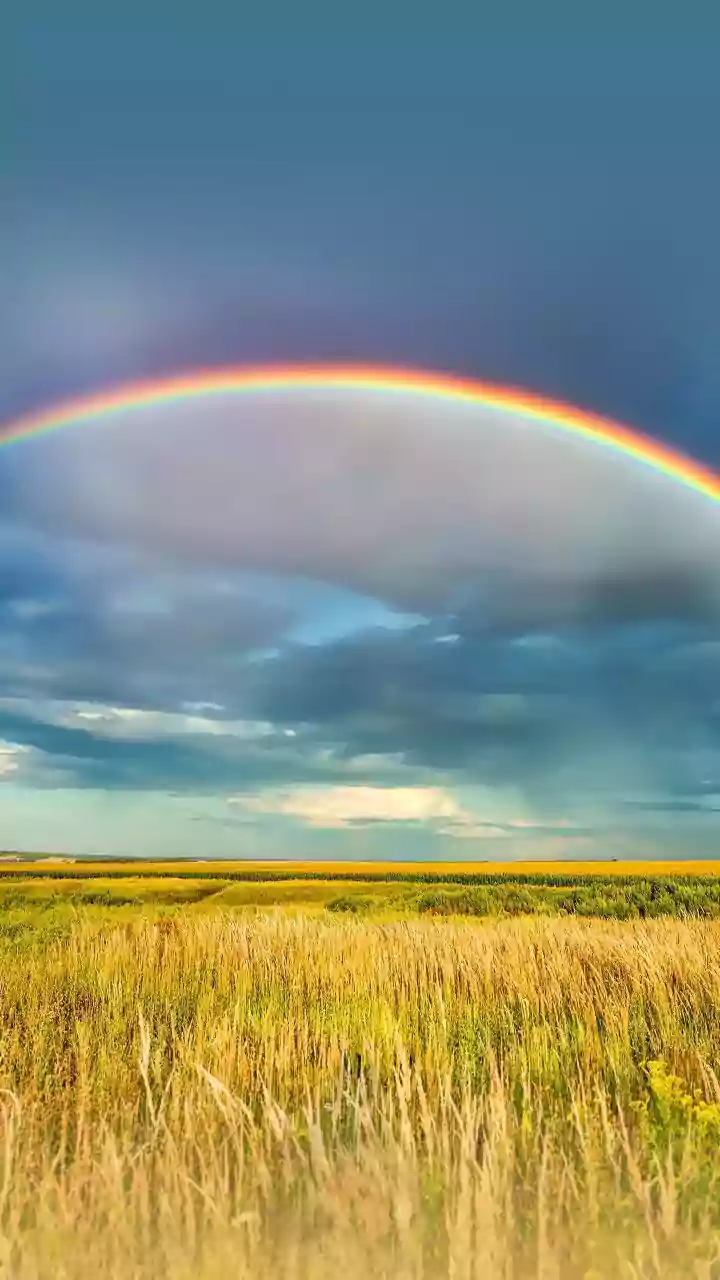
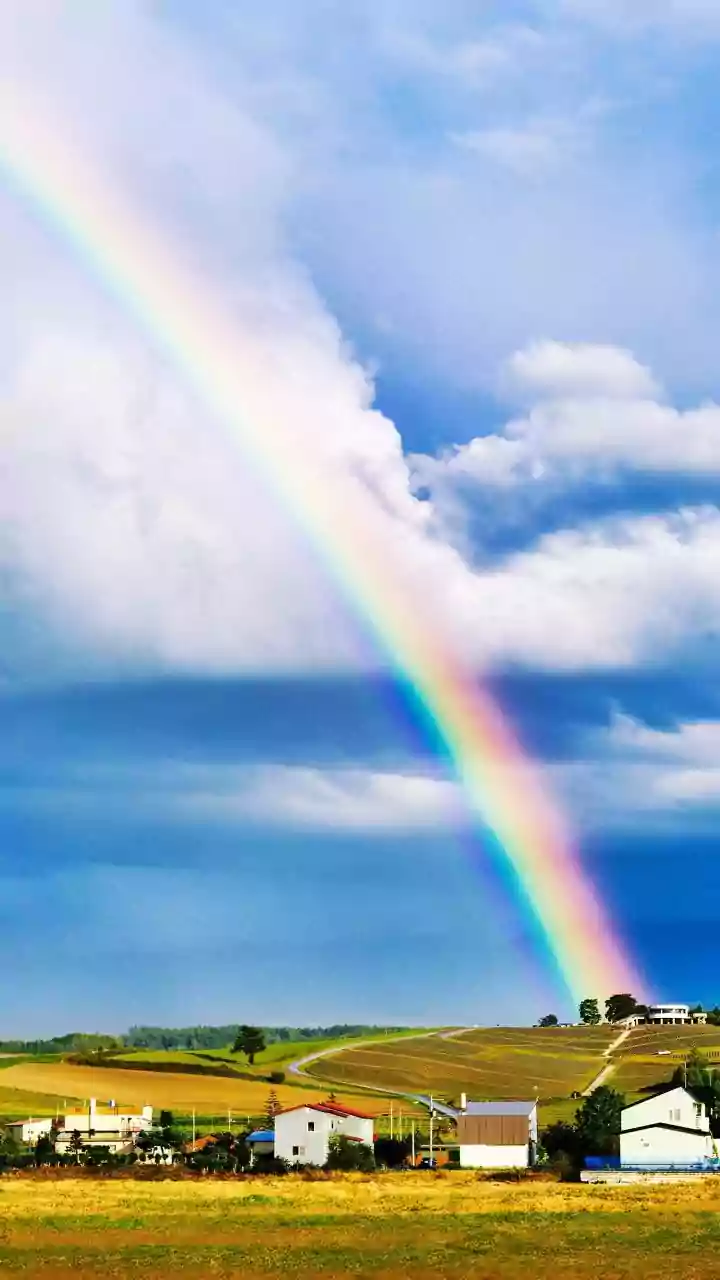
It's easy to confuse the two, but the science behind them is quite different. A traditional rainbow is formed when sunlight is refracted and reflected by liquid water droplets, usually from rain. This is why you always see a rainbow in the part of the sky opposite the sun. In contrast, a circumhorizontal arc is formed by the refraction of light through ice crystals. It appears in the same part of the sky as the sun, but far below it. Another key difference is the colour pattern. While both can show a full spectrum, circumhorizontal arcs have their colours in a neat, horizontal band with red on top and violet on the bottom, appearing much tidier than the more jumbled colours sometimes seen in other phenomena like cloud iridescence.
A Guide for Aspiring Skywatchers
Want to spot one yourself? Your location and the time of year are crucial. These arcs are most commonly seen in mid-latitude locations during the summer months when the sun can reach that critical 58-degree height. For instance, in a city like Los Angeles, the sun is high enough for about 670 hours between late March and late September, while in London, it only meets the criteria for 140 hours between May and July. The best time to look is during the middle of the day when the sun is at its peak. Keep an eye on weather reports for forecasts of thin, high-altitude cirrus clouds on clear days. Wearing polarised sunglasses can also help make a faint arc more visible.
Why Atmospheric Optics Matter
Phenomena like fire rainbows are more than just beautiful sights; they are a visual demonstration of atmospheric optics. Scientists at organisations like NASA study these events to better understand our atmosphere. The presence, shape, and alignment of ice crystals in clouds provide valuable information about conditions in the upper atmosphere, which is crucial for weather forecasting and climate modelling. By observing how light interacts with atmospheric particles—whether it’s ice crystals on Earth or different elements on planets like Mars or Jupiter—scientists can learn about the composition and dynamics of different atmospheres across the solar system.