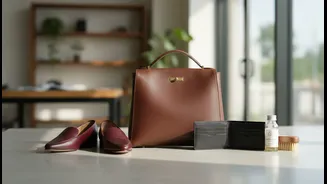







The First Step: Gentle Cleaning
Before you do anything else, your leather needs to be clean. Dust and grime can act like fine sandpaper, causing micro-scratches that dull the finish over time. Start by giving your item a regular wipe-down with a soft, dry microfiber cloth. For a deeper
clean every few months, use a pH-balanced cleaner specifically formulated for leather. Avoid household products like baby wipes, vinegar, or detergents, as their ingredients can strip the leather of its natural oils, leading to dryness and cracking. Always apply the cleaner to a cloth, not directly onto the leather, and test it on a small, hidden area first to ensure it doesn't cause discoloration. After cleaning, wipe away any residue with a clean, damp cloth and blot dry.
The Secret to Suppleness: Conditioning
Cleaning is only half the battle. Conditioning is what keeps leather soft, flexible, and resistant to cracks by replenishing its natural oils. Think of it as a moisturiser for your belongings. Depending on the climate and how often you use the item, conditioning every three to six months is a good rule of thumb. Items in dry climates may need more frequent attention, while those in humid areas may need less. Be careful not to over-condition, as applying too much product can clog the leather's pores, making it feel greasy and attract more dirt. A little goes a long way. Apply a thin, even layer with a soft cloth using gentle, circular motions, let it absorb for at least an hour, and then buff off any excess.
Protect Your Investment: Smart Storage
How you store your leather items is just as important as how you clean and condition them. The wrong environment can lead to irreversible damage. Leather needs to breathe, so never store it in plastic bags, which can trap moisture and encourage mould and mildew growth. Instead, use breathable fabric dust bags. For bags and shoes, stuff them lightly with acid-free paper or newspaper wrapped in cloth to help them maintain their shape and absorb any excess moisture. For jackets, use wide, padded hangers to prevent stretching and creasing at the shoulders. Finally, find a cool, dry place away from direct sunlight and heat sources like radiators. UV rays and high heat can cause leather to fade, dry out, and become brittle.
Common Mistakes to Avoid
Even with the best intentions, it's easy to make mistakes. One of the most common is using the wrong cleaning products; always stick to formulas made for leather. Another frequent error is letting leather get soaked. If your item gets wet, gently blot the moisture with a dry cloth and let it air dry at room temperature—never use a hairdryer or place it near a heater. Once dry, a light conditioning can help restore its flexibility. Overstuffing bags or wallets can also cause the leather to stretch and lose its shape permanently, so be mindful of how much you carry. By avoiding these common pitfalls, you give your leather goods the best chance to age gracefully.