

A Mysterious Little Red Dot
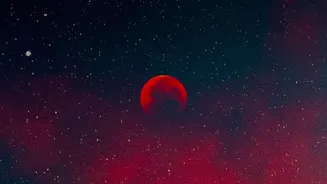
In images capturing the faint light of the early universe, astronomers noticed something peculiar—a brilliant red dot that stood out from its surroundings. Discovered using the James Webb Space Telescope (JWST), this object, named MoM-BH-1, dates back
to just 660 million years after the Big Bang. At first glance, it resembled a gigantic star, perhaps the size of our entire solar system. However, its characteristics presented a profound puzzle. The object was producing an amount of energy roughly 100 billion times greater than any known star could physically generate, an output more commonly associated with a black hole. This contradiction has led scientists to propose that they have found something entirely new.
What is a Black Hole Star?
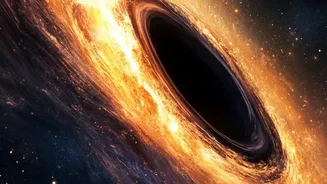
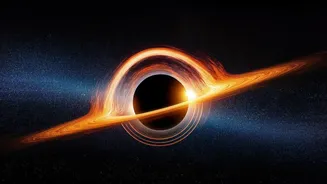
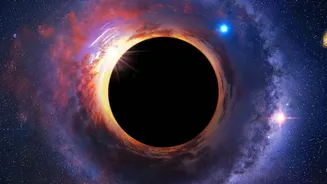
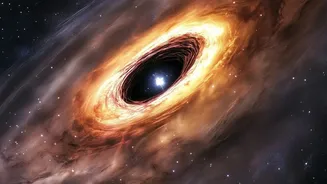
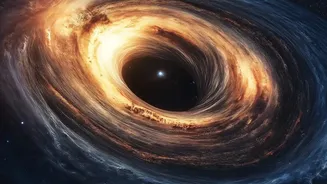
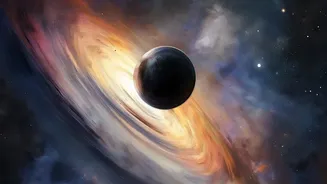
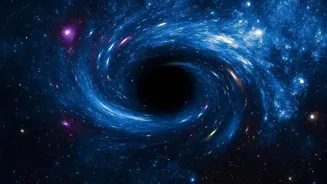
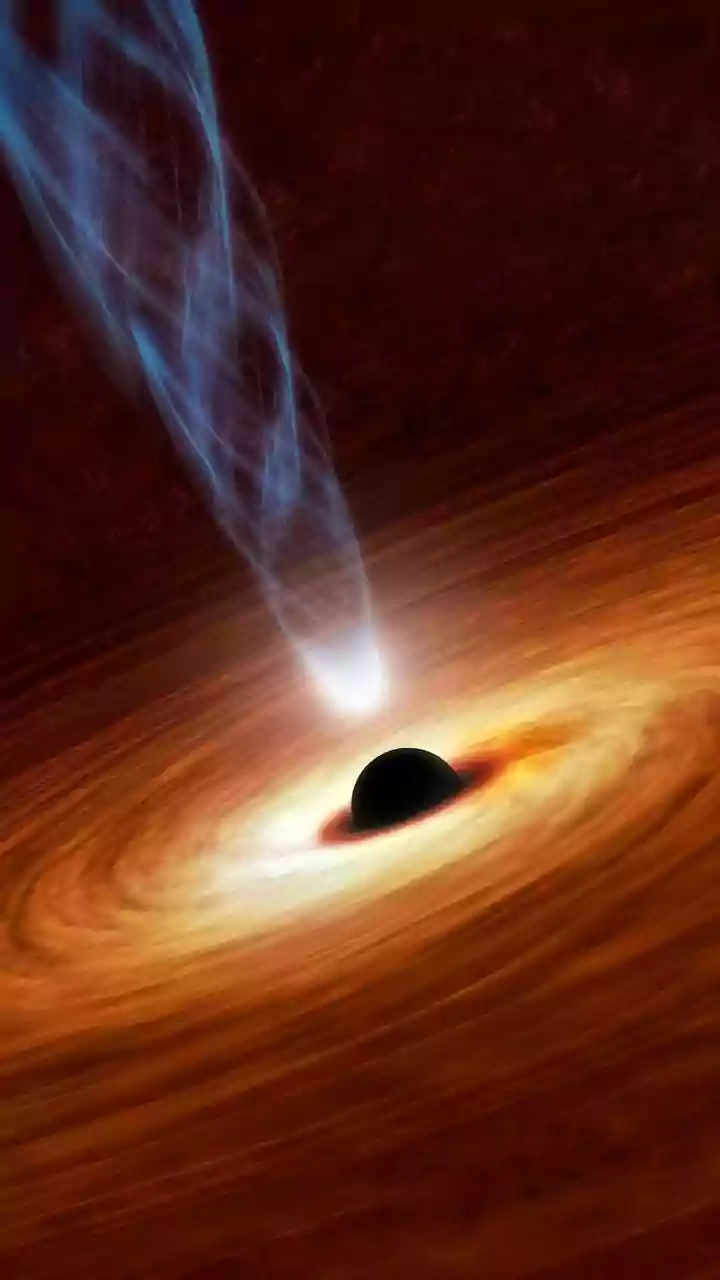
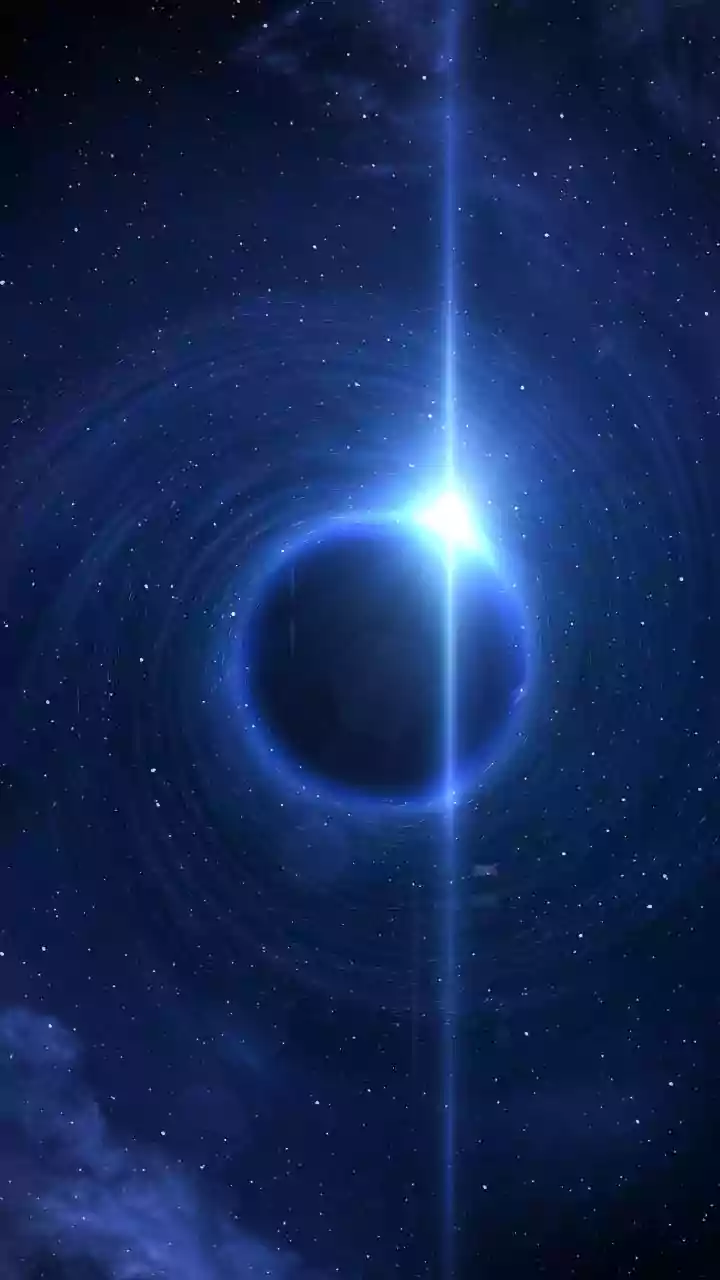
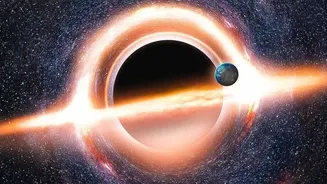
The leading theory is that this object is a “black hole star,” a theoretical celestial body that had been hypothesized but never before observed. Unlike a normal star powered by nuclear fusion at its core, a black hole star is thought to be a massive, dense cocoon of hydrogen gas with a supermassive black hole at its center. In this model, the object’s immense brightness isn’t from fusion, but from the black hole itself, which is furiously consuming the surrounding gas, releasing a torrent of energy that causes the entire gaseous envelope to glow intensely, like a star's atmosphere. This specific object is believed to contain a black hole about 100,000 times the mass of our sun, wrapped inside its star-like shell.
Solving a Cosmic Puzzle
The discovery of MoM-BH-1 could solve a persistent mystery that emerged shortly after the JWST came online: the appearance of numerous “little red dots” scattered across images of the early universe. These objects were too bright and compact to be explained easily by existing models of star or galaxy formation. Astronomers debated their nature, but the data from MoM-BH-1 provides a compelling candidate. Its distinct red color, which was initially thought to be caused by cosmic dust, now appears to be the signature of superheated hydrogen gas, which fits the black hole star model perfectly. Researchers now suspect that many of these other red dots could also be black hole stars, though MoM-BH-1 is unique because its brilliance completely outshines its host galaxy, giving scientists a pure, unobstructed view.
Why the Webb Telescope Was Crucial
Identifying this object would not have been possible without the specific capabilities of the James Webb Space Telescope. Its unparalleled sensitivity and powerful infrared vision allow it to peer back in time to the cosmic dawn, capturing light that has traveled for over 13 billion years. While astronomers have long theorized about objects like "quasi-stars," they remained undetectable until now. The JWST's ability to analyze the specific wavelengths of light coming from MoM-BH-1 was key. Researchers noticed that at a certain wavelength, the light from the object simply disappeared—a feature known as a Balmer break. This signature, combined with the extreme brightness, ruled out other explanations and pointed directly toward the groundbreaking black hole star hypothesis.
What Happens Next?
While the evidence is strong, MoM-BH-1 is still considered a candidate for this new class of object. The term “black hole star” itself signifies that this is the first of its kind, and the scientific process demands further verification. Astronomers have already scheduled follow-up observations with the JWST to study the object in greater detail. These future studies will aim to confirm the composition of the gas, measure the black hole’s mass more precisely, and search for similar objects to see if they share the same characteristics. This discovery could also help explain another major puzzle: how supermassive black holes in the early universe grew so large, so quickly. Black hole stars, which essentially force-feed their central black holes, might be the missing link in their evolution.