






India's Outpost in the Cosmos
The project at the heart of this ambition is the Bharatiya Antariksha Station (BAS), India's answer to the International Space Station. Envisioned as a modular, 52-tonne orbital laboratory, the BAS will orbit at an altitude of around 400-450 kilometres.
It is designed to be a home and workplace for Indian astronauts, allowing them to stay in space for periods of three to six months to conduct advanced scientific research. This isn't just about planting a flag; it's about creating a sovereign, state-of-the-art platform for science and technology development in the unique microgravity environment of space. The government has signaled its firm commitment, with the Union Cabinet approving the initial development phase as an extension of the Gaganyaan programme in late 2024.
Building Block by Block
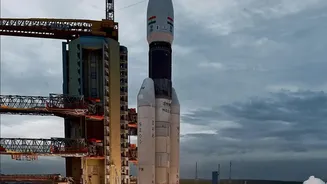
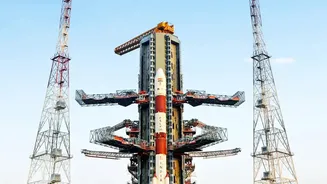
The Bharatiya Antariksha Station will be assembled in space, piece by piece, using five distinct modules. The first, BAS-01, is a base module slated for launch in 2028. This initial component, weighing around 8-10 tonnes, will serve as a crucial testbed for the station's core technologies, including life support systems and docking mechanisms. Though initially robotic, it will lay the groundwork for human habitation. Following this, a core-docking module, a science research module, a laboratory, and a common berthing module will be added incrementally. While the first module can be launched by ISRO's current workhorse, the LVM-3 rocket, the subsequent, heavier modules will require a new-generation launch vehicle currently under development. The entire five-module station is targeted for completion by 2035.
The Crucial 'Technical Foundation'
Recent updates confirm that ISRO has moved beyond the drawing board and is now actively designing the critical subsystems for these future modules. This 'technical foundation' involves some of the most complex challenges in space engineering. Key among them are the Environmental Control and Life Support Systems (ECLSS), which are essential for maintaining a breathable atmosphere, managing temperature, and recycling water for the crew. Another critical area is the development of indigenous rendezvous and docking technologies, allowing different modules and visiting spacecraft to connect flawlessly in orbit. ISRO has also made progress in robotics, developing a robotic arm that will be essential for assembling the station and performing maintenance. The successful design review of these systems means ISRO is confident in the core technologies needed to build not just the first module, but the entire station.
Gaganyaan: The Essential Lifeline
The space station does not exist in a vacuum; its success is intrinsically linked to the Gaganyaan programme. Gaganyaan is developing India's capability to send humans into space and bring them back safely. It provides the essential transportation to and from the Bharatiya Antariksha Station. Without the Gaganyaan crew capsule, there would be no way for Indian astronauts to reach their new home in orbit. The technologies developed for Gaganyaan—from the human-rated launch vehicle to life support and crew escape systems—are directly feeding into the space station project. Several precursor missions, including vehicle tests and air drop tests, have already been successfully completed, paving the way for the first uncrewed Gaganyaan flight and, eventually, India's first human spaceflight mission.