


What Is a Hanging Glacier?
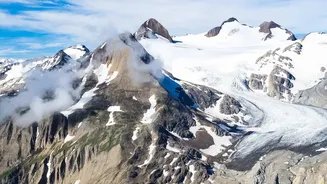
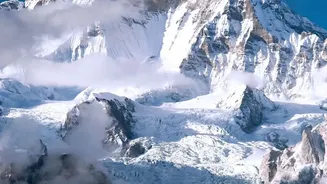
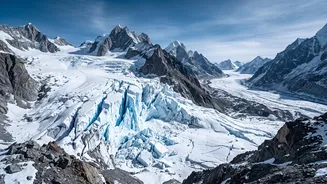
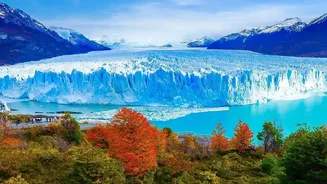
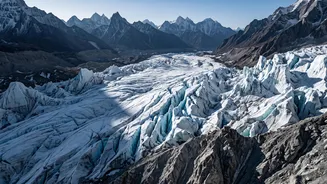
A hanging glacier is a body of ice that originates high on the wall of a mountain or cliff. Unlike a typical valley glacier that flows down a gentle slope, a hanging glacier clings to a steep face and often ends abruptly, suspended high above the valley floor.
This precarious position is key to its potential danger. As the main valley glacier below it shrinks or retreats—a process accelerated by climate change—the tributary glacier is left stranded, or 'hanging'. This instability is a natural part of their formation, but it creates a ticking clock in a warming world.
An Unstable Mix of Ice and Rock
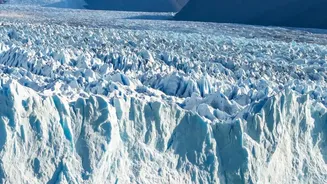
The term 'glacier' is slightly misleading; these are not pure blocks of ice. They are a consolidated mass of ice, snow, and rock. Climate change exacerbates their instability. Warmer temperatures cause more frequent freeze-thaw cycles, which can weaken the ice and the bond it has with the bedrock underneath. As meltwater seeps into cracks, it can act as a lubricant, making a sudden, catastrophic detachment more likely. This makes them uniquely sensitive to warming, transforming majestic ice formations into potential natural bombs.
The First Domino: The Collapse
The chain of hazards begins with the initial collapse. When the weight of the hanging glacier overcomes the weakening forces holding it in place, a massive chunk of ice and rock breaks free. This isn't a gentle slide; it's a vertical drop that can be over a kilometre long, releasing an immense amount of energy. The impact can be so powerful that it registers as a significant seismic event, with scientists comparing the energy release to that of a high-intensity bomb blast. This initial ice-rock avalanche is just the first, violent step in a far more complex disaster.
The Cascade of Hazards Unfolds
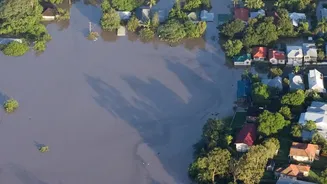
What happens next is a devastating domino effect known as a 'multi-hazard cascade'. The initial avalanche of ice and rock thunders down into the valley. If it lands in a river, it can create a temporary dam, blocking the flow of water. Behind this unstable dam of ice and debris, a lake rapidly forms. Eventually, the immense pressure of the trapped water causes the dam to burst, unleashing a catastrophic flash flood known as a Glacial Lake Outburst Flood (GLOF). This torrent is not just water; it's a thick, fast-moving slurry of mud, boulders, and debris that can travel for hundreds of kilometres, destroying everything in its path.
The Himalayan Hotspot
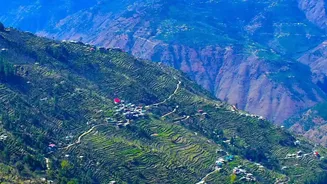
For India, this is not a remote theoretical danger. The Himalayas, which are warming faster than the global average, are a hotspot for these hazards. A 2026 study identified 219 hanging glaciers in Uttarakhand's Alaknanda basin alone, with many deemed unstable. The 2021 Chamoli disaster was a tragic real-world example of this hazard chain, where a collapse of rock and hanging ice triggered a deadly debris flow. With infrastructure and settlements expanding into high-altitude danger zones, the risk to life and property is growing. Projections show a dramatic increase in buildings and people at risk in these areas.
Monitoring a Moving Target
Preventing these events is impossible, but managing the risk is crucial. The challenge is immense, as these glaciers are located in extremely remote and rugged terrain. However, scientists are making progress. Using a combination of satellite imagery, ground-penetrating radar, and seismic sensors that can detect 'icequakes', researchers aim to identify the most unstable glaciers. By mapping high-risk zones and installing early-warning systems to detect floods, authorities hope to provide downstream communities with precious time to evacuate.