




Why Humidity Is Papaya’s Enemy
The sticky, damp air of the monsoon season is a perfect breeding ground for fungal diseases that attack fruits. High humidity accelerates the ripening process and encourages the growth of mould and bacteria, which can cause a firm, sweet papaya to spoil
in just a day or two. Fungal infections like anthracnose often start on the fruit while it's still on the tree, remaining dormant until the humidity and ripening process trigger their growth, leading to sunken, dark spots. This makes proper storage not just a good idea, but a necessity to avoid food waste.
Start with the Right Papaya
Your success begins at the market. Choosing the right papaya can make a significant difference in its shelf life. Look for papayas with smooth skin that is mostly green with a hint of yellow. These are mature but will ripen over a few days at home. Avoid fruits with deep bruises, cuts, or numerous sunken spots, as these are signs of damage or over-ripeness and are more susceptible to rot. A fruit that is uniformly orange and yields to gentle pressure is ready to eat immediately. If you buy a greener papaya, you have more control over the ripening process at home.
Ripening Papayas in a Humid Climate
Ripening a papaya during the monsoon requires a careful balance. While the fruit needs warmth to ripen, the excessive humidity can be a problem. The best approach is to store your unripe papaya at room temperature, away from direct sunlight. To protect it from excess moisture in the air and encourage even ripening, you can place it in a paper bag or wrap it in newspaper. This creates a micro-environment that traps ethylene, a natural gas that promotes ripening, without trapping excess moisture. Check the fruit daily; it should be ready in a few days.
Storing Ripe Papayas
Once your papaya is ripe—mostly yellow-orange and slightly soft to the touch—it’s time to move it to the refrigerator. The cold temperature slows down the ripening process and inhibits the growth of microbes. A whole, ripe papaya can last for up to a week in the fridge. For best results, place it in the crisper drawer, which helps maintain a more stable temperature and humidity. Storing it in a plastic bag can also help extend its freshness for about 5 to 7 days.
Handling Cut Papaya
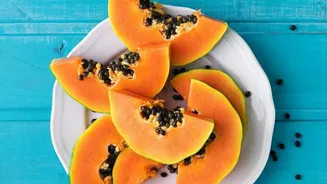
Once you cut into a papaya, its shelf life shortens considerably. To store leftover pieces, scoop out the seeds and place the fruit in an airtight container in the refrigerator. Cut papaya should be consumed within two to three days. Adding a squeeze of lime juice over the flesh can help preserve its flavour and slow down deterioration. It’s also important to store it away from strong-smelling foods, as papaya can easily absorb odours.
How to Spot Spoilage
It’s crucial to know when a papaya has gone bad. Signs of spoilage include a very soft, mushy texture, dark or sunken spots on the skin, and any visible mould. An off-smell or a fermented, unpleasant odour is another clear indicator that the fruit should be discarded. If the flesh has turned dark instead of its usual vibrant orange or pink, it is no longer good to eat. Always trust your senses—if it looks or smells wrong, it's better to be safe and throw it away.