


A Journey into the Clouds
The Nilgiri Mountain Railway (NMR), affectionately known as the 'toy train', is more than just a mode of transport; it's a journey back in time. Recognised as a UNESCO World Heritage site in 2005, it is part of the esteemed Mountain Railways of India.
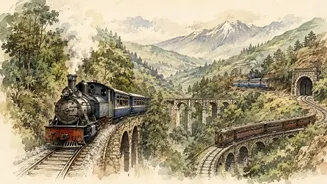
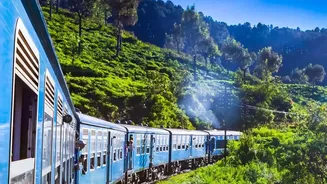
The 46-kilometre route begins in the plains at Mettupalayam, climbing over 1,800 metres to its final destination, Udhagamandalam, or Ooty. This five-hour uphill odyssey takes passengers through lush forests, across more than 250 bridges, and through 16 tunnels, offering breathtaking views of the Nilgiri hills. But the picturesque scenery is only half the story. The railway's ability to navigate this dramatic landscape is a testament to a remarkable feat of engineering.
The Problem of the Steep Ascent
When plans for a railway to the popular hill station of Ooty were first proposed in the mid-19th century, engineers faced a formidable challenge: the sheer steepness of the Nilgiri mountains. A conventional train relies on the friction between its steel wheels and the steel rails, a principle known as adhesion. This method works perfectly on flat ground or gentle slopes. However, it becomes ineffective and dangerous on steep gradients, as the wheels can slip and lose traction. The NMR track features the steepest gradient in all of Asia, with inclines as sharp as 1 in 12, or a staggering 8.33%. A regular train would simply not be able to make the climb. A clever solution was needed to literally pull the train up the mountain.
The Ingenious Rack-and-Pinion Solution
The answer was a technology called the rack-and-pinion system, making the NMR the only rack railway in India. The concept is brilliantly simple. A third rail, called a 'rack', which looks like a long metal bar with teeth, is laid between the two conventional running rails. The locomotive is fitted with a rotating cogwheel, known as a 'pinion'. As the train moves, the teeth of the pinion engage with the teeth of the rack rail. This interlocking mechanism provides a positive grip, allowing the locomotive to haul itself and the carriages up the steep incline without any risk of slipping, much like a climber using their hands and feet to find holds on a rock face. The specific technology used on the NMR is the Abt system, which uses multiple toothed bars to ensure constant, smooth engagement.
Putting the Technology to Work
This special system isn't used for the entire 46-kilometre journey. The train operates on a conventional adhesion basis at the start of its route from Mettupalayam. However, shortly after the now-closed station of Kallar, the real climb begins. It's here that the rack rail appears and the train's speed slows to a determined crawl of about 15 kilometres per hour. For this crucial section, between Mettupalayam and Coonoor, classic X-Class steam locomotives, many originally built in Switzerland, are used. These powerful engines are positioned at the rear of the train, pushing the carriages uphill for added safety and control. Once the train reaches Coonoor, the steepest part of the ascent is complete. The steam engine is replaced by a diesel locomotive for the gentler, final leg of the journey to Ooty.
A Living Piece of History
First opened to Coonoor in 1899 and extended to Ooty by 1908, the railway was a marvel of its time, taking decades to plan and construct. It revolutionised access to the hill station, which served as a summer retreat for the British. Today, it remains a cherished piece of living history, powered by the same fundamental technology that was laid down over a century ago. The rhythmic chug of the steam engine, the sound of the pinion engaging the rack, and the slow, steady climb through the mountains are an integral part of the experience. It stands as a powerful reminder of the ingenuity required to connect communities and conquer challenging terrain, long before the age of modern machinery.