





Why Your Core Needs This Move
When you think of core training, crunches might come to mind. But a truly strong core goes beyond the six-pack muscles. The side plank is crucial because it targets muscles that traditional ab exercises often miss. Primarily, it strengthens the obliques,
the muscles running along the sides of your torso that are vital for twisting, bending, and protecting your spine. It also engages deeper spinal stabilizers like the quadratus lumborum, and even works your glutes and shoulders. This creates stability across your entire trunk, which improves balance, enhances posture, and helps prevent lower back injuries by creating a strong, supportive corset of muscle.
The Anatomy of a Perfect Side Plank
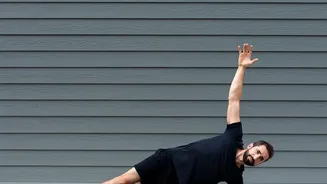
Executing a side plank with precision is key to unlocking its benefits. Here is a step-by-step guide to achieving proper form: Start by lying on your right side on an exercise mat, with your legs straight and stacked one on top of the other. Place your right forearm flat on the floor, ensuring your elbow is positioned directly underneath your shoulder to create a stable base. Engage your core muscles by drawing your navel in toward your spine. Press through your forearm and the side of your bottom foot to lift your hips off the floor. Your body should form a straight, rigid line from your head to your heels. Extend your left arm toward the ceiling. Keep your neck in a neutral position, aligned with the rest of your spine, by gazing forward rather than up or down. Hold this position, focusing on quality form over duration.
The Most Common Mistake: The Hip Drop
The single most common error in a side plank is allowing the hips to sag toward the floor. This usually happens as your muscles fatigue. When your hips drop, you lose that straight line from head to heels, which compromises the entire exercise. It shifts the load away from your core muscles, particularly the obliques, and places undue stress on your shoulder joint and lower back. Essentially, a sagging side plank is not only ineffective but also a recipe for potential strain. The goal is to resist gravity and keep the hips lifted and stable, which is what builds true core endurance and strength. Always prioritize maintaining a level pelvis over holding the plank for a longer time with poor form.
How to Check and Correct Your Form
Self-assessment is crucial for progress. The easiest way to check your alignment is to perform side planks in front of a mirror. This allows you to see if your body is in a straight line and if your hips are dropping. Another effective technique is to record yourself with your phone. Watching the playback can reveal subtle form breakdowns you might not feel in the moment. Pay close attention to the alignment of your hips—they should be stacked vertically, not rotating forward or backward. Your body should be in the frontal plane, as if you are pressed between two walls. If you feel your form starting to break, it's better to lower yourself down with control, rest, and start a new set than to hold a compromised position.
Modifications for Every Fitness Level
The side plank is a versatile exercise that can be adapted for anyone. If you are a beginner, start with a modified version by bending your knees and lifting your hips from your knees instead of your feet. This reduces the lever length and makes the exercise more manageable while you build foundational strength. For more stability, you can also stagger your feet instead of stacking them. To increase the challenge, you can try several progressions. A side plank with a leg lift, where you raise your top leg, adds a greater challenge to your hip abductors and obliques. You can also add movement, such as side plank hip dips, where you slowly lower and lift your hips in a controlled motion to build dynamic stability.