







The Island Fortress in the Sea
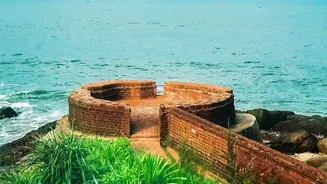
Rising from an oval-shaped rock in the Arabian Sea, Murud-Janjira is India’s only unconquered sea fort. Located about two kilometres from the coastal village of Murud in Maharashtra, its very geography was its first line of defence. Any invading army
had to approach by water, immediately putting them at a strategic disadvantage against a well-prepared enemy. The fort’s origins trace back to a wooden structure built by local Koli fishermen in the 15th century to defend against pirates. However, its destiny changed when it was captured and transformed into an impregnable stone bastion, setting the stage for centuries of resistance.
The Reign of the Siddis
The true story of Janjira is inseparable from the Siddis, rulers of African descent who established a powerful, independent state. Originally serving as commanders under the Ahmadnagar Sultanate, the Siddis took control of the fort and, under the leadership of figures like Malik Ambar, heavily fortified it in the 16th and 17th centuries. These skilled naval tacticians turned Janjira into their capital and stronghold, ruling for over 300 years. From this island base, they controlled coastal territories and commanded a formidable navy, creating a legacy of sovereignty that lasted until Janjira's political integration with India in 1947.
A Masterclass in Defensive Architecture
Janjira’s invincibility was not an accident; it was a result of brilliant and ruthless design. The fort’s 40-foot-high walls rise directly from the sea, making them nearly impossible to scale. Its main gate is ingeniously hidden, only becoming visible when an enemy is dangerously close, foiling many surprise attacks. The fort was armed with around 572 cannons, including three legendary cannons known for their immense size and range: Kalalbangdi, Chavri, and Landa Kasam. Crucially, the fort contained two large freshwater lakes, ensuring its inhabitants could withstand prolonged sieges without running out of essential supplies.
Defying Empires
The fort’s reputation was forged in the fires of countless failed attacks. The mighty Maratha Empire, under leaders like Chhatrapati Shivaji Maharaj and Sambhaji Maharaj, made numerous determined attempts to capture Janjira, viewing it as a critical strategic prize. All of their assaults, including a plan by Sambhaji Maharaj to build an underwater causeway to the fort, were repelled. European powers, including the Portuguese and the British, also failed to breach its defences. Through centuries of conflict, Janjira stood as a symbol of defiance on the Konkan coast, a fortress that simply would not fall.
An Enduring Legacy and the Patekar Connection
The story of Janjira's resistance continues to resonate in modern India, inspiring artists and storytellers. This connection is deeply personal for acclaimed actor Nana Patekar, who was born in Murud-Janjira and spent part of his childhood there. His intimate ties to the town fostered a lifelong bond, and he reportedly harboured a dream of building a small house there. This deep connection to his birthplace fuelled his passion for its history. A few years ago, reports surfaced of his ambition to direct and star in a film celebrating the valour of the Siddis of Janjira, a project aimed at bringing their incredible story of survival and sovereignty to a wider audience. Though the project's current status is unknown, Patekar's interest underscores the powerful and timeless appeal of Janjira's unconquered legacy.