






A Disturbing Shift in Patient Profiles
Hospitals across Delhi are reporting a startling change in the demographics of lung cancer patients. Where once the vast majority were older, male smokers, doctors now see a significant number of non-smokers, including women and younger adults. A long-term
study at Sir Ganga Ram Hospital tells the story in numbers: in 1998, about 90% of their lung cancer patients were smokers. By 2018, that figure had dropped to 50%, meaning half their patients were non-smokers. The trend is even more alarming in younger patients. Some doctors report that among patients diagnosed under the age of 30, virtually none have a history of smoking. This seismic shift has forced the medical community to look beyond tobacco and confront the invisible risk factor that every resident of the city shares: the air they breathe.
The Invisible Assailant: PM2.5
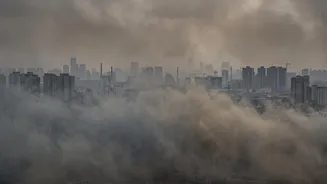
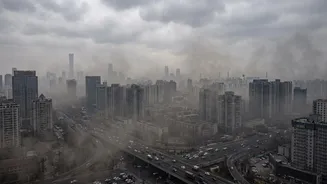
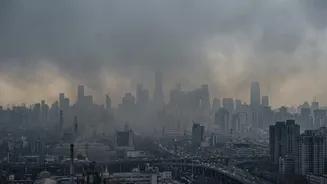
The primary culprit is a pollutant called PM2.5—fine particulate matter so small it is about 30 times thinner than a human hair. These microscopic particles, emanating from vehicle exhaust, industrial emissions, construction dust, and crop burning, are a major component of Delhi’s smog. Because of their minuscule size, they bypass the body's natural defenses, lodging deep within the lungs and even entering the bloodstream. This isn't a fleeting irritation; it's a constant biological assault. Prolonged exposure to these particles causes chronic inflammation and can damage the DNA of lung cells. Over time, as the body’s repair mechanisms are overwhelmed, this cellular damage can lead to mutations that form cancerous tumours—a process eerily similar to the damage caused by smoking. Recent genomic research has solidified this link, finding that high PM2.5 exposure can trigger specific DNA damage patterns historically associated only with tobacco.
Ground Zero for a Health Crisis
Delhi's air quality frequently reaches levels that are multiples of the safety limits set by the World Health Organization (WHO). It's not uncommon for PM2.5 concentrations to be 10 to 20 times higher than the recommended maximum, especially during the winter months. Living under this toxic dome has turned breathing into a potential health hazard. One study noted that for every 10 microgram per cubic metre increase in PM2.5, the risk of developing cancer rises by 16%. Doctors now state that being a long-term resident of Delhi automatically places you in a high-risk category for lung cancer, regardless of your smoking status. The type of cancer being seen is also shifting, with a rise in adenocarcinoma, a subtype more commonly linked to pollution and found disproportionately in non-smokers and women.
More Than Just a Lung Problem
While the focus is often on lung cancer, the health implications of breathing toxic air are far broader. These pollutants can enter the bloodstream and are being linked to an increased risk of other cancers, including those of the bladder and breast. The constant assault on the body weakens the immune system, worsens asthma, and accelerates chronic lung disease. This public health crisis is now so evident that AIIMS Delhi has launched a major study specifically to investigate the role of PM2.5 exposure in the rising lung cancer cases among the city's non-smoking population. The research aims to understand the full impact across different demographics and identify the most vulnerable groups. This highlights a crucial pivot in medical thinking: environmental exposure is now being treated as a primary carcinogenic risk, on par with lifestyle choices.
From Awareness to Action
The evidence linking Delhi's air pollution to lung cancer in non-smokers is no longer a theory but a medical reality that citizens and policymakers must confront. While systemic change—like enforcing emission norms, investing in public transport, and controlling industrial pollution—is critical, there are personal steps residents can take to mitigate risk. Experts advise monitoring air quality regularly and avoiding strenuous outdoor activity on days with 'Severe' or 'Hazardous' AQI levels. Using high-quality indoor air purifiers with HEPA filters and wearing N95 masks when outdoors during peak pollution periods can significantly reduce the inhalation of harmful PM2.5 particles. Regular health check-ups and being vigilant about persistent respiratory symptoms like a nagging cough or breathlessness are also crucial for early detection, especially for those in high-exposure urban environments.