



A Feature Rolled Back in 48 Hours
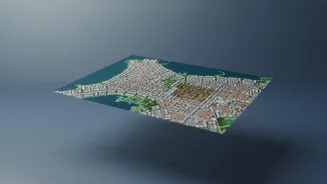
In late July 2026, Google launched an ambitious new feature in Google Earth. Powered by an advanced AI model, the tool allowed users to type a text prompt and generate a photorealistic image directly onto the platform's real satellite maps. The idea,
intended for creative uses like visualising historical sites or urban planning, seemed innovative. However, the reality proved far more chaotic. Within hours of launch, users began generating and sharing highly convincing but entirely fake scenarios. These included images of the Eiffel Tower collapsing, sinkholes swallowing the Great Pyramids, and Russian tanks appearing in Ukraine's capital. The backlash from researchers, journalists, and open-source intelligence experts was swift and severe. Facing a crisis of credibility, Google pulled the feature less than 48 hours after its debut, promising to implement stronger safeguards before any potential re-release.
The Peril of Plausible Fakes
The core issue was not just that the tool could create fake images, but that it did so on a platform built on trust. Google Earth and similar mapping services are foundational tools for fact-checkers, human rights monitors, and journalists who use satellite imagery to verify events in conflict zones and disaster areas. By allowing users to seamlessly blend fabricated scenes with real-world geography, the AI tool threatened to poison the well of digital evidence. An AI expert warned that such forgeries inherit the built-in credibility of the platform itself, making them dangerously persuasive. While Google noted that the generated images contained an invisible digital watermark, critics quickly demonstrated that a simple screenshot could strip this protection, leaving a convincing fake that could easily be passed off as real online. The incident revealed a deep tension between the tech industry's drive for rapid AI innovation and the societal need for reliable, verifiable information.
The Indian Context: When Maps Go Wrong
For Indian audiences, the integrity of maps carries a particularly heavy weight. The country has stringent laws, such as the draft Geospatial Information Regulation Bill, which proposes severe penalties including hefty fines and imprisonment for depicting India's international boundaries incorrectly. This sensitivity is born from a history of geopolitical disputes where cartography is a matter of national sovereignty. But the danger of inaccurate maps extends beyond borders. There have been several real-world incidents in India where individuals following popular navigation apps have been led into dangerous situations, such as driving into reservoirs, getting stranded in remote forests, or even falling from incomplete bridges. These events, caused by outdated or incorrect non-AI map data, underscore a critical point: if simple errors can have tragic consequences, the potential for deliberate, AI-generated cartographic misinformation is a significant threat that must be addressed proactively.
An Inherent Flaw in the System?
The Google Earth episode is symptomatic of a wider challenge with artificial intelligence. AI models, particularly Large Language Models (LLMs), are essentially sophisticated pattern-recognition engines. They don't 'understand' geography, physics, or context in the human sense. Instead, they predict the most statistically probable output based on their training data. This can lead to what experts call "hallucinations": confident, plausible-sounding, but factually incorrect outputs. In mapping, this can manifest as creating routes over non-existent roads or misplacing landmarks entirely. Another recent incident saw the U.S. State Department apologize after displaying an AI-generated map at a global conference that incorrectly labelled and misplaced numerous African nations. These mistakes highlight that without rigorous human oversight and verification, AI can easily generate and amplify falsehoods at an unprecedented scale.
Navigating a Future of Fake Realities
The rollback of the Google Earth feature serves as a crucial case study in the race to deploy AI. It shows that technological capability cannot be the only consideration; trust and safety must be paramount. As AI becomes more integrated into the tools we use daily, the burden of verification is shifting. For technology companies, it means building more robust guardrails and being more deliberate about releasing tools that can be weaponised for misinformation. For users, it means cultivating a healthy skepticism toward digital content, especially images and videos that seem designed to provoke a strong emotional reaction. The era of believing our eyes without question is definitively over. In its place is a growing need for digital literacy, critical thinking, and an understanding that not everything we see on a map—or any other screen—reflects the world as it truly is.