






The Planet's Engine Room
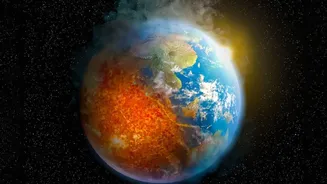
At the heart of this discovery is the Indo-Pacific Warm Pool (IPWP), often called the Tropical Warm Pool. This enormous body of water, stretching from the eastern Indian Ocean to the western Pacific, is the largest area of warm ocean on Earth, with surface
temperatures consistently above 28°C. Often described as the planet's 'heat engine', its warm, moist air fuels powerful atmospheric convection, driving weather patterns that affect the entire globe. For India, this region is critically important, as the heat and moisture it provides are fundamental ingredients in the formation and strength of the annual monsoon. Any significant change in the Warm Pool's behaviour can have a direct impact on rainfall across the subcontinent.
A Distant, Unexpected Connection
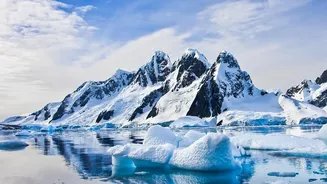
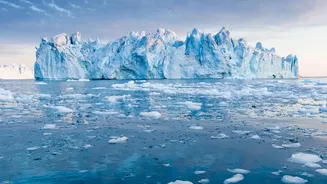
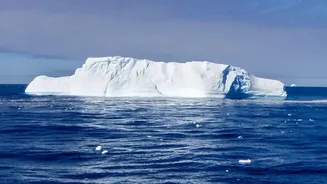
A new study published in the journal Nature has revealed an unexpected teleconnection between this tropical 'heat engine' and the frozen expanses of East Antarctica. Researchers analyzing satellite data from 2021 to 2023 discovered a remarkable event: the Antarctic Ice Sheet experienced a temporary mass gain of 695 billion tons. This went against the long-term trend of massive ice loss. The culprit, they found, was an unusually persistent and intense warming of the Tropical Warm Pool. This warming, thousands of kilometres away, triggered a chain reaction in the atmosphere that led to record-breaking snowfall over a specific region of East Antarctica.
How It Works: An Atmospheric Chain Reaction
The mechanism is a fascinating example of how interconnected our planet's systems are. The sustained warming in the tropics generated large-scale atmospheric waves, known as Rossby waves, that propagated towards the South Pole. These waves altered wind patterns over East Antarctica, establishing a pressure system that acted like a giant atmospheric pipeline. This new circulation pattern redirected vast amounts of moisture from the mid-latitude Indian Ocean, funneling 'atmospheric rivers' towards the Antarctic coast. The result was persistent, heavy snowfall over the Queen Mary Land–Wilkes Land region, leading to the substantial, albeit temporary, ice gain.
A Temporary Reprieve, Not a Reversal
Scientists behind the study are quick to emphasize that this event does not reverse the long-term trend of Antarctic ice loss, which is a major contributor to global sea-level rise. The West Antarctic Ice Sheet, in particular, continues to lose mass at an alarming rate as it is melted from below by warming ocean waters. The mass gain from the extra snowfall was concentrated in East Antarctica and is seen as a temporary slowdown, not a solution. The study suggests such events may occur roughly once a decade, positioning the Tropical Warm Pool as a remote 'regulator' of East Antarctic snowfall. However, the dominant trend remains one of overall melting and contribution to rising seas.
Why This Matters for India
This research underscores the profound interconnectedness of the global climate system. For India, the implications are significant. The Tropical Warm Pool is a linchpin of the monsoon. If its behaviour is being influenced by events as far away as Antarctica, it introduces a new layer of complexity into predicting our most critical weather system. The study highlights that warming in one part of the Indian Ocean can weaken monsoon circulation. As the Indian Ocean continues to warm, the likelihood of such large-scale disruptions—including more extreme rainfall events and altered monsoon timing—is expected to increase, posing challenges for agriculture, water management, and disaster preparedness.