



What Are the New Proposals?
In early August 2026, the Ministry of Coal successfully auctioned six new coal blocks across states like Jharkhand, Madhya Pradesh, Telangana, and Chhattisgarh. This was part of the 15th round of commercial coal mine auctions, a policy started in 2020
to open the sector to private players and boost domestic production. These new mines alone hold geological reserves of over 1,500 million tonnes. This is not an isolated event but part of a larger trend. Reports from 2025 and 2026 show that India is leading a global rise in planned coal mining capacity, with proposals doubling in just a year, primarily driven by developments in Jharkhand and Odisha. While the actual start of new mining operations has slowed globally, India's pipeline of proposed projects is expanding rapidly.
The Energy Security Imperative
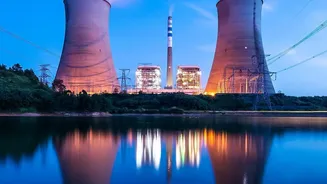
So, why more coal? The primary driver is India's surging demand for electricity. With a growing economy and a population that needs reliable power, especially during increasingly severe heatwaves, the government views coal as essential for energy security. Coal currently fuels over 70% of India's electricity generation and meets nearly 55% of its total primary energy needs. Unlike solar and wind, which are intermittent, coal provides 'baseload' power—a steady, dependable supply that keeps the grid stable around the clock. Officials argue that relying on domestically available coal, of which India has the world's fourth-largest reserves, is strategically smarter and more affordable than depending on imported fuels like natural gas, which are subject to volatile global prices.
An Engine for Economic Growth
Beyond electrons and grids, the push for coal is deeply tied to economics. The government's goal is to produce 1.15 billion tonnes of coal in the 2025-26 fiscal year, a significant increase aimed at reducing import dependence and fostering self-reliance ('Aatmanirbhar Bharat') in energy. The recent auction of just six blocks is expected to generate nearly ₹2,000 crore in annual revenue for states, attract over ₹1,700 crore in capital investment, and create more than 15,000 jobs. Since the commercial auction policy began in 2020, the 147 blocks auctioned are projected to create nearly 5 lakh jobs once operational. Coal is also intrinsically linked to major industries like steel and cement, and the Indian Railways earns significant revenue from its freight.
The Climate Conundrum
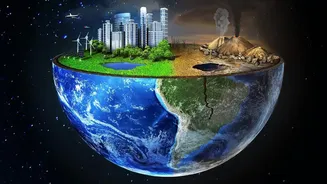
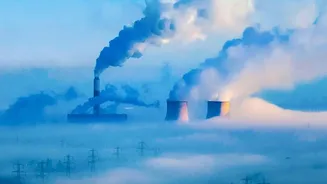
This expansion runs parallel to India's ambitious climate commitments, creating a significant paradox. The country has made huge strides in renewable energy, with non-fossil fuels now accounting for over half of its total installed power capacity as of July 2026. However, installed capacity is different from actual generation. While solar and wind capacity is high, they contribute a much smaller percentage of the actual power produced compared to coal. Critics and environmental groups warn that doubling down on coal locks India into a carbon-intensive future for decades, making it harder to achieve its climate goals, including the long-term target of Net Zero by 2070. Every new mine deepens the challenge of transitioning away from fossil fuels, a goal agreed upon at global climate summits like COP28.
Is Coal's Reign Nearing an End?
Despite the new mines, the long-term outlook for coal is not straightforward. The economic case for coal is weakening globally as the cost of renewable energy and battery storage continues to fall. Even within India, there is a massive push for green hydrogen and other clean technologies. The government's strategy appears to be a dual-track approach: use domestic coal to secure immediate energy needs and power economic growth, while simultaneously building the infrastructure for a future dominated by renewables. Coal is seen as a 'transition' fuel, a bridge to a cleaner energy system. However, the sheer scale of the planned expansion suggests this will be a very long bridge, with analysts pushing back their forecasts for when India's coal consumption will peak, some now predicting it won't happen until the early 2040s.