





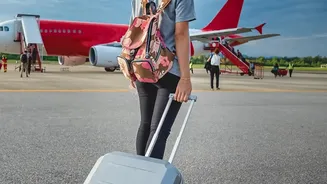

It’s a frustrating scenario: you’ve boarded, taken your seat, and then realise you left something vital at the gate. But when you try to pop back out, the crew says no. It feels illogical, but there are critical security reasons behind this rule.
The Concept of the 'Sterile' Zone
Once
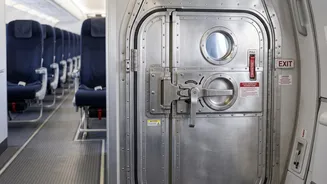
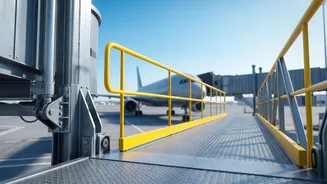
you pass through the security checkpoint at an airport, you enter what is known as a 'sterile area'. This zone, which includes the gates and waiting lounges, is considered secure because everyone within it has been screened. The aircraft itself is the final, most secure part of this bubble. When the cabin door is closed for departure, the plane is a sealed, secure environment. Allowing a passenger to leave and then re-enter breaks that seal. From a security standpoint, the moment a passenger steps back into the non-sterile jet bridge or gate area, the integrity of the aircraft's sterile environment has been compromised.
The Problem with Passenger Counts
Before any flight can depart, airlines must complete a complex process of reconciliation. This involves ensuring the flight manifest — the official list of passengers on board — is 100% accurate. This count is critical for both safety and security. When a passenger who has been scanned and counted on the manifest deboards, that count becomes inaccurate. The entire process of verifying who is on board must be restarted. This isn't just a simple headcount; it's a data-driven process linked to tickets, seat assignments, and security flags. Any discrepancy must be resolved before the flight can be cleared for takeoff, creating significant delays.
Baggage Reconciliation is Non-Negotiable
One of the most important security protocols is Positive Passenger Bag Match (PPBM). This international rule dictates that a checked bag cannot travel unless the passenger who checked it is also on board the aircraft. If you board the plane and then decide to get off, the airline is required to find and remove your checked luggage from the cargo hold. This is a time-consuming and labour-intensive task. Ground crews must locate your specific bags among hundreds of others, offload them, and then ensure the remaining luggage is secure. This process alone can delay a flight by a significant amount of time, creating a domino effect across the airport's schedule.
The Security 'Reset' Procedure
If a passenger deplanes, security protocols often dictate that the aircraft is no longer considered secure. The assumption must be that the person could have left an item behind or, in a worst-case scenario, tampered with something. This can trigger a full security sweep of the cabin. Passengers may be asked to deplane, taking all their carryon luggage with them, so that security personnel can thoroughly search the aircraft from top to bottom. This 'reset' is a massive logistical headache that causes extensive delays and can even lead to flight cancellation. Airlines avoid this at all costs, which is why they are so strict about not letting passengers off once they've boarded.
Operational and Logistical Chaos
Beyond the security imperatives, letting a passenger off the plane sets off a chain of operational challenges. The flight crew has to file new paperwork with the updated passenger manifest. Air traffic control needs to be notified, and the flight might lose its carefully timed departure slot, forcing it to wait for a new one. The ground crew, who may have already been preparing to push the aircraft back from the gate, must halt their procedures and re_secure the plane. All these steps add up, turning a simple request into a major operational disruption that affects not only your flight but potentially other flights in the airline's network.