







Beyond the Carbon Charts
On paper, the hierarchy of green transport is clear. Walking and cycling are champions, producing nearly zero emissions. For short to medium distances, choosing a bike over a car can slash your travel emissions by about 75%. Public transport, especially
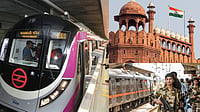
trains, comes next as a highly efficient option. A medium-distance train journey can cut emissions by around 80% compared to a car. Even electric vehicles, despite the emissions from electricity generation, are consistently a lower-carbon choice than their petrol or diesel counterparts. But these numbers are just a baseline. They don't account for a sudden downpour, a dangerously busy road, or how you feel on a particular day. The 'best' choice is rarely just about the data; it's about what is practical, safe, and sustainable for you in a specific moment.
When the Weather Intervenes
Weather is the great disruptor of green travel plans. Heavy monsoon rains can make walking unpleasant and cycling outright dangerous, reducing visibility and making roads slick. Extreme heat, increasingly common in Indian cities, poses health risks for those undertaking strenuous activity like cycling or a long walk. Even technology isn't immune; extreme cold can reduce the efficiency and range of electric vehicle batteries, while extreme heat can affect aircraft performance. In these scenarios, the theoretically 'perfect' low-carbon choice may become impractical or unsafe. A bus or metro, which might have a slightly higher carbon footprint per person than a bicycle, becomes the superior option, offering shelter and safety while still being far more eco-friendly than taking a private car.
Your Personal Fitness Factor
The idea of active transport—walking or cycling—is wonderful for both personal health and the environment. It can improve your mood, reduce stress, and help you meet daily exercise goals. However, individual fitness levels and physical ability are crucial factors. A five-kilometre trip is considered comfortably cyclable, and trips under three kilometres are generally walkable for most. But for someone with limited mobility, recovering from an injury, or simply not accustomed to physical exertion, a 'short' walk can be a significant barrier. This is where e-bikes are emerging as a game-changer. They provide pedal assistance that reduces the effort needed, making longer or hilly commutes accessible to more people without resorting to a car. They bridge the gap between pure active travel and motorised options, expanding the definition of what is 'doable'.
The Stark Reality of Road Safety
In India, the decision to walk or cycle is heavily influenced by one critical factor: safety. Our cities have often been designed to move cars, not people. A lack of continuous, unobstructed footpaths and dedicated, protected cycle lanes puts the most vulnerable road users at immense risk. Two-wheeler riders, pedestrians, and cyclists constitute a staggering majority of road accident fatalities in urban areas. In Delhi, for instance, a cyclist is reportedly 40 times more likely to die in a road accident than a car passenger. When faced with a choice between a zero-carbon-but-dangerous journey and a higher-carbon-but-safer one, the decision becomes a matter of self-preservation. Until infrastructure prioritises the safety of walkers and cyclists, modes like buses, metros, or even carpooling will remain the most sensible choice for many, despite their environmental cost.
Making the Smartest Choice Today
So how do you decide? Think dynamically. On a clear, pleasant morning with a short commute, walking or cycling is unbeatable. If the distance is longer, but you want to stay active, an e-bike might be your answer. During a heatwave or downpour, or if your journey involves unsafe roads, the metro or bus is a wise and still relatively green choice. Using public transport also contributes to your daily physical activity, as almost every trip begins and ends with a walk to and from the station or stop. The goal isn't to be a perfect zero-carbon commuter every single day. It's about evaluating the conditions—external and personal—and choosing the lowest-carbon option that is practical and safe for that specific journey.