







Tokyo's Burden and Japan's Answer
In late July 2026, Japan's parliament, the National Diet, passed a landmark law to establish a framework for a 'secondary capital'. The primary motivation is stark: survival. The government estimates a 70% probability of a major magnitude-7 earthquake
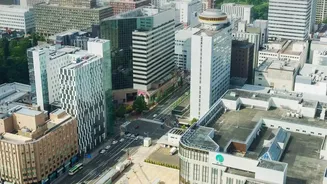
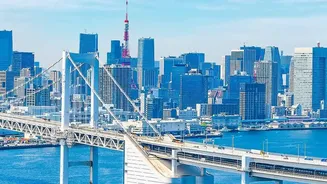
striking the Tokyo metropolitan area within the next 30 years. Such a catastrophe could paralyse the nation's political and economic heart. The new law allows the prime minister to designate one or more regions to take over core government functions in an emergency. This 'fukushuto', or vice-capital, is a radical approach to de-risking a nation heavily concentrated in one urban centre. Tokyo hosts about 30% of the population and generates a fifth of the country's economic output, making it dangerously central to Japan's stability.
More Than Just a Backup Plan
The Japanese initiative is not just about disaster management; it's also a strategic move to decentralise the economy. The law aims to correct the “overconcentration” of resources in Tokyo by fostering new engines of growth elsewhere. Prefectures vying for the designation, such as Osaka, Aichi, and Fukuoka, see an opportunity for significant investment. The chosen region or regions will benefit from the development of government facilities, enhanced transport links, tax incentives, and regulatory reforms designed to attract private investment. To qualify, a candidate region must be geographically distant enough to avoid being hit by the same disaster that strikes Tokyo, while also possessing the infrastructure and administrative capacity to serve as a functional backup. This dual focus on resilience and economic rebalancing makes Japan's model a fascinating experiment in proactive national planning.
India's Urban Predicament
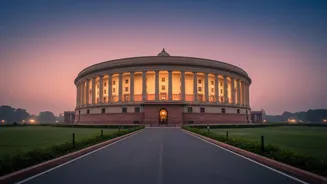
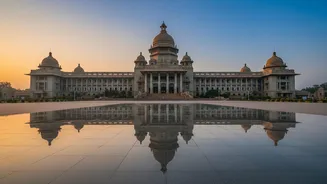
The challenges driving Japan's decision resonate deeply with India's urban reality. Cities like Delhi, Mumbai, and Bengaluru are grappling with immense strain on infrastructure, hazardous pollution levels, and increasing vulnerability to climate-related disasters like flooding and extreme heat. Concentrating administrative, political, and economic power in a handful of megacities has created significant imbalances and security risks. The idea of decentralising government functions is not new in India; discussions have long revolved around moving ministries to cities better aligned with their focus to improve governance and spur regional development. With India's urban population projected to soar in the coming decades, the need for a sustainable and resilient urban growth model is more urgent than ever.
Lessons in Resilience and Decentralisation
While directly replicating Japan's capital-backup plan may not be feasible for India, the underlying principles offer a valuable blueprint. First is the emphasis on proactive risk mitigation. Instead of only reacting to disasters, Japan is building a system to ensure continuity. For India, this means integrating climate resilience into all urban planning, from land use to infrastructure. Second is the strategic value of decentralisation. Moving some central government functions away from Delhi could ease the city's burden while stimulating economic growth in tier-2 and tier-3 cities. This would not only create more balanced national development but also enhance governance by bringing policymakers closer to the ground realities of different regions. The goal isn't to diminish Delhi but to distribute the load, making the entire system more robust.
A Blueprint for India's Future Cities?
Executing such a vision in India would face hurdles, including political will, financial costs, and the need for seamless administrative coordination. However, the potential benefits—improved livability, reduced inequality, and greater national security—are immense. India has already shown an interest in Japanese urban planning models, with its National Spatial Policy drawing inspiration from Japan's approach to manage urban expansion. Japan's secondary-capital law provides a powerful, real-world example of how a nation can strategically plan for a more secure and balanced future. It challenges India to think beyond incremental fixes and consider bolder, more structural reforms for its urban centres. The conversation needs to shift from whether we can afford to decentralise to whether we can afford not to.