








A Sky Full of Rockets
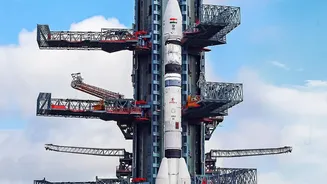
We are living in an unprecedented era of space launches. In 2025 alone, the world saw over 320 orbital launch attempts, more than double the pace of just five years prior. This surge is primarily driven by the commercial space sector, which now accounts
for the vast majority of launch activity. Companies like SpaceX, with its reusable Falcon 9 rockets, have dramatically lowered the cost of accessing orbit, launching over 165 missions in 2025. This new accessibility is fueling the deployment of massive satellite mega-constellations for global internet service and expanding Earth observation networks. Projections show this trend is only accelerating, with 2026 expected to set new records as more launch providers in the US, China, and India scale up their operations. While this represents incredible progress, it also creates a significant, and often overlooked, side effect.
What Goes Up Must Come Down
Every launch leaves something behind. The most concerning objects are large, spent rocket stages, sometimes weighing over 20 tonnes. While many rocket designs ensure these stages fall back into the ocean in a controlled manner, some don't. These massive objects are left tumbling in low Earth orbit, where atmospheric drag eventually pulls them down in an uncontrolled re-entry. The path of this falling debris is highly unpredictable, with potential impact zones spanning vast, populated areas of the globe. Historically a rare occurrence, the sheer volume of modern launches has made these events more frequent. China's Long March 5B rocket, for example, has been a notable source of uncontrolled re-entries, with its massive core stage falling back to Earth after several missions to build the Tiangong space station. These incidents have drawn criticism from international bodies like NASA for posing unnecessary risks.
Gauging the Real-World Risk
The good news is that most of a re-entering rocket will burn up due to the intense heat of atmospheric friction. However, components made of high-melting-point materials like titanium can survive the plunge. It is estimated that for a very large rocket body, several tonnes of material can reach the ground. So far, there have been no confirmed deaths from falling space junk, and the odds of any single person being hit are incredibly small. However, there have been close calls, with debris from a Long March 5B stage damaging buildings in the Ivory Coast in 2020 and other fragments landing in places like Kenya and the Philippines. As launch frequency increases, so does the collective risk. One study calculated a 10% chance of one or more casualties over the next decade. The danger isn't just on the ground; falling debris also poses a risk, albeit a small one, to the thousands of commercial aircraft in the sky at any given moment.
Searching for Sustainable Solutions
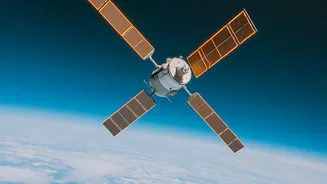
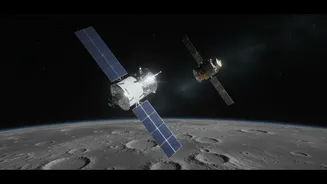
The space community is acutely aware of the problem. The most effective solution is designing rockets for responsible disposal from the outset. This includes reserving enough fuel to perform a controlled de-orbit burn over a remote ocean area, a standard practice for many US and European rockets. Full reusability, the model pursued by SpaceX with its Starship vehicle, is the ultimate goal, as it aims to leave nothing behind. For the tens of thousands of large objects already in orbit, the challenge is greater. Agencies like NASA and the European Space Agency (ESA) are developing technologies for 'active debris removal'. These concepts include robotic 'space tugs' that could grab a defunct rocket stage and drag it into the atmosphere for a controlled burn. The ESA has also adopted a 'Zero Debris' policy for its future missions, requiring them to be removed from orbit within five years, a drastic reduction from the previous 25-year guideline.