

Plitvice Lakes National Park, Croatia: Nature's Masterpiece
Imagine a landscape of 16 terraced lakes, each spilling into the next through a series of breathtaking waterfalls and cascades. That is Plitvice Lakes National Park, a UNESCO World Heritage site since 1979. The park's visual appeal comes from its otherworldly
turquoise, green, and blue waters, which constantly change color with the minerals and sunlight. This vibrant display is the result of a natural process of tufa formation, where calcium carbonate in the water deposits onto moss and plants, creating natural dams that are thousands of years old. A network of wooden boardwalks allows you to walk directly over the crystal-clear water, offering an immersive experience that feels like stepping into a vibrant, living painting. Surrounded by dense forests of beech and fir, home to rare wildlife, Plitvice is a testament to the sheer artistry of nature, stunning in its beauty no matter the season.
Prague's Old Town Square, Czech Republic: A Fairytale Centerpiece
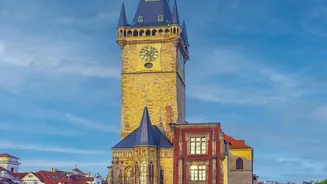
Stepping into Prague's Old Town Square (Staroměstské náměstí) is like walking onto the set of a historical epic. The square is a breathtaking panorama of European architectural history, with magnificent buildings telling tales from the 14th century to the present. Its visual drama is defined by the contrast between the imposing, dark spires of the Gothic Church of Our Lady before Týn and the crisp, white façade of the Baroque St. Nicholas Church. The centerpiece is the Old Town Hall Tower, adorned with the world-famous Astronomical Clock, a 15th-century marvel of mechanics and art that draws crowds every hour. Pastel-colored Romanesque and Gothic houses, now home to cafes and galleries, complete the scene, creating a vibrant, storybook atmosphere that feels both grand and intimately charming.
Rila Monastery, Bulgaria: A Jewel in the Mountains
Nestled deep in the rugged Rila Mountains, the Rila Monastery is a stunning masterpiece of Bulgarian National Revival architecture and a beacon of spiritual heritage. What makes it so visually striking is the dramatic contrast between its formidable, fortress-like exterior and the explosion of color within its courtyard. The main church is covered, inside and out, with astonishingly vivid frescoes depicting biblical narratives and moral lessons, painted in bold, brilliant colors. These are framed by elegant, striped arcades and intricately carved wooden balconies, creating a mesmerizing pattern of light and shadow. This vibrant artistic expression, set against a backdrop of serene mountain peaks, makes the UNESCO-listed monastery a place of profound beauty and tranquility.
Wawel Royal Castle, Kraków, Poland: A Tapestry of Styles
Perched on a limestone hill overlooking the Vistula River, Wawel Royal Castle is not just one building, but a sprawling complex that served as the heart of Polish statehood for centuries. Its immense visual appeal comes from the harmonious yet distinct blend of nearly all major European architectural styles, including Romanesque, Gothic, Renaissance, and Baroque. Visitors can see the pointed arches and powerful towers of its Gothic past alongside the elegant, airy arcades of its magnificent Italian-style Renaissance courtyard. This layering of history is visible everywhere, from the fortified walls to the golden-domed Sigismund Chapel, often called the “pearl of the Polish Renaissance.” Wawel isn't just a castle; it’s a living museum of architecture, representing the evolution of a nation's identity through stone and art.
Historic Centre (Old Town) of Tallinn, Estonia: A Medieval Time Capsule
As one of Northern Europe's best-preserved medieval cities, Tallinn's Old Town is a UNESCO World Heritage site that truly feels like a journey back in time. Its visual charm lies in its remarkable intactness. You can wander through a labyrinth of original cobblestone streets, flanked by grandiose merchant houses, ancient churches, and barns that date back to the Hanseatic League's golden age in the 13th to 16th centuries. The city is divided into the Upper Town (Toompea), the historical seat of power, and the Lower Town, a bustling hub for traders and artisans. The entire area is enclosed by a formidable system of medieval walls and defensive towers, with nearly 2 km of the original wall still standing. The skyline of red-tiled roofs, punctuated by Gothic spires, creates an unforgettable and authentic medieval atmosphere.