






Understanding the Rubin Roadmap
To grasp the significance of any delay, it is crucial to understand NVIDIA’s product hierarchy. The current king is the Blackwell platform, which is already powering advanced AI data centers. Its announced successor is the Rubin platform, named after
astronomer Vera Rubin. This family includes the standard Rubin GPU, set for partner availability in the second half of 2026, and the even more powerful Rubin Ultra, originally slated for 2027. These releases are part of NVIDIA's aggressive new one-year product cadence, a strategy designed to maintain its commanding lead in the AI sector by rendering its own technology obsolete before competitors can catch up. The Rubin platform as a whole promises major leaps in performance, including a new Arm-based CPU called Vera, next-generation HBM4 memory, and significantly faster interconnects.
The Nature of the Delay
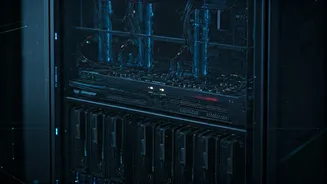
The latest issue appears to be centered not on the Rubin Ultra chip itself, but on the complex infrastructure needed to house it. According to industry analysis, the Kyber rack-scale system, which is essential for deploying Rubin Ultra chips at scale, is facing manufacturing challenges. Specifically, the production of a key circuit board, or 'midplane', is proving difficult, pushing the availability of this critical system into 2028. This is not the first setback for the ambitious platform. Earlier in July 2026, it was reported that NVIDIA had to scrap its initial quad-die design for the Rubin Ultra GPU due to packaging yield issues, reverting to a dual-die design. While the standard Rubin chips remain on track for this year, the cascading issues with the higher-tier Ultra platform highlight the immense technical hurdles in pushing the boundaries of computing.
A Crack in the Armor?
For a company that has executed its product roadmap with near-flawless precision, these consecutive announcements are noteworthy. The delay of the Kyber rack system is significant because modern AI relies on a 'rack-scale' approach, where the entire system of GPUs, CPUs, networking, and storage is the computer. Without the custom-designed rack, the full potential of the Rubin Ultra chips cannot be realized. Reports indicate that a proposed backup plan involving combining existing rack designs was rejected by major cloud providers, signaling that customers are unwilling to accept compromised solutions. This stumble, while not catastrophic, is a rare public misstep and raises questions about whether NVIDIA's one-year cadence is too aggressive even for its own formidable engineering teams.
An Opening for Competitors
Every delay at the top creates an opportunity for those looking to climb. Rivals like AMD and Google (with its TPU division) are aggressively developing their own AI accelerators. AMD has shifted to a similarly aggressive annual release schedule for its Instinct GPU series, aiming to provide a viable alternative for data centers wary of a single supplier. This delay in NVIDIA's most advanced scale-up solution could give competitors a crucial window to gain ground in large-scale training cluster contracts for 2027 and 2028. While NVIDIA's software ecosystem (CUDA) provides a powerful moat that keeps customers locked in, a hardware stumble provides the best chance rivals have had in years to persuade customers to test new waters.