

It's a problem any homeowner with an old house understands: you want to run more powerful appliances, but the wiring can't handle it. The International Space Station just completed a massive electrical upgrade, solving a similar issue in orbit.
A Major Power Boost in Orbit
The International
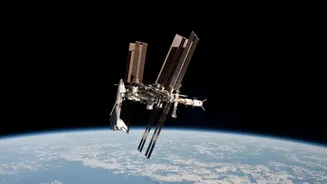
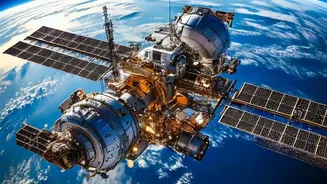
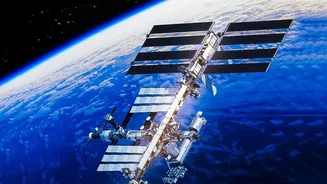
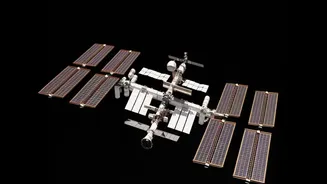
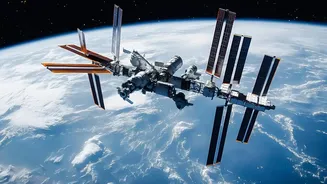
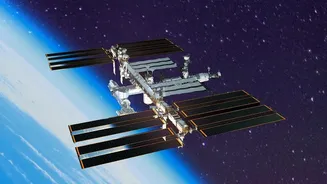
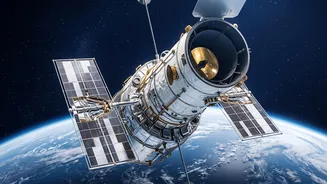
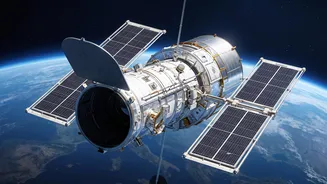
Space Station (ISS) has successfully completed a multi-year project to significantly upgrade its power generation capabilities. The station's total power capacity has been increased from approximately 160 kilowatts to around 215 kilowatts. This represents a substantial boost of over 30%, providing the orbiting laboratory with the electrical resources needed to support its ambitious science and commercial goals for the remainder of its operational life. The upgrade was accomplished by installing eight new solar arrays, known as ISS Roll-Out Solar Arrays (iROSAs), which supplement the station's original, aging power system. This additional 55 kilowatts of power is crucial for running more experiments simultaneously, supporting new modules, and ensuring the station's life support and operational systems have ample energy.
Why the Upgrade Was Necessary
The ISS has been continuously inhabited for over two decades, and its original hardware is showing its age. The station's original eight large solar array wings, installed between 2000 and 2009, were designed with a 15-year service life. Over years of exposure to the harsh environment of space—including extreme temperature swings and radiation—their efficiency has gradually degraded. At the same time, the demand for power on the station has only grown. With increasingly complex scientific experiments, a growing commercial presence, and plans for new privately-owned modules to attach to the station, the original power grid was being pushed to its limits. Rather than undertake the complex task of replacing the original arrays, NASA opted to augment them with smaller, more advanced panels.
Rolling Out a New Generation of Solar Tech
The solution came in the form of the iROSA technology. These new arrays are smaller, more lightweight, and significantly more efficient than their predecessors. Each iROSA unit was delivered to the station in a compact, rolled-up cylinder aboard a SpaceX Dragon cargo spacecraft. The installation was a monumental undertaking, requiring a series of meticulously planned spacewalks by multiple astronaut crews that began in June 2021. Astronauts mounted the iROSAs onto the existing solar array truss structure, positioning them to partially overlay the older panels. During the final spacewalks in late 2026, astronauts Anil Menon and Joshua Kutryk installed the seventh and eighth arrays, marking the successful completion of the five-year project. Once bolted into place, the arrays unfurl themselves without a motor, using the stored energy in their carbon-composite booms to roll out to their full length of about 63 feet in just 10 minutes.
Powering the Future of a Space-Based Economy
This 30% increase in power is more than just a simple maintenance upgrade; it's a critical investment in the future of the low Earth orbit economy. The additional electricity will support a new wave of scientific research and technology demonstrations, including those vital for NASA's Artemis program, which aims to establish a sustainable human presence on the Moon. Perhaps most importantly, the enhanced power grid enables the expansion of commercial activities on the station. Companies like Axiom Space are planning to attach their own private modules to the ISS in the coming years, which will serve as habitats for private astronauts and hubs for in space manufacturing and research. These commercial ventures require a significant and reliable power supply, which the newly upgraded system can now provide. This ensures the ISS can serve as a robust platform for both government led exploration and private enterprise until its planned retirement around 2030.